
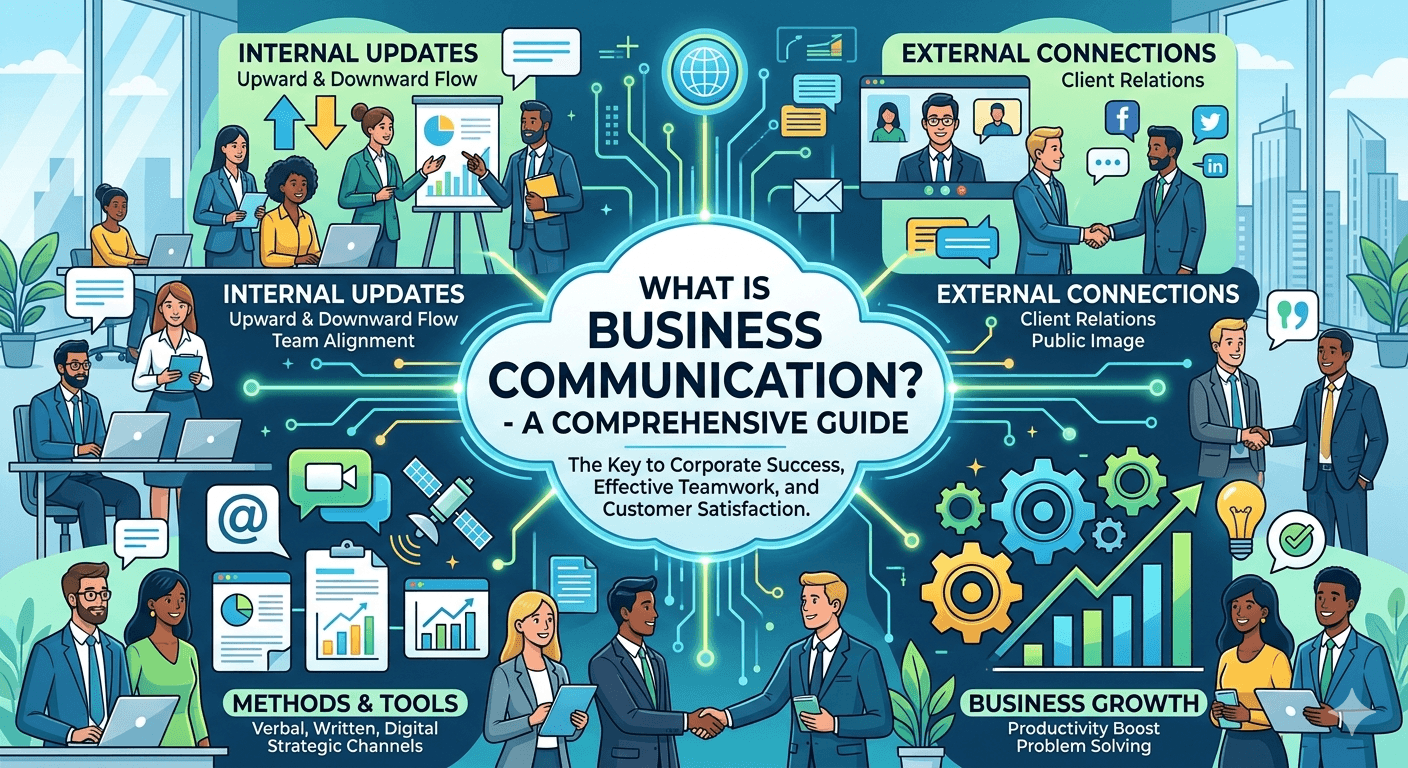
In the fast-paced corporate world, the ability to transmit information accurately and efficiently is the cornerstone of success. At its core, business communication is the process of sharing information between people within and outside an organization. High-quality communication ensures that employees are aligned with company goals, customers are satisfied with services, and stakeholders are kept informed of progress. Without a robust framework for what is business communication, even the most innovative companies can struggle with internal friction and external misunderstandings.
In this informational guide, we will explore the depths of how professionals connect, the various methods of communication in business, and why mastering these skills is essential for anyone from a fresh graduate to a seasoned executive. By the end of this article, you will have a comprehensive understanding of the business communication meaning and how to implement it effectively in your workplace.
What is Business Communication? A Comprehensive Definition
When people ask what is business communication, they are often looking for more than a simple dictionary entry.
The business communication definition involves the constant flow of information used to promote a product, service, or organization; relay information within the business; or deal with legal and similar issues. It encompasses everything from a simple internal email to a complex multi-million dollar marketing campaign. Unlike casual conversation, communication in business is always goal-oriented and structured.
The definition for business communication highlights that it is a two-way street. It is not just about sending a message but also about ensuring the message is received and understood as intended. In a professional setting, business and communication are inseparable; you cannot have a functioning business without a method to convey instructions, feedback, and strategies. This integration is why most corporate training programs focus heavily on explain business communication concepts to new hires.
The Vital Connection Between Business and Communication
To truly grasp what is communication and business communication, one must look at the synergy between the two. Business and communication work together to create a brand voice and a corporate culture. Every interaction, whether it is a businessman communication with a client or a manager speaking to their team, contributes to the overall perception of the company. In this context, in business communication, the medium is often as important as the message itself.
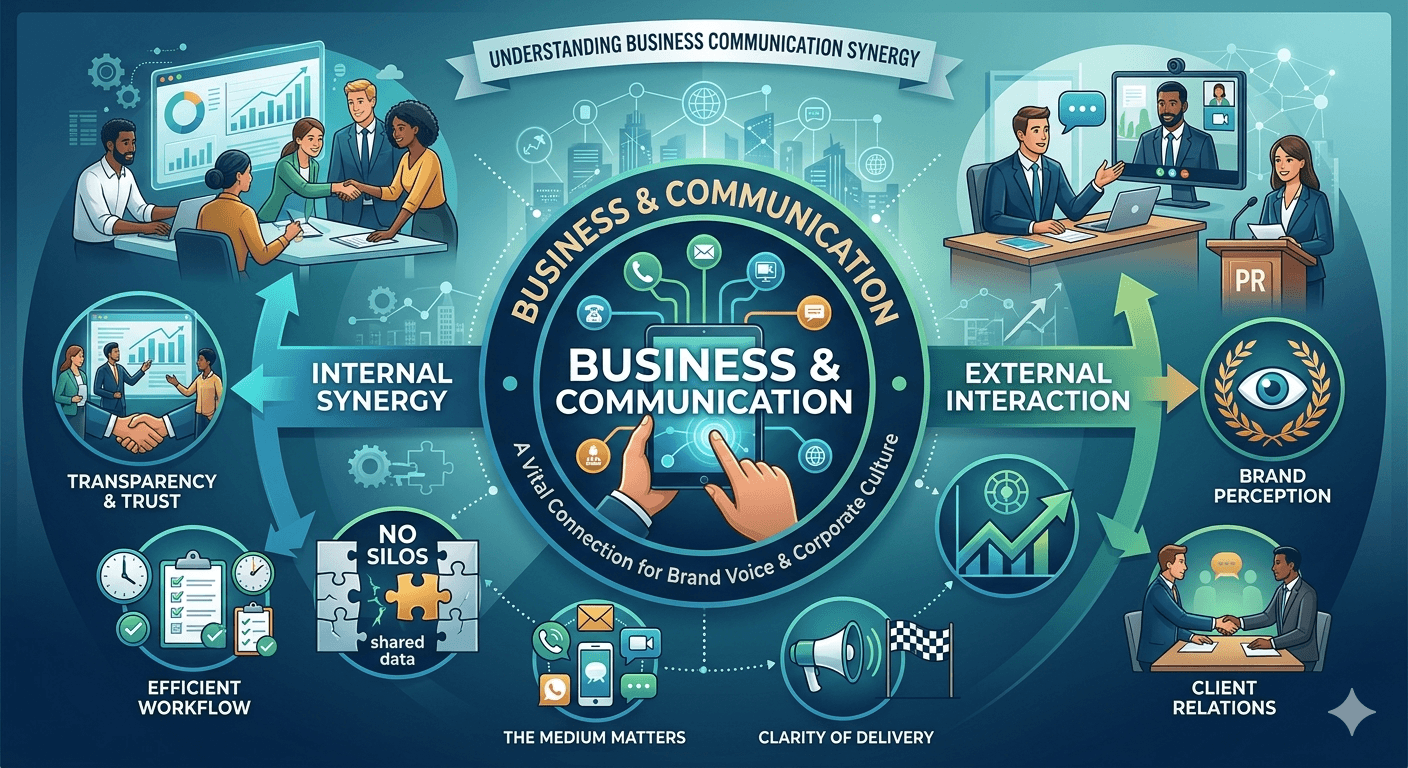
Whether you are using business comms for internal updates or external PR, the clarity of your delivery determines your efficiency. Poorly executed communication in businesses leads to “silos,” where departments fail to share critical data, resulting in wasted resources and missed deadlines. Conversely, strong business communications foster an environment of transparency and trust, which are the hallmarks of a thriving enterprise.
Why Business Communication is Important for Growth
It is often said that business communication is important because it acts as the “nervous system” of an organization. It allows for the coordination of complex tasks across different geographical locations and time zones. For managers, communication for management and business is the primary tool used to motivate employees and provide clear direction. Without it, leadership becomes invisible, and employees feel disconnected from the company’s mission.
Effective communications in business also drive customer loyalty. When a company communicates its values and product benefits clearly, it builds a rapport with its audience. This external communication meaning business success is evident in brands that maintain high levels of engagement on social media and responsive customer support channels. By prioritizing communicating in business, organizations can reduce turnover and increase their market share simultaneously.
Exploring Different Methods of Communication in Business
Modern organizations use a diverse array of methods of communication in business to reach their objectives. These can be broadly categorized into internal and external channels. Understanding how to navigate these communications for business is a critical skill for any professional. The choice of channel—whether it is a formal report, a quick chat message, or a video conference—depends on the urgency and sensitivity of the information.
- Verbal Communication: This includes face-to-face meetings, phone calls, and video conferencing. It is best for nuanced discussions where tone and body language are important.
- Written Communication: Emails, memos, and reports fall into this category. It provides a permanent record of business communication description and is essential for formal documentation.
- Electronic Communication: This modern facet of business comms includes instant messaging (like Slack or Teams), social media, and web-based collaboration tools.
- Visual Communication: Using charts, graphs, and presentations to explain business communication data visually, making complex information easier to digest.
Internal vs. External Business Communication
To master communication in business management, one must distinguish between internal and external flows. Internal business communications happen within the company walls and are further divided into upward, downward, and lateral communication. Downward communication involves instructions from leaders to subordinates, while upward communication consists of feedback and reports from employees to management. Lateral business communication occurs between colleagues at the same hierarchical level.
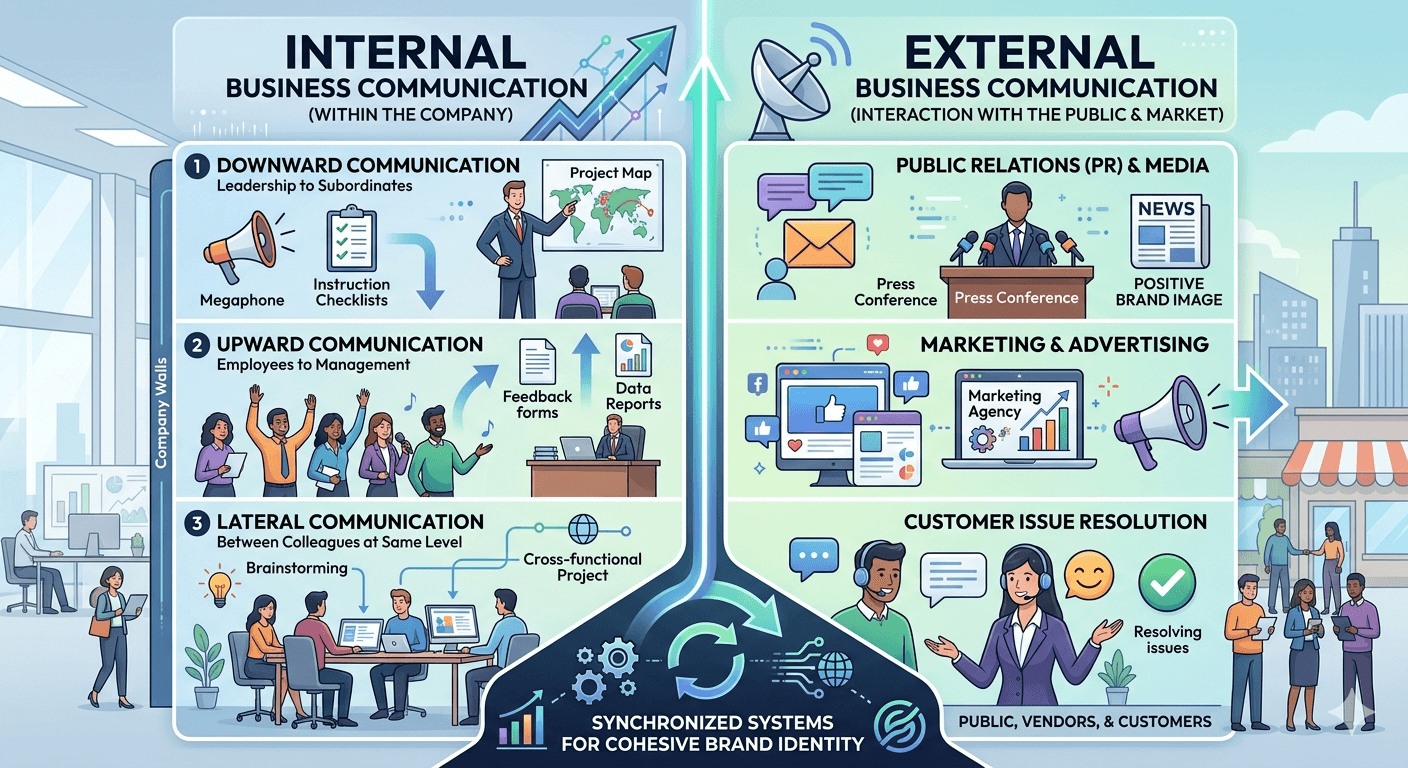
On the other side of the coin, external communications for business involve any interaction with the public, vendors, or customers. This is where business communication services like public relations and marketing agencies come into play. A company’s external business communication meaning is often defined by its ability to resolve customer issues and present a professional image to the world. Both internal and external systems must be synchronized to maintain a cohesive brand identity.
What is a Business Communication Class and Why Take One?
Given the complexity of modern interactions, many professionals and students ask, what is a business communication class? These courses are designed to teach the specific skills needed to thrive in a corporate environment. Students learn about definition of communication business theory, but they also get hands-on experience in writing professional emails, delivering persuasive presentations, and managing workplace conflict.
A business communication class often covers the psychology of persuasion and the ethics of information sharing. It helps students understand that business comunication (often misspelled but vital) is about more than just talking; it’s about strategic listening and adaptive messaging. For those looking to move into leadership, communication for management and business courses are essential for learning how to lead teams through periods of change and uncertainty.
Communication in Business Management Strategies
Successful leaders know that communication in business management is about creating a feedback loop. It is not enough to issue orders; a manager must also listen to the concerns of their team. This two-way communication services in business ensures that employees feel heard and valued. Management must choose the right business communication tools to ensure that messages aren’t lost in a sea of emails.
Strategic communication in business also involves “crisis communication.” When things go wrong, the speed and honesty of a manager’s communications business can mean the difference between a quick recovery and a public relations disaster. By integrating business and communication into the daily routine, managers can identify potential problems before they escalate, saving the company time and reputation.
The Role of Business Communication Services
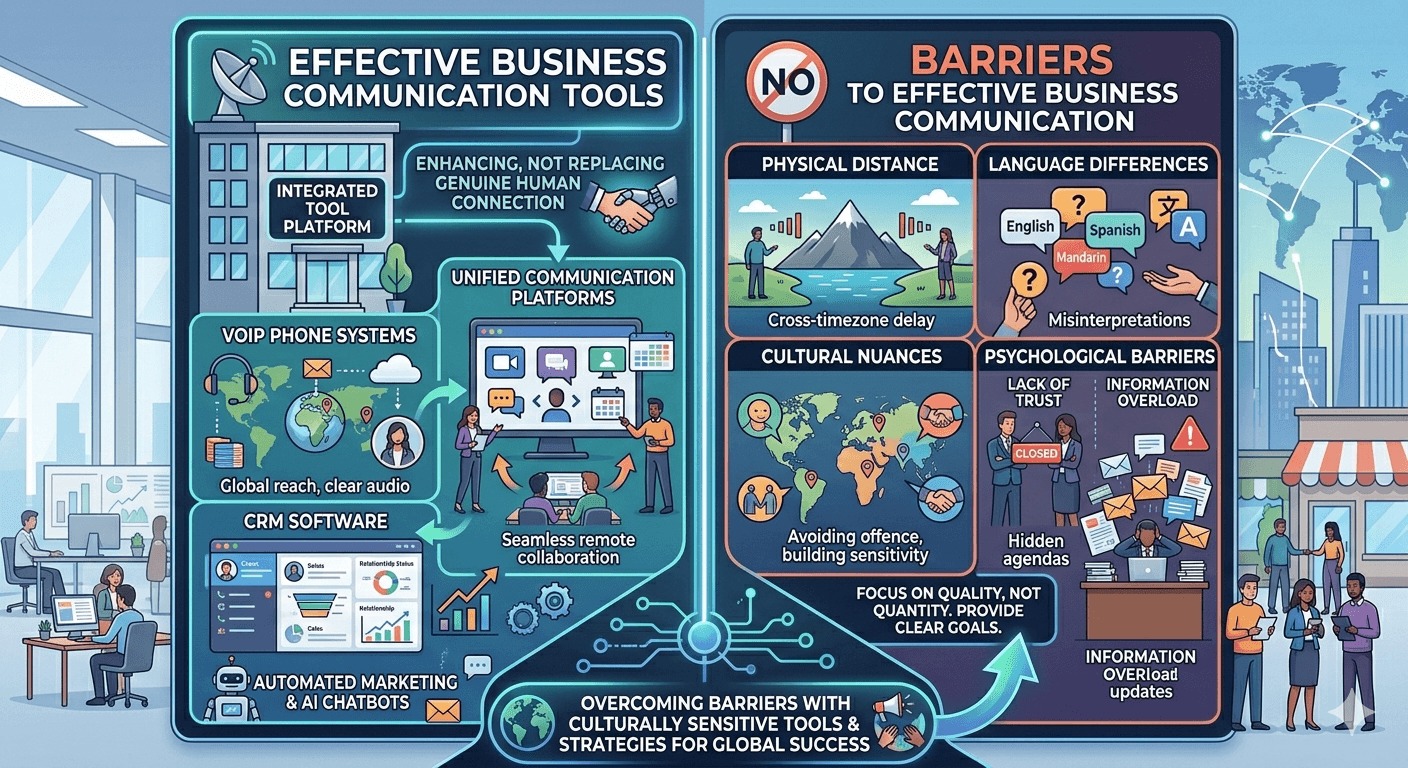
In today’s digital landscape, many companies rely on specialized business communication services to manage their interactions. These services include VoIP phone systems, unified communication platforms, and customer relationship management (CRM) software. These tools are designed to streamline business comms, making it easier for remote teams to collaborate and for sales teams to track their conversations with clients.
Utilizing professional communications business tools allows an organization to scale without losing the personal touch that customers expect. From automated email marketing to AI-driven chatbots, these business communications technologies are redefining how we interact. However, technology should only be an enhancer of the business communication meaning, not a replacement for genuine human connection and clear, concise messaging.
Barriers to Effective Communication in Businesses
Even with the best tools, communication in businesses can often fail due to various barriers. Recognizing these obstacles is the first step toward overcoming them. Common barriers include physical distance, language differences, and cultural nuances. In a globalized economy, businessman communication must be culturally sensitive to avoid offending international partners or misinterpreting key business terms.
Psychological barriers, such as a lack of trust or “information overload,” also hinder business communication. When employees are bombarded with too many business communications daily, they often start to ignore important updates. To solve this, companies should focus on the quality of their business comms rather than the quantity. Providing a clear business communication description of goals and expectations helps cut through the noise and ensures everyone is on the same page.
Improving Your Professional Business Communication Skills
If you want to excel in your career, you must constantly work on your business communication skills. This starts with active listening—paying full attention to the speaker rather than just waiting for your turn to talk. Clear and concise writing is another hallmark of effective business comunication. In a world where people are constantly distracted, the ability to get your point across quickly is a massive competitive advantage.
Furthermore, being mindful of non-verbal cues is essential in communication and business communication. Your posture, eye contact, and even your digital “tone” in chat messages speak volumes. By attending a business communication class or reading up on definition for business communication, you can refine these soft skills. Remember, in business communication, being professional does not mean being cold; it means being clear, respectful, and purposeful.
Modern Trends: The Future of Business Comms
As we look toward the future, business communication is becoming increasingly visual and automated. The use of video messaging instead of long emails is a rising trend in communications for business. AI is also playing a larger role, helping to draft business communications definition documents and translating conversations in real-time. This evolution makes what is business communication a moving target that requires constant learning and adaptation.
Remote and hybrid work models have made communication services in business even more vital. Teams that don’t see each other in person must rely heavily on digital business comms to maintain a sense of community. Companies that invest in the right business communication services and training will be the ones that thrive in this new landscape. The core of what is communication and business communication remains the same: the human need to connect and share ideas, but the tools are more powerful than ever.
Read More: Wireless IP Phones vs. Mobile Apps: Deciding What’s Best for Your Remote Workforce
Final Thought on Business Communication
In conclusion, business communication is the lifeblood of any professional organization. From the fundamental business communication definition to the complex methods of communication in business used today, it is clear that effective interaction is the key to corporate longevity. Whether you are improving your personal businessman communication or overhauling your company’s business communications, the goal remains the same: clarity, efficiency, and connection. By prioritizing communication in business management and staying curious about what is a business communication class, you position yourself and your organization for a future of limitless growth and collaboration.
Frequently Asked Questions (FAQs)
What is business communication and why is it important?
Business communication is the process of sharing information within and outside a company to achieve organizational goals. It is important because it ensures that everyone in the company is working toward the same objectives, prevents misunderstandings, increases employee engagement, and builds a strong, professional relationship with customers and clients.
What are the 4 main types of business communication?
The four main types are internal upward (employee to manager), internal downward (manager to employee), internal lateral (between coworkers of the same rank), and external communication (between the company and outside parties like customers, vendors, or the media).
What are the common barriers to effective communication in business?
Common barriers include physical distance, language and cultural differences, technical issues with communication tools, and psychological factors like a lack of trust or information overload. Overcoming these requires a clear strategy and the right choice of communication channels.
What is a business communication class?
A business communication class is a course designed to help students and professionals master the art of professional interaction. It covers topics like writing effective business letters, public speaking, conflict resolution, and the strategic use of digital communication tools in a corporate environment.
How can a company improve its business communication services?
Companies can improve by investing in unified communication platforms, conducting regular training for staff, encouraging open feedback through upward communication channels, and ensuring that all external messages are consistent with the company’s core values and brand identity.