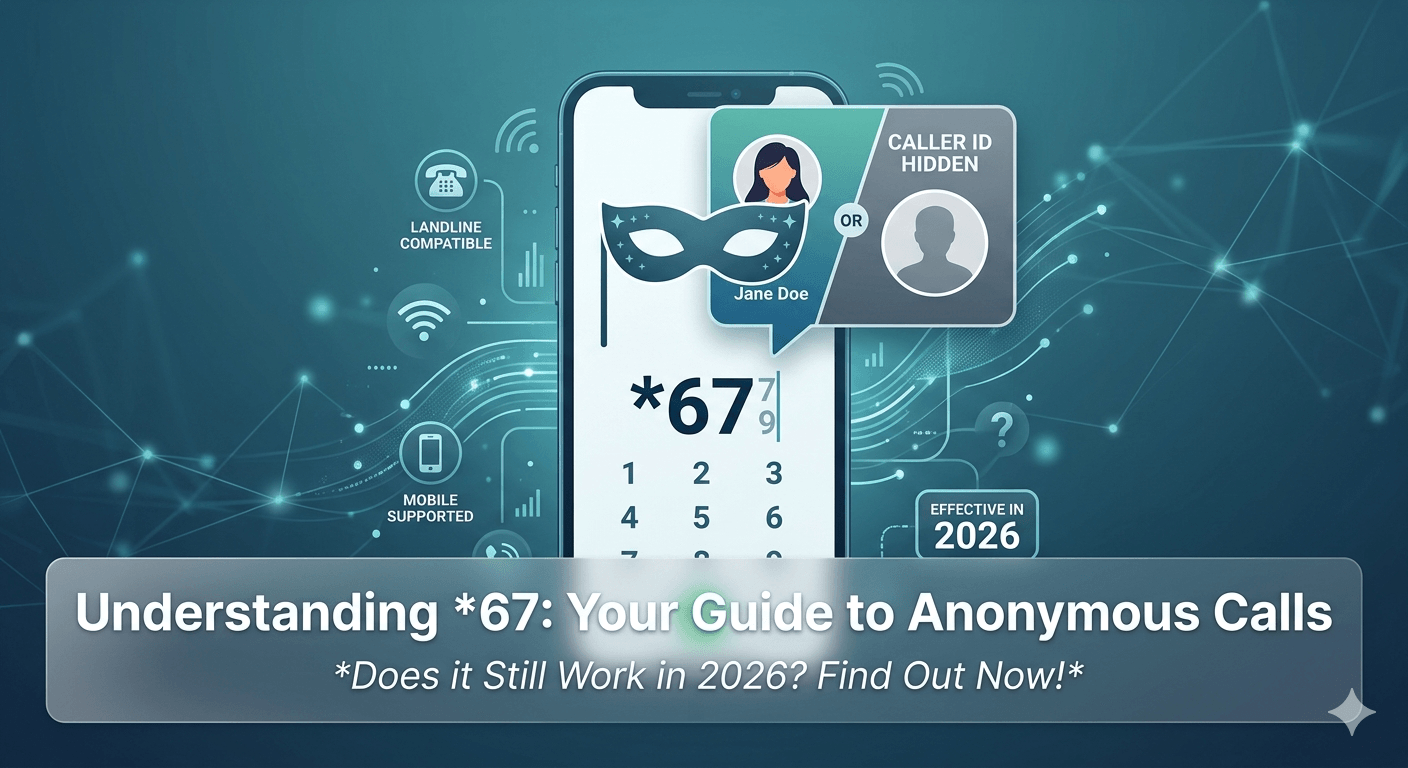
Yes, star 67 still works effectively in 2026 for masking your caller ID on landlines and mobile devices. By dialing this vertical service code before a phone number, you can hide your personal information from the recipient, making the call appear as Private or Restricted. However, its effectiveness is limited when calling toll-free numbers or emergency services like 911, which can bypass the block. While it remains a reliable tool for basic privacy, modern spam filters and specific carrier settings may sometimes interfere with its functionality across different networks, requiring users to understand the specific nuances of digital signal routing.
What You’ll Need
To successfully hide your identity during a voice conversation, you do not need any specialized software or expensive hardware. The beauty of this system lies in its simplicity and universal integration across major telecommunications networks. First and foremost, you need a functioning telephone line, whether it is a traditional copper-wire landline or a modern smartphone running on 5G technology. You also need to ensure that your service provider supports vertical service codes, which most major carriers like AT&T, Verizon, and T-Mobile do by default.
Another essential requirement is the correct destination number, including the area code if you are calling outside your local exchange. If you are using a mobile device, you should ensure that your software is up to date to prevent any internal dialer conflicts. It is also helpful to have a secondary device nearby if you wish to perform a test call to see how your information appears on another screen. Finally, a basic understanding of how star67 interacts with different types of receiving numbers will help you manage your expectations regarding privacy and security.
The Story of Star 67: More Than Just a Code
The origin of this three-digit sequence dates back to the era of the Bell System and the introduction of Custom Local Area Signaling Services. Originally, these codes were designed to give consumers more control over their landline experience as Caller ID technology became a standard household feature in the late 1980s and early 1990s. Before the digital revolution, the telephone network was a closed system where anonymity was often the default, but the rise of digital displays meant people could suddenly see who was on the other end of the line.
As privacy concerns grew, the telecommunications industry introduced these codes as a way to balance the transparency of Caller ID with the individual’s right to remain anonymous. For decades, this tool was the primary method for doctors calling patients from personal lines or journalists contacting sensitive sources.
According to a historical report on telecommunications privacy, the Federal Communications Commission (FCC) mandated that carriers must honor the privacy request of a caller using *67 for non-toll-free numbers to protect consumer rights. This legacy continues today, even as we move toward an almost entirely digital infrastructure.
How Does *67 Still Work?
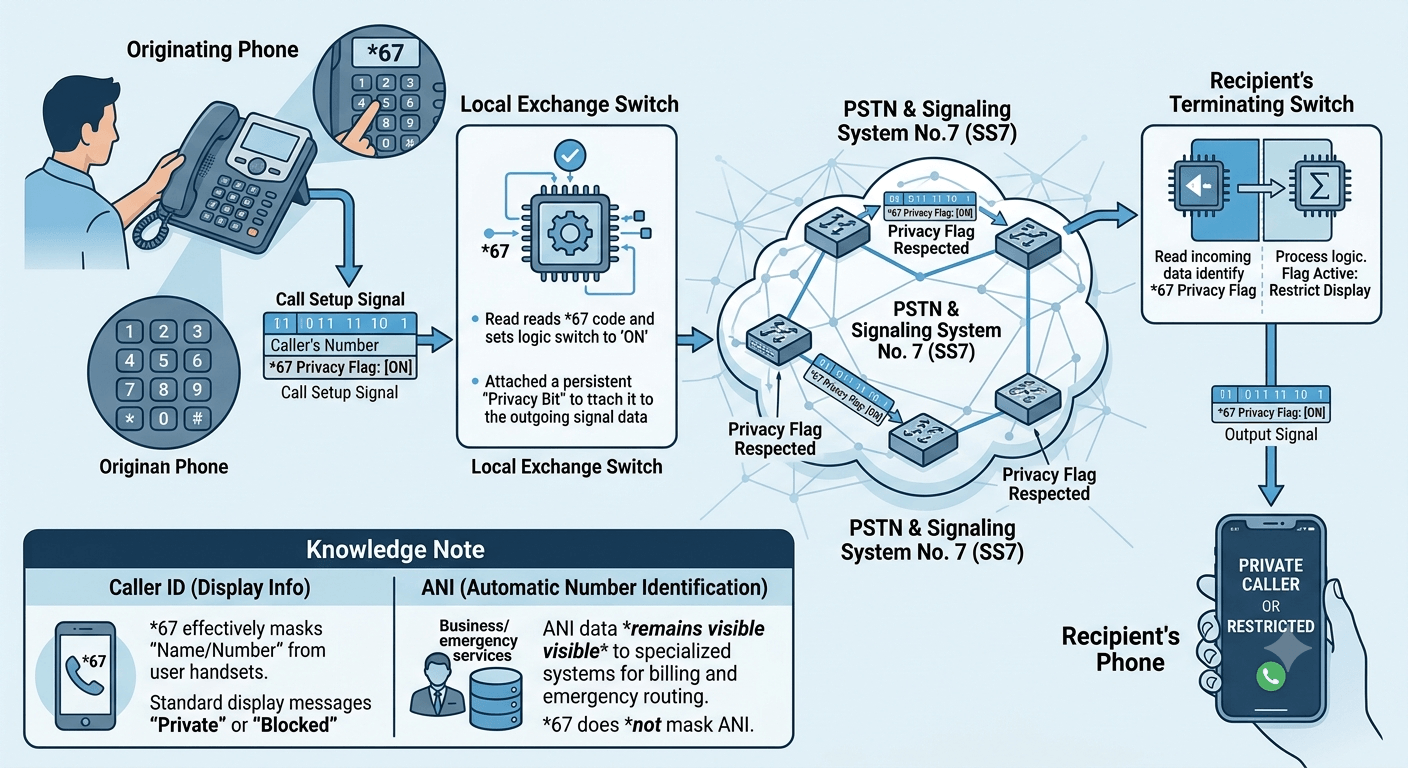
Understanding the mechanics of a restricted call requires a look at how signals move through the Public Switched Telephone Network (PSTN). When you dial the privacy code, you are sending a specific instruction to your local exchange or central office. This instruction tells the switch to attach a privacy flag to the signaling information that accompanies your voice data. This flag remains attached as the call is routed through various switches until it reaches the destination.
1. Caller ID vs ANI
It is important to distinguish between the display name you see on a phone and the actual routing information. Caller ID is the service that provides the name and number to the recipient’s handset, which is what the privacy code successfully masks. However, Automatic Number Identification (ANI) is a different layer of data used primarily by businesses and emergency services for billing and routing purposes. While star 67 still work for blocking the display name, it does not hide the ANI data from systems designed to capture it for administrative reasons.
2. Per-Call Blocking Signal
The mechanism functions on a per-call basis, meaning the signal is only active for the specific duration of that single dial session. When the switch receives the *67 command, it modifies the SS7 (Signaling System No. 7) packets. These packets carry the metadata of the call, including the originating number. The privacy bit in the packet is set to 1, which instructs the terminating switch at the other end to withhold the information from the user’s display, resulting in a 67 number block.
3. Landline vs Mobile Differences
While the code was born on landlines, mobile networks have adapted to recognize these legacy signals through their digital gateways. On a landline, the instruction is handled by the local physical switch. On a mobile device, the phone’s operating system translates the digits into a digital command sent to the cellular tower. This is how to make an anonymous phone call regardless of whether you are using a rotary phone or the latest iPhone, though the underlying digital protocols have evolved significantly over time.
4. Carrier Display Rules
Each carrier has specific rules for how they display a blocked number to the end user. Some might show the words Private Caller, while others might display Restricted or Unknown. These variations depend on the software used by the receiving carrier and the device’s internal settings. Even though do star 67 still work across carriers, the visual representation is not standardized, which can sometimes lead to confusion for the person receiving the call.
5. Routing Path Behavior
As a call travels from your phone to the recipient, it may pass through several different service providers. The privacy flag must be respected at every hop along this journey. In most domestic cases, this works flawlessly because of industry-standard agreements. However, if a call is routed through a smaller, less-regulated VoIP provider, there is a tiny chance the privacy flag could be stripped, though this is rare in modern North American telecommunications.
Does Star 67 Still Work in 2026?
As we navigate through 2026, many wonder if these vintage codes have been rendered obsolete by advanced apps and digital caller identification services. The reality is that the core infrastructure of our global phone system still relies on these fundamental commands for compatibility. While we have more sophisticated ways to manage privacy today, the manual entry of three digits remains the most accessible method for the general public to protect their identity on the fly.
1. Fails on Toll-Free and Emergency Lines
The most significant caveat to the effectiveness of this method is its interaction with 800, 888, and 911 numbers. Because toll-free numbers are paid for by the receiver, the law allows them to see the originating number for billing purposes via ANI. Similarly, emergency services must be able to identify a caller’s location and identity to provide life-saving assistance. Therefore, if you are trying to hide your number when calling from iphone to a business line, the privacy code will likely be bypassed by their advanced enterprise systems.
2. Works on Landlines and Mobiles with Limits
The system is highly reliable for person-to-person calls between standard mobile and residential lines. If you are calling a friend or a local shop, does 67 work? The answer is almost always yes. However, the limit comes when the recipient has active blocking features. Many modern smartphones have settings to automatically silence or reject calls from unknown or private numbers. In this scenario, your call will go directly to voicemail or be disconnected without the recipient ever seeing it ring.
3. Blocked by Advanced Spam Filters
With the massive surge in robocalls and fraudulent activity, many consumers now use third-party spam protection apps. These applications often flag any call with a masked ID as high-risk. A recent study by a leading cybersecurity firm noted that calls with restricted caller IDs have a 70% higher chance of being ignored compared to calls from verified numbers. This means that while the code is working to hide your number, it might also be working against you by preventing your call from being answered.
4. Partially Supported Outside North America
While the *67 prefix is a staple of the North American Numbering Plan, its functionality varies greatly once you cross international borders. In the UK, for example, the equivalent code is 141. If you are traveling and wondering how do you call someone anonymously, you must use the local equivalent code rather than the one you use at home. The interconnected nature of global roaming usually translates these codes, but it is not a 100% guarantee, especially in developing regions with older infrastructure.
How to Use Star 67: A Step-by-Step Guide
Using this feature is a straightforward process that has remained virtually unchanged for decades. It requires no configuration in your phone settings and can be done on any keypad. Whether you are using a physical button pad or a touchscreen, the sequence remains the same. Follow these detailed steps to ensure your number is properly masked before the call is connected to the other party.
Step 1: Understand the Purpose
Before you begin, determine why you need to hide your number. Are you calling a business to ask about a product but don’t want to be added to their marketing list? Or are you returning a call to an unknown number and want to maintain your privacy? Knowing the purpose helps you decide if this is the right tool or if you need a more robust solution like a secondary virtual number. It is also important to remember that this does not make you invisible to the law or your service provider.
Step 2: Dial the Code
Open your phone’s dialer application or pick up your landline receiver. Type the star symbol followed by the numbers six and seven. You should see *67 on your screen. Do not press the call button yet, as the code must be followed immediately by the destination phone number. This sequence tells the network that the very next set of digits should be handled with a privacy flag. If you make a mistake, clear the screen and start over to ensure the command is registered correctly.
Step 3: Enter the Full Number
Immediately after the code, type the ten-digit phone number you wish to reach. This includes the three-digit area code and the seven-digit local number. For example, your screen should display something like *675551234567. There is no need to add spaces or dashes, as the system processes the string of digits as a continuous command. Make sure you have the correct number, as you will not be able to see the contact name if you have it saved in your phone until the call starts.
Step 4: Place the Call
Once the full sequence is entered, press the call or send button. You might notice a slight delay of a second or two as the switch processes the privacy request. Listen for the ringing tone. At this point, the recipient’s phone will receive the signal. Instead of seeing your name or mobile number, their display will show a message such as Private or No Caller ID. You are now successfully participating in an anonymous conversation.
Step 5: Test Before Real Use
If you are concerned about whether does 67 work on your specific device or carrier, it is wise to perform a test. Call a friend or use a second phone you own to verify the display. Dial the code and the number, then check the receiving device. If the screen shows Restricted, you are good to go. If your number still appears, you may need to check your carrier settings or see if you have an “Always Show Caller ID” toggle enabled in your phone’s menu that is overriding the manual code.
The Critical Limitations: When Star 67 Fails You
While the *67 code is a powerful tool for basic privacy, it is far from an all-encompassing invisibility cloak. There are several specific environments and technologies where the code is either ignored or intentionally bypassed. Understanding these limitations is crucial if you are relying on anonymity for safety or sensitive professional reasons. Over-reliance on this legacy system without knowing its weaknesses can lead to unintended exposure of your private contact information.
1. Emergency Numbers Ignore It
As mentioned previously, dialing 911 or other emergency services will always reveal your number and location. This is a matter of public safety. Public Safety Answering Points (PSAPs) use specialized equipment that bypasses any caller ID blocking to ensure they can call you back if the line is dropped or if they need to dispatch emergency personnel to your location. Never assume that a privacy code will keep your location hidden from emergency responders or law enforcement agencies.
2. Toll-Free Numbers Ignore It
Businesses that pay for 1-800, 888, or 877 numbers use a service called ANI. This is essentially a billing feature that identifies the source of the incoming call so the business can be charged correctly. Because the business is paying for the call, they have a legal right to know where the call is coming from. If you use *67 to call a customer service line, there is a very high probability that the agent’s screen will still display your phone number, regardless of the privacy code you used.
3. Business Systems Use Enhanced Tools
Modern corporate phone systems, often referred to as PBX or VoIP systems, frequently use advanced logic to handle incoming calls. Many businesses implement a feature called Anonymous Call Rejection. If your call comes in with a masked ID, the system will automatically play a recording stating that they do not accept private calls. The system may ask you to hang up and unblock your number before trying again. This is a common tactic used to filter out telemarketers and anonymous harassers.
4. International Routing Drops It
When a call leaves the domestic network and enters the international gateway, the metadata format can change. Not all international carriers recognize the North American *67 privacy flag. In some cases, the transit carrier might strip the privacy bit to ensure the call is routed through their billing system properly. This means that if you are calling someone in a different country, your number might be displayed even if you used the privacy code correctly at the start of the dial.
5. VoIP Platforms Reject It
Many people now use internet-based calling apps like WhatsApp, Skype, or Zoom. These platforms do not use the traditional SS7 signaling system in the same way that standard carriers do. Trying to use a vertical service code within a VoIP app usually results in an error or the code being treated as part of the phone number, causing the call to fail. If you are using a digital app, you must look for the privacy settings within the app’s own menu rather than relying on the star 67 method.
6. Receivers Can Block You Using *77
Landline users and some mobile carriers offer a service known as *77, which is Anonymous Call Rejection. When a user activates this, their phone will not even ring if a call is placed using star 67. Instead, the caller receives a message indicating that the party they are trying to reach does not accept anonymous calls. This creates a technological “checkmate” where your attempt at privacy results in an inability to communicate at all with the target party.
Star 67 and the Illusion of Privacy: Anonymity Theatre
In the world of cybersecurity and telecommunications, there is a concept known as “Anonymity Theatre.” This describes a situation where a user feels they are taking significant steps to protect their privacy, but the actual protection provided is superficial at best. Using *67 is a prime example of this phenomenon in the modern age. While it masks your number from the average person’s phone screen, it leaves a massive digital footprint elsewhere that is easily accessible to the right entities.
-
The Concept of “Anonymity Theatre”
The term implies a performance of security rather than the existence of true security. When you dial the privacy code, you feel a sense of control over your data. However, this control is limited to the visual display on the recipient’s handset. It does not encrypt your voice, it does not hide your IP address if you are on a digital network, and it certainly does not hide the fact that a call took place from your service provider’s logs. It is a convenience feature, not a professional-grade security tool.
-
The Link to *67
The link between the code and this concept is found in the way people overestimate its power. Many believe that because their number doesn’t show up on a friend’s phone, they are completely untraceable. This misconception can be dangerous. For instance, if someone uses the code to make a prank call or engage in harassment, they may be surprised when the police are able to identify them within minutes by simply requesting the call logs from the carrier. The code is a “do not disturb” sign, not a vanishing act.
-
The Two Layers of Your Phone Call
Every phone call consists of two layers: the signaling layer and the media layer. The signaling layer handles the “handshake” between phones, which is where the caller ID sits. The media layer is the actual audio of your conversation. Star 67 only modifies a tiny portion of the signaling layer. It does nothing to protect the media layer from being intercepted or to hide the metadata (duration, time, and location) that is stored in the carrier’s permanent database for years.
Star 67: Privacy & Ethical Considerations
Using tools to hide your identity comes with a set of ethical responsibilities. Just because you have the technical ability to make an anonymous call does not mean it is always appropriate or legal to do so. Maintaining privacy is a right, but using that privacy to infringe upon the rights of others is a violation of the social contract. There are several key points to consider when deciding to use a 67 block number.
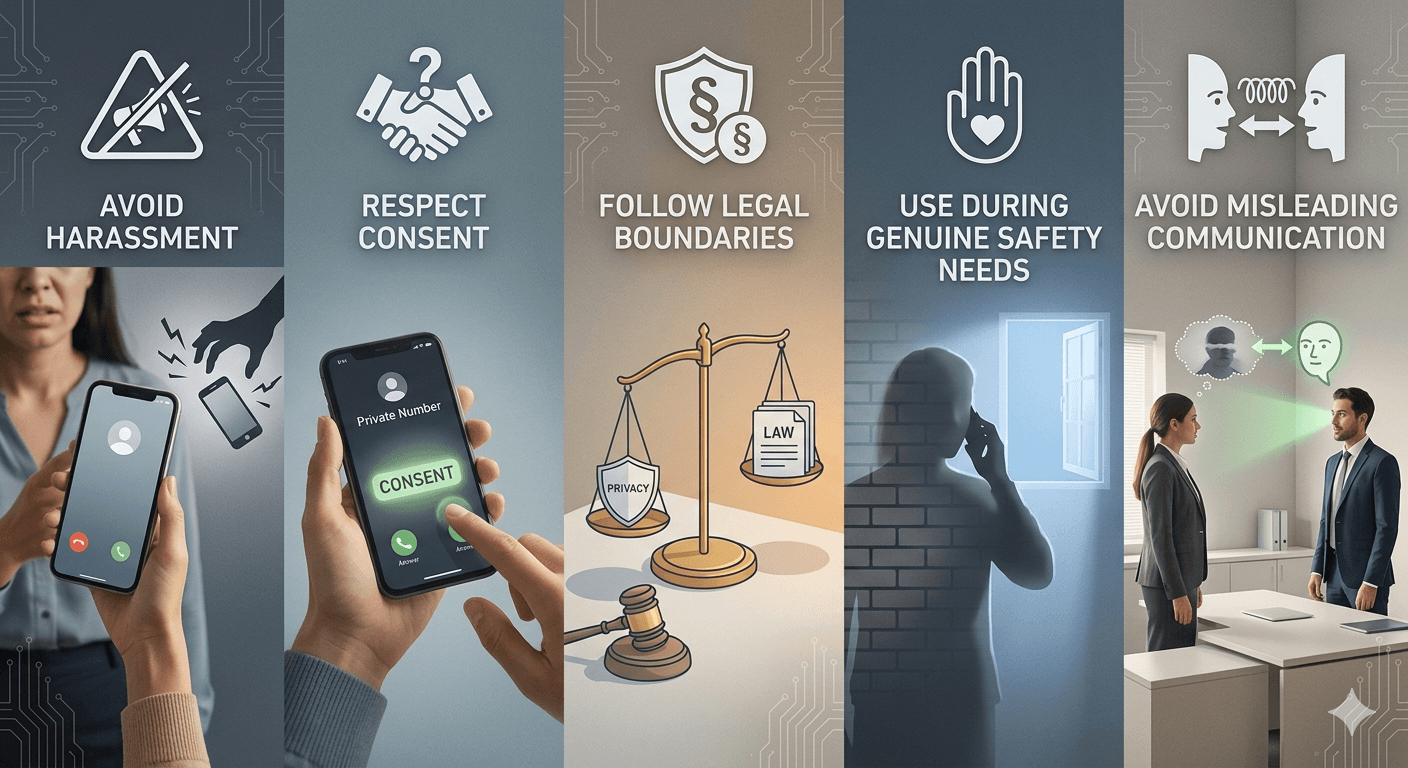
1. Avoid Harassment
The most obvious ethical boundary is the prohibition of harassment. Using an anonymous ID to repeatedly call someone who does not want to speak to you is not only unethical but often illegal. Laws regarding “telephonic harassment” apply regardless of whether your number is displayed or restricted. Anonymity should be used for protection, such as hiding your home number from a business, rather than for causing distress or fear in another individual.
2. Respect Consent
Communication is a two-way street that requires mutual consent. Many people find anonymous calls intrusive or suspicious. If someone has a policy of not answering private numbers, you should respect that choice. Forcing a connection through different means or trying to trick someone into answering a restricted call can be seen as a violation of their personal boundaries. Ethical usage involves understanding that the recipient has the right to know who is calling them before they pick up.
3. Follow Legal Boundaries
There are specific laws, such as the Truth in Caller ID Act in the United States, which make it illegal to transmit misleading or inaccurate caller ID information with the intent to defraud, cause harm, or wrongly obtain anything of value. While using *67 for legitimate privacy is perfectly legal, using it as part of a scam or a fraudulent scheme can lead to heavy fines and criminal charges. Always ensure your use of privacy tools falls within the spirit and letter of the law.
4. Use During Genuine Safety Needs
There are many scenarios where using a private ID is an ethical and necessary choice for safety. Victims of domestic violence, individuals trying to escape stalkers, or whistleblowers may need to make calls without revealing their exact location or return number. In these cases, the tool serves its highest purpose. It provides a layer of defense for vulnerable individuals who need to communicate with the outside world while maintaining a necessary level of distance and security.
5. Avoid Misleading Communication
Transparency is a cornerstone of healthy professional and personal relationships. Using a restricted number to call a colleague or a client can create an atmosphere of distrust. If the recipient feels you are hiding something, it can damage your reputation. Generally, it is best to be upfront about your identity unless there is a compelling reason to remain anonymous. Authenticity in communication usually yields better results than unnecessary secrecy.
Troubleshooting Common Issues
Even a system as established as this one can encounter technical glitches. If you find that your attempts to hide your number are failing, or if your calls are not going through, there are several common causes you can investigate. Troubleshooting these issues usually requires a basic check of your dialing habits and your phone’s configuration. Most problems can be solved without having to call your service provider’s technical support line.
1. Call Not Masking Properly
If you have confirmed through a test call that your number is still appearing, the most likely culprit is a setting on your smartphone. Some devices have a “Show My Caller ID” toggle in the settings menu (usually under Phone or Call settings). If this is set to “On” or “Always,” it might override the manual *67 command. Try toggling this setting to “Network Default” and try the code again. Additionally, ensure you are not adding any characters between the code and the phone number.
2. Blocked by Recipient Systems
If your call immediately disconnects or goes to a recording, the recipient likely has Anonymous Call Rejection enabled. This is not a failure of your phone or the code, but a deliberate choice by the person you are calling. In this situation, the only way to reach them is to call without the privacy code. Many businesses use this to prevent spam, so if you are trying to reach a professional office, you might have to accept that your number will be visible to them.
3. Carrier Restrictions
A few prepaid carriers or specialized budget plans might not support vertical service codes as part of their basic service. If you receive an error message like “Your call cannot be completed as dialed” whenever you use the prefix, your carrier might have disabled this feature. You can check your carrier’s website or help documents to see if they support star codes. In some cases, you may need to add a specific “privacy feature” to your plan, though this is rare in 2026.
4. VoIP and App Limitations
If you are trying to use the code through a Wi-Fi calling feature or a third-party app like Google Voice, it may not function correctly. These services often handle caller ID through their own internal web interfaces. To hide your number on Google Voice, for example, you would go into the app settings rather than using a dialer code. Always check if you are using a standard cellular voice line or a data-based voice service before using legacy star codes.
5. Incorrect Dialing Sequence
It sounds simple, but many errors come from incorrect dialing. Ensure you are using the star key (*), not the pound key (#). While #67 is used on some very specific older systems or in different countries, *67 is the standard for North America. Also, make sure you are not waiting for a dial tone or a confirmation beep after typing the code. The entire string of digits (code plus number) should be entered before hitting the call button.
6. International Call Failures
As discussed, international routing is complex. If you are calling from the US to Europe, the *67 signal may be lost in transition. If privacy is essential for an international call, consider using an encrypted app like Signal or a virtual phone number service that allows you to choose the displayed caller ID. This provides a much more reliable result than relying on a 50-year-old signaling protocol to survive across multiple international borders and different carrier standards.
7. Device Compatibility Issues
Very rarely, a specific combination of phone hardware and firmware might have a bug that prevents the proper transmission of star codes. This is sometimes seen in “unlocked” phones that were originally designed for a different regional market. If you suspect this is the case, try inserting your SIM card into a different device to see if the problem persists. If it works on the other device, you know the issue is with the original phone’s software handling of dialer strings.
Read More: Is VoIP Secure? 10 Essential VoIP Security Truths
Conclusion
The question of whether star 67 still works is met with a resounding yes, though it comes with more nuances today than it did in the past. It remains a quick, free, and accessible way to maintain a level of privacy in an increasingly connected world. While it effectively masks your number from standard residential and mobile displays, it is not a foolproof solution for total anonymity. Its failure to hide information from emergency services and toll-free numbers, combined with the rise of anonymous call rejection, means it should be used with an understanding of its limits.
In the modern era, privacy is often a multi-layered approach. While the privacy code is a great first step for casual use, those requiring higher levels of security might look toward virtual numbers or encrypted communication platforms. Ultimately, this legacy tool is a testament to the enduring design of our telecommunications infrastructure. It continues to provide a valuable service to millions of users every day, proving that sometimes the simplest solutions are the ones that stand the test of time. As we look forward, the balance between transparency and privacy will continue to evolve, but for now, those three little digits remain a reliable part of our digital toolkit.
FAQs
-
Does star 67 still work?
Yes, star 67 still works for most landline and mobile phone users in North America. When you dial these three digits before a phone number, the recipient’s caller ID will display Private, Restricted, or Unknown instead of your personal phone number. It is a standard feature provided by most major telecommunications carriers to allow users to protect their privacy on a per-call basis without any additional cost.
-
Is *67 free to use?
Using the *67 code is completely free and included as a standard feature on almost all residential and mobile phone plans. Because the service uses the signaling layer of the voice network rather than the internet, you will not see hidden fees on your bill or any consumption of your mobile data.
-
Can I unmask a number that used *67 on me?
Generally, an average person cannot unmask a restricted number using their own phone settings. While some third-party apps claim to unmask numbers using call-forwarding tricks, their effectiveness is limited; official unmasking through a “trap and trace” is typically only performed by service providers for law enforcement in cases of harassment.
-
What is the difference between *67 and *69?
The primary difference is that *67 is used to hide your own number from the person you are calling, whereas *69 is the “Last Call Return” service used to identify and automatically redial the last person who called you. It is important to note that if someone calls you using *67, the *69 service will generally be unable to see their number or successfully return the call.
-
Does *67 work for texting?
The *67 prefix is incompatible with SMS and MMS, meaning it only works for voice calls and cannot mask your number for text messages. If you attempt to send a text starting with *67, the recipient will see the code as part of the message text, and your mobile number will remain fully visible.
-
What are the international equivalents of *67?
While Canada uses *67 as part of the North American numbering plan, other countries require different codes to mask caller ID. In the United Kingdom, users must dial 141 before the phone number, while callers in Australia should use the prefix 1831.
-
Does *67 show up on the phone bill?
Your own phone bill will log the destination number you called, but it typically does not indicate that you used a privacy code for that specific call. On the recipient’s end, the incoming call will appear on their statement as “Private” or “Restricted,” though the service provider maintains full internal records of both numbers.
-
Does *67 work for international calls?
The effectiveness of *67 is inconsistent for international calls because the “privacy flag” is often lost when the call is handed off between different international carriers. To ensure privacy when calling abroad, it is better to use the specific privacy prefix required by the local country’s network standards.
-
Why does my *67 not work?
If *67 is not working, it may be because your carrier requires you to manually enable star codes in your account dashboard or because your smartphone’s internal “Show My Caller ID” toggle is overriding the manual code. Additionally, traditional star codes like *67 are usually not supported if you are placing a call over a Wi-Fi network or using a VoIP application.
-
Can I use *67 for emergency services?
It is important to remember that *67 does not work when calling 911 or other emergency services. These dispatchers are equipped with technology that overrides privacy codes to ensure they can locate and identify callers in an emergency.