

In the modern digital landscape, communication remains the backbone of every successful enterprise. As traditional landlines fade into the background, a more robust and flexible technology has taken center stage: Voice over Internet Protocol, or voip. Understanding the landscape of modern communication requires a deep dive into VoIP advantages and disadvantages to determine how this technology fits into your specific operational needs. Whether you are a small startup or a global corporation, the transition to an internet-based communication system represents a significant shift in how we connect, collaborate, and conduct business.
Voice over Internet Protocol is more than just a way to make phone calls over the internet; it is a comprehensive suite of communication tools that integrates voice, video, and data into a single, unified stream. By converting analog voice signals into digital data packets, voip allows for seamless communication across any device with an internet connection. This guide will help you to explain what is voip? its advantages, and the potential voip disadvantages, ensuring you have all the information necessary to make an informed decision for your organization.
What is VoIP and How Does It Transform Communication?
Before exploring the advantages and disadvantages of voip, it is essential to understand what the technology actually is. A voip phone functions differently than your traditional Public Switched Telephone Network (PSTN). Instead of relying on physical copper wires and circuit switching, VoIP uses packet switching. When you speak into a VoIP-enabled device, your voice is sliced into small digital packets, transmitted over the internet, and reassembled at the destination.
The voip network leverages your existing internet infrastructure, meaning you don’t need a separate set of wires for your phone system. This integration is why many refer to it as an internet phone for business. Companies like Nextiva voip service have revolutionized this space by offering cloud-based PBX systems that remove the need for bulky on-site hardware. By utilizing the cloud, businesses can access their phone systems from anywhere in the world, which is a fundamental reason why use voip in an era dominated by remote and hybrid work models.
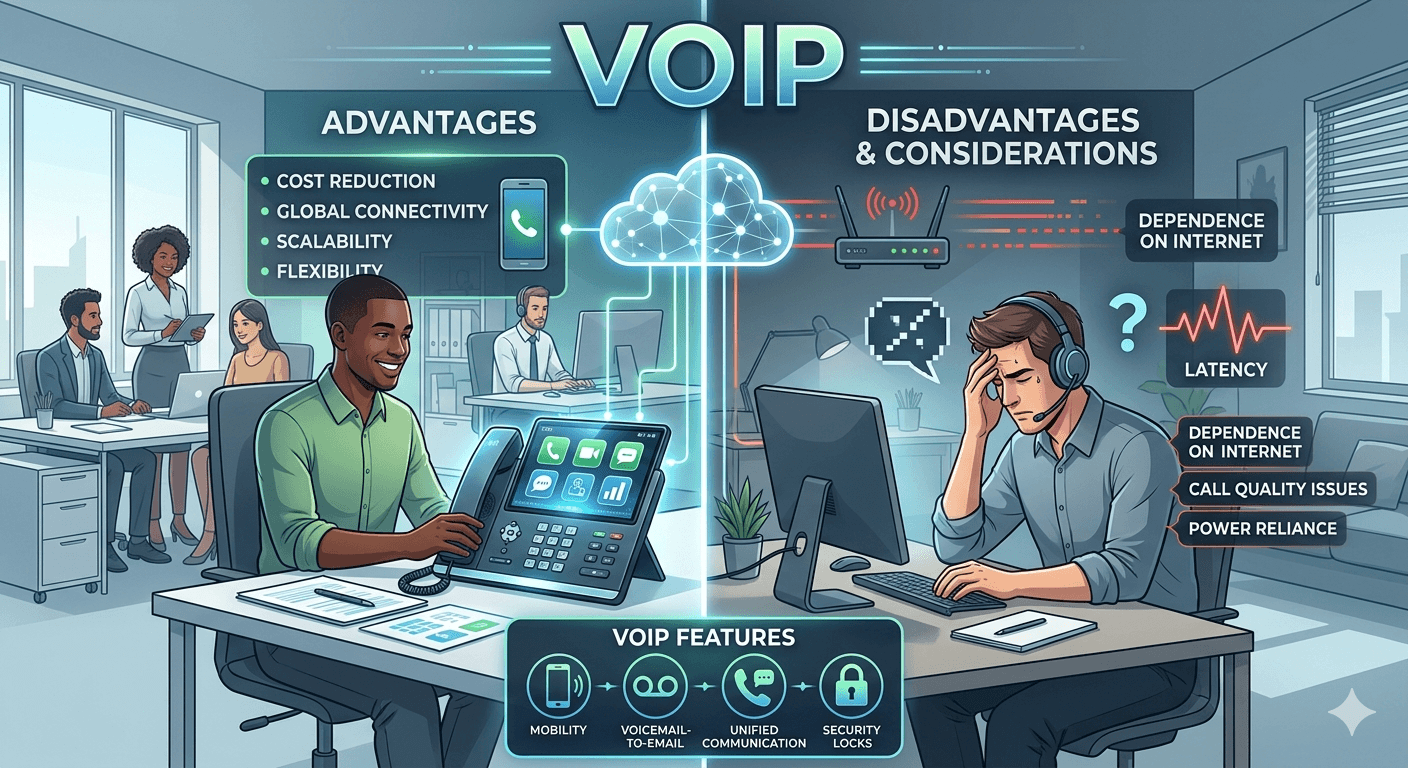
The Primary VoIP Advantages for Modern Enterprises
When discussing what are the advantages of voip, the conversation usually starts with cost. However, the benefits of voip extend far beyond the monthly bill. From enhanced mobility to advanced features that were once only available to large corporations, the advantages of using voip are numerous and impactful.
1. Significant Cost Reduction and Financial Efficiency
One of the most compelling voip advantages is the immediate reduction in operational costs. Traditional phone systems require expensive hardware installations, maintenance contracts, and high per-minute rates for long-distance calls. In contrast, VoIP typically operates on a subscription-based model with flat monthly fees. Because the system uses the internet, long-distance and international calls are significantly cheaper—often included in the base price.
For organizations looking at the benefits of voip for small business, the savings on initial capital expenditure are a game-changer. There is no need to purchase a physical PBX (Private Branch Exchange) system. Instead, the service provider hosts the infrastructure in the cloud. This shift from CapEx to OpEx allows small businesses to allocate their budget toward growth rather than maintaining legacy hardware.
2. Unmatched Scalability and Flexibility
The advantages of voip for business include the ability to scale your communication system at the click of a button. In a traditional environment, adding a new employee meant calling a technician to run new wires and install a physical jack. With VoIP, adding a new user is as simple as creating an account in an online dashboard. This flexibility is a primary answer to why switch to voip for rapidly growing companies.
Whether you need to add ten lines or five hundred, the voip network accommodates your growth without requiring major infrastructure overhauls. This scalability ensures that your communication tools grow alongside your business, preventing the bottlenecks often associated with physical hardware limits.
3. Mobility and Remote Work Integration
The rise of the global workforce has made voip benefits even more apparent. Because VoIP is tied to a user account rather than a physical location, employees can take their business extension with them wherever they go. By using a mobile app or a laptop-based softphone, a team member in London can answer a call directed to their New York office extension seamlessly.
This portability is one of the most significant advantages of voice over internet protocol. It empowers a “work from anywhere” culture, ensuring that customer service and internal collaboration remain uninterrupted, regardless of geographical barriers. When considering why use voip for business, the ability to maintain a professional presence from any location is a top priority.
Advanced VoIP Features and Benefits
A major part of the voip features and benefits package is the access to sophisticated tools that enhance productivity. Traditional phones are limited to basic functions like call waiting and voicemail. VoIP, however, integrates with your digital workflow.
- Auto-Attendants: Virtual receptionists that direct callers to the correct department without human intervention.
- Unified Communications: Integration of voice, video conferencing, SMS, and instant messaging in one platform.
- CRM Integration: The ability to link your phone system with software like Salesforce or HubSpot, allowing call logs and customer data to be updated automatically.
- Voicemail-to-Email: Transcribing voice messages into text and sending them directly to your inbox for quicker responses.
- Call Analytics: Detailed reporting on call volume, duration, and peak times to help optimize staffing and sales strategies.
These voip benefits for business allow smaller entities to project the professional image of a much larger corporation. When you analyze what are the benefits of voip, the ability to streamline workflows through automation and integration is consistently a highlight.
Understanding the Potential VoIP Disadvantages
Despite the overwhelming praise for the technology, a balanced view requires looking at voip disadvantages. No technology is perfect, and there are specific scenarios where VoIP might present challenges. Knowing these voip drawbacks allows businesses to prepare and implement solutions to mitigate risks.
1. Dependence on a Stable Internet Connection
The most obvious of the 5 disadvantages of voip is its reliance on high-speed internet. If your internet goes down, your phone system goes down. Unlike traditional landlines that carry their own low-voltage power, VoIP is entirely dependent on your data connection. If you are in an area with frequent internet outages or slow bandwidth, the disadvantages of voip will become very apparent very quickly.
To counter this, many businesses invest in redundant internet connections or use SD-WAN technology to ensure that if one provider fails, the system automatically switches to a backup. Without a robust voip network and reliable ISP, the quality of your communication will suffer.
2. Latency and Jitter Issues
Because voice data is broken into packets, these packets must travel across the internet and arrive in the correct order to be reassembled into clear sound. If there is congestion on the network, you might experience latency (delay) or jitter (packets arriving out of order). This results in “choppy” audio or echoed conversations. This is one of the technical disadvantages of using voip that can frustrate users and customers alike.
Ensuring high call quality requires a properly configured router and sufficient bandwidth. Most modern voip advantages and disadvantages discussions emphasize the importance of Quality of Service (QoS) settings on office routers to prioritize voice traffic over less urgent data like large file downloads or video streaming.
3. Emergency Service Limitations (E911)
A critical concern in the list of voip disadvantages is how the system handles emergency calls. Traditional phones are linked to a specific physical address, making it easy for emergency services to locate a caller. Since VoIP is portable and IP-based, a user could be anywhere. This makes it difficult for 911 operators to automatically track the location of the caller.
While providers have developed E911 (Enhanced 911) services where users can register their location, it is not as foolproof as a hardwired landline. This is a significant factor when evaluating the pros and cons of voip for organizations that prioritize strict safety compliance and physical location tracking.
4. Security Vulnerabilities
Like any internet-connected device, VoIP systems are susceptible to cyber threats. This is a major part of the advantages and disadvantages of voip debate. While traditional lines can be tapped, VoIP systems face risks like phishing, “vishing” (voice phishing), and unauthorized access to the network. Hackers might attempt to hijack your system to make fraudulent long-distance calls at your expense.
However, these voip drawbacks can be managed with strong security protocols. Using encrypted connections (SRTP), implementing multi-factor authentication, and choosing a reputable provider like Nextiva voip service can significantly reduce these risks. Security should always be a primary consideration when establishing a voip network.
VoIP Features Comparison: What to Look For
When weighing the voip advantages and disadvantages, it is helpful to see how specific features compare across different service tiers. Not all VoIP providers offer the same tools, and understanding the voip features comparison can help you choose the right partner for your communication needs.
The benefit of voip is that you can usually start with a basic tier and upgrade as your requirements become more complex. This modular approach is part of the long-term advantages of using voip for businesses that are currently in a growth phase.
Why Use VoIP for Business Growth?
If you are still asking why use voip, consider the competitive edge it provides. In a marketplace where customer experience is the primary differentiator, having a communication system that is always available, provides data insights, and integrates with your customer records is invaluable. The benefits of voip for business include the ability to respond to customers faster and more effectively.
Furthermore, the benefits of using voip extend to employee satisfaction. Providing tools that work seamlessly from home or the office reduces friction and improves productivity. When employees have the right tools, they perform better. The advantages of voice over internet protocol are not just about the technology itself, but about the human connections it facilitates.
For small businesses specifically, the benefits of voip for small businesses often center on professional credibility. Features like “Follow Me” (which rings multiple devices simultaneously) ensure that you never miss a client call, regardless of where you are. This level of responsiveness is vital for building trust with new clients.
How to Successfully Implement a VoIP System
To maximize the voip advantages and minimize the voip disadvantages, a strategic implementation plan is required. Simply signing up for a service is not enough; you must ensure your infrastructure is prepared for the transition.
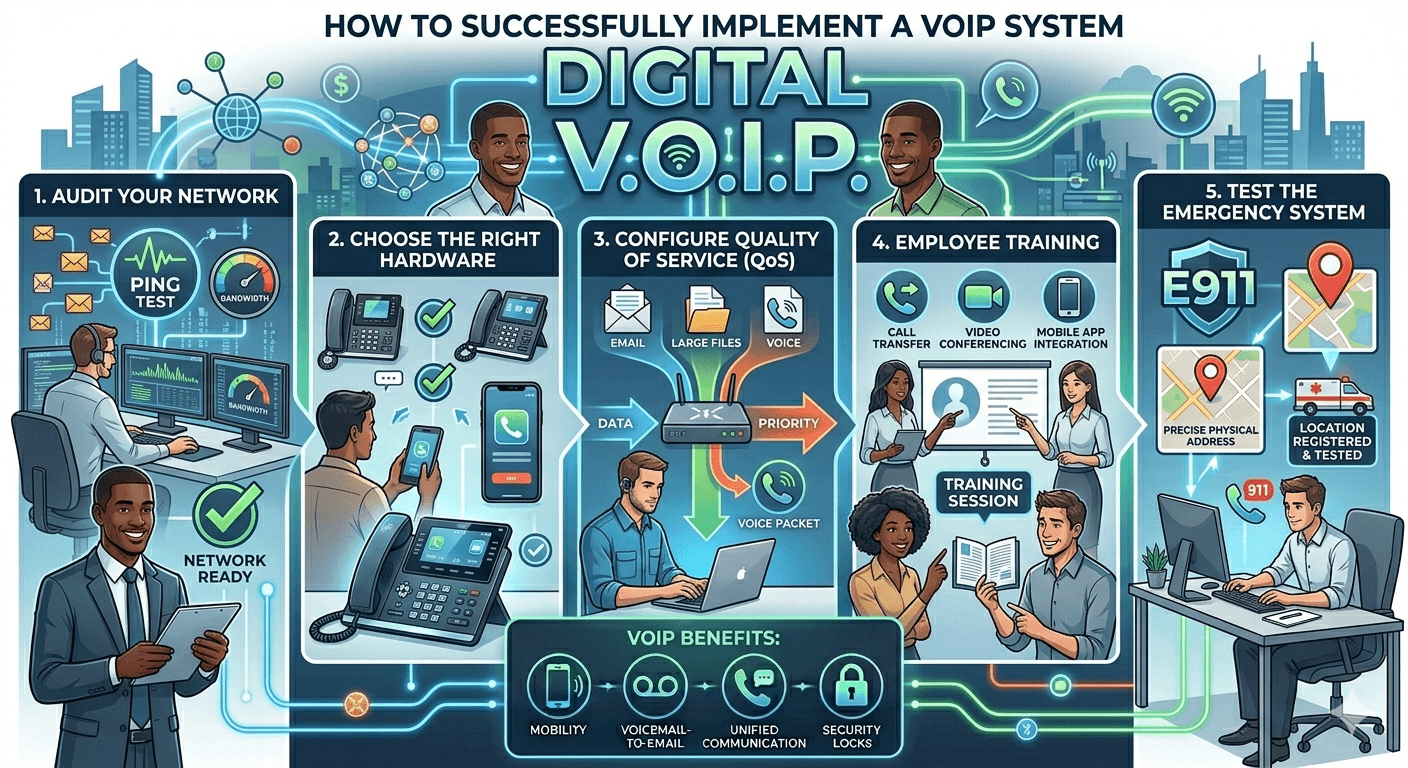
- Audit Your Network: Before switching, check your internet bandwidth and stability. A “ping test” can help determine if your network can handle the low-latency requirements of voice traffic.
- Choose the Right Hardware: While you can use softphones, many employees prefer physical handsets. Ensure your desk phones are compatible with your chosen provider.
- Configure Quality of Service (QoS): This is a critical step in the voip network setup. By prioritizing voice data at the router level, you ensure that high-volume data transfers don’t interfere with call quality.
- Employee Training: Ensure your team knows how to use the advanced voip features and benefits, such as call transferring, video conferencing, and mobile app integration.
- Test the Emergency System: Make sure every user has correctly registered their location for E911 services.
Read More: What is VoIP Adapter: VoIP to POTS Converter Guide
Final Thoughts on VoIP Advantages and Disadvantages
Navigating the world of modern communication requires a clear understanding of the pros and cons of voip. While the reliance on internet connectivity and the technical nuances of latency represent real challenges, the overwhelming voip advantages—including cost savings, massive scalability, and a rich feature set—make it the superior choice for most organizations.
The transition from traditional telephony to an internet phone for business is not just a trend; it is a fundamental shift toward a more connected and efficient world. By carefully selecting a provider, securing your network, and training your staff, you can leverage the benefits of voip to drive your business forward. In the end, the question isn’t just “what is voip phone technology?” but rather how that technology can be harnessed to bridge the gap between your brand and your customers.
Frequently Asked Questions (FAQs)
What are the advantages and disadvantages of using VoIP?
The primary advantages of VoIP include significant cost savings on long-distance and monthly fees, the ability to scale up or down easily, and the mobility to use your business number from anywhere. On the other hand, the disadvantages include a total reliance on a stable internet connection, potential issues with call quality (like jitter or latency) if the network is congested, and the requirement for a power source to keep internet hardware running during outages.
Why is everyone switching to VoIP?
Most businesses and individuals are switching to VoIP because it offers far more features at a lower cost than traditional landlines. VoIP allows for unified communications, meaning you can handle calls, video meetings, and texts all in one place. Additionally, as telecommunications companies phase out older analog infrastructure, VoIP has become the modern standard for reliability and global connectivity.
Do VoIP phones have a monthly fee?
Yes, most VoIP services operate on a monthly subscription model. This fee usually covers the hosting of your phone system in the cloud, a certain number of minutes (often unlimited for domestic calls), and access to features like auto-attendants and mobile apps. While there is a monthly cost, it is typically much lower than the combined cost of a traditional business phone line and its associated hardware maintenance.
What are the risks of VoIP?
The main risks associated with VoIP are security-related, such as potential hacking, eavesdropping, or service interruptions due to cyberattacks like DDoS (Distributed Denial of Service). There is also the risk of not being able to make emergency calls if your internet or power goes out. However, these risks can be largely mitigated by using encrypted connections, robust firewalls, and backup power supplies (UPS).
Can I keep my current phone number if I switch to VoIP?
In most cases, yes. The process is known as “porting.” Most VoIP providers allow you to transfer your existing landline or mobile numbers over to their service. This ensures that you don’t lose your established business identity when making the switch to a more modern communication platform.