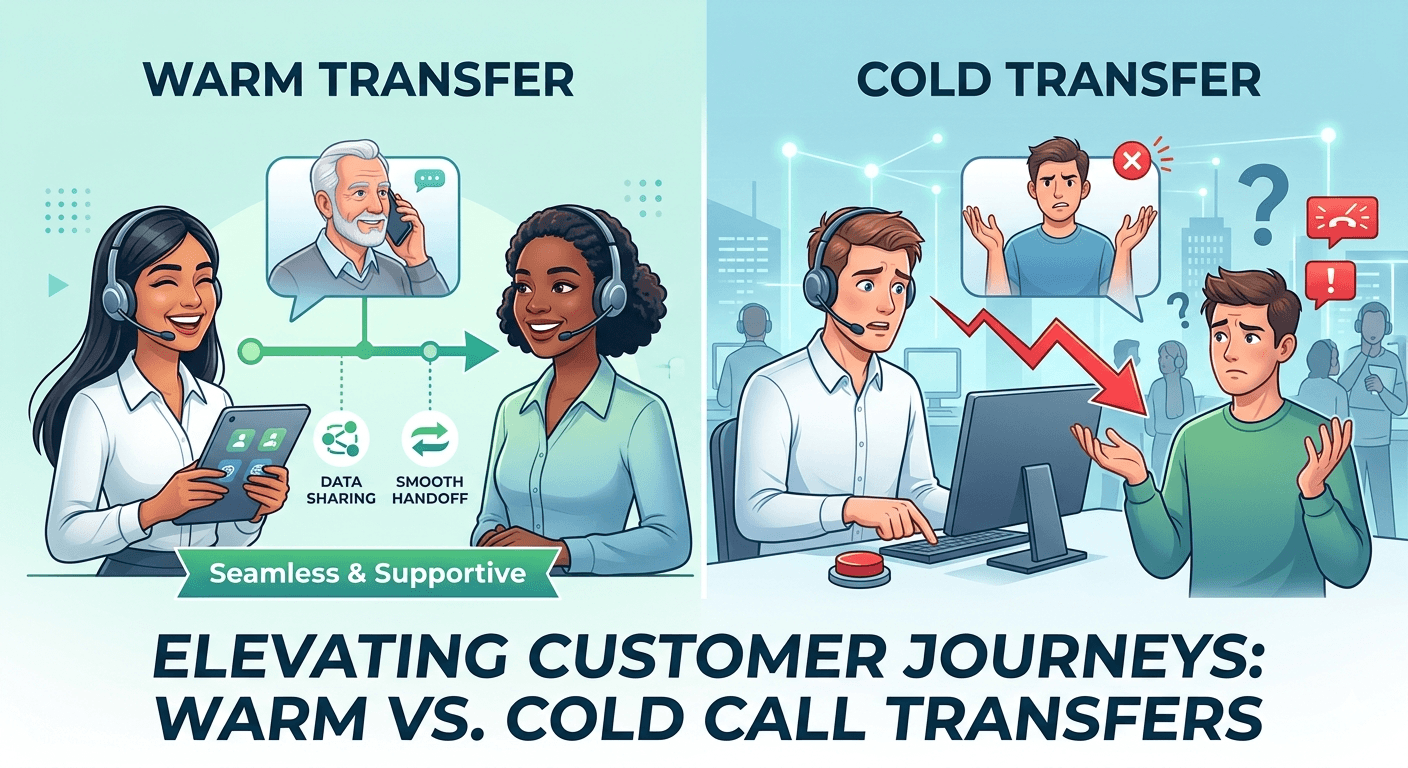
The warm transfer meaning refers to a collaborative approach where the initial agent speaks with the receiving party before the caller is connected. This process ensures that all relevant data is shared, preventing the customer from having to repeat their situation. On the other hand, the cold transfer represents a more direct route where the call is immediately moved to a new queue or agent without an introductory conversation. In the ongoing debate of warm transfer vs cold transfer, both strategies have their place in a high-functioning communication ecosystem, but they serve different purposes depending on the complexity of the inquiry and the desired speed of resolution.
Call management stands as a cornerstone of modern customer service, determining how efficiently a business handles its daily influx of inquiries. At the heart of this process is the call transfer, a technical maneuver that moves a live conversation from one agent or department to another. While the action seems simple on the surface, the methodology used can significantly alter the customer journey. Businesses generally rely on two distinct methods to handle these transitions, each offering different levels of engagement and operational efficiency. Choosing between these methods requires a deep understanding of organizational goals and customer expectations.
In a professional setting, the choice of movement between departments reflects the brand identity of a company. High-touch industries often prefer a more guided experience to maintain a sense of continuity and care. Conversely, high-volume service centers might lean toward faster methods to keep wait times low. Understanding the technical and psychological nuances of these transfers allows managers to optimize their workflows, improve agent performance, and ultimately drive higher levels of satisfaction across the customer base.
Warm Transfer Meaning and Operational Benefits
The warm transfer meaning encompasses a high-touch communication strategy designed to provide a seamless transition for callers. In this scenario, when an agent determines that a caller needs specialized assistance, they do not immediately hand off the line. Instead, they place the caller on a brief hold, dial the intended department or specialist, and provide a summary of the ongoing interaction. This summary typically includes the name of the caller, the reason for the inquiry, and any steps already taken to resolve the issue. Once the receiving agent is fully briefed, the original agent brings the caller back onto the line, introduces the new party, and then exits the conversation.
This method is highly valued in environments like a warm transfer call center because it prioritizes the human element of service by ensuring the next representative is prepared, the business eliminates the common frustration of information loss. From a technical standpoint, this requires a phone system that supports multi-party conferencing and internal messaging. The primary goal is to make the customer feel valued and heard, rather than feeling like a piece of data being shuffled through a machine. This approach is particularly effective for complex troubleshooting, high-stakes sales leads, or sensitive customer support issues where context is everything.
Implementing this strategy often leads to a noticeable improvement in First Call Resolution (FCR) rates. When the second agent receives a detailed brief, they can begin the resolution process immediately upon greeting the caller. This reduces the total time the customer spends explaining their problem, which is a major factor in overall satisfaction scores. While this method may increase the average handle time for the initial agent, the long-term benefits of a resolved issue and a happy customer far outweigh the extra minutes spent on the handoff.

Examining the Cold Transfer Process in High Volume Environments
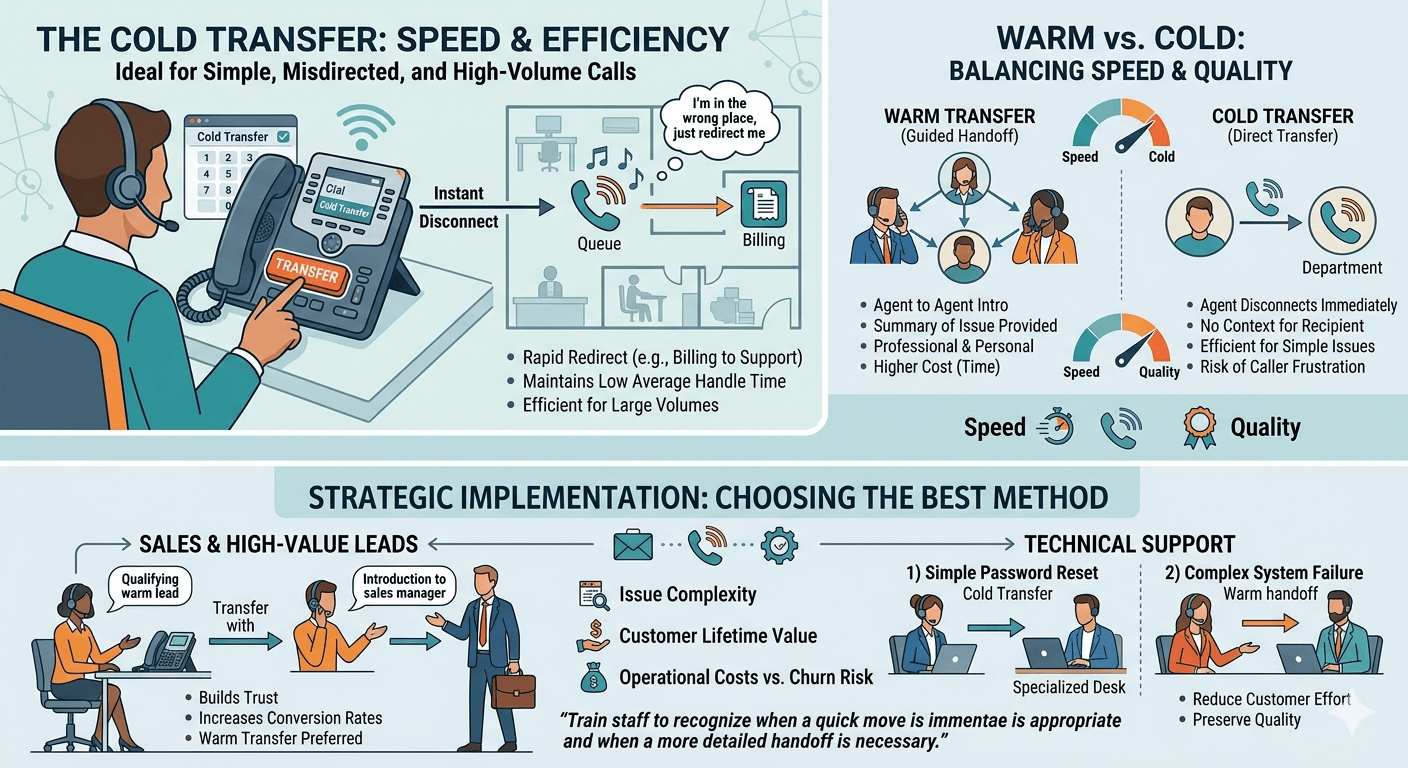
A cold transfer occurs when an agent sends a call to another person or department without first speaking to the recipient. This is often referred to as a blind transfer because the receiving party has no prior knowledge of who is calling or why. The process is remarkably fast; the agent simply inputs the extension or selects the department and hits the transfer button, immediately disconnecting themselves from the line. The caller is then placed back into a ringing state or a queue until the next person picks up.
While often viewed as less personal, the cold transfer is a highly efficient tool for certain types of interactions. For example, if a caller reaches the wrong department by mistake, such as calling billing when they meant to reach technical support, a quick transition is often the most logical step. In these cases, the caller usually understands that they are in the wrong place and expects a quick redirect rather than a lengthy introduction. It is also beneficial in large organizations where agents handle hundreds of calls an hour and the inquiries are simple enough that no context is required for the next person to assist.
The efficiency of this method allows call centers to maintain lower average handle times and handle a higher volume of calls with fewer resources. However, it places a higher burden on the caller, who must re-explain their situation to the new representative. If a caller is transferred multiple times using this method, it can lead to significant frustration. Therefore, businesses must train their staff to recognize when a quick move is appropriate and when a more detailed handoff is necessary to preserve the quality of the customer experience.
Primary Differences Found in Warm vs Cold Transfer Strategies
The debate of warm vs cold transfer often centers on the balance between speed and quality. The most significant difference lies in the customer experience. In a warm scenario, the customer experiences a guided transition that feels like a professional handoff. They are introduced to the new agent, and they hear a summary of their problem, which confirms that the first agent was listening. In a cold scenario, the customer is suddenly moved to a new line, often encountering a new set of hold music or a different ringing tone, which can feel jarring and impersonal.
From an agent’s perspective, the two methods require different skill sets and time commitments. A warm transition requires the agent to be proficient in internal communication and brief reporting. They must be able to summarize complex issues quickly and accurately to their colleagues. A cold transition requires less communication skill but demands a high level of accuracy in knowing exactly where to send the call. Sending a cold call to the wrong department is much more damaging than a warm one, as the caller will have to start the entire process over again without any support.
Technical requirements also differ between the two. A standard cold transfer vs warm transfer analysis shows that warm transfers require more robust telephony features, such as the ability to hold one line while active on another and then merge all three. Some legacy systems may struggle with these complex maneuvers, making cold transfers the default. However, modern cloud-based VOIP solutions have made the warm process much simpler, allowing agents to see the status of their colleagues before even attempting to move the call.
Choosing the Best Call Transfer Method for Business Success
Deciding which method to implement depends heavily on the specific needs of the business and the nature of the customer inquiries. For sales-driven organizations, warm transfer leads are often the preferred choice. In this context, a front-end agent or a lead qualifier gathers initial information before handing the prospect over to a senior sales executive. This introduction builds trust and ensures the executive has all the data needed to close the deal. The professional atmosphere created by a warm handoff can significantly increase conversion rates by making the prospect feel like a priority.
In contrast, technical support departments might use a mix of both. If a customer needs a simple password reset, a cold transfer to the automated system or a specialized desk is efficient. But if the customer is reporting a complex system failure that they have already spent twenty minutes describing, a warm transition is essential. Businesses should establish clear guidelines on when to use each method based on the “tier” of the issue or the “value” of the customer. High-value clients should almost always receive a warm handoff to maintain the relationship.
Operational costs also play a role in this decision. Because warm transfers take more time, they technically cost the company more in terms of agent labor. However, this must be weighed against the cost of customer churn. According to a study by the Harvard Business Review, one of the top reasons customers leave a brand is the effort required to get an issue resolved. Reducing that effort through better call management can lead to higher lifetime value, which far outweighs the few extra cents spent on a longer call duration.
Strategic Impact of Cold vs Warm Transfer on Customer Retention
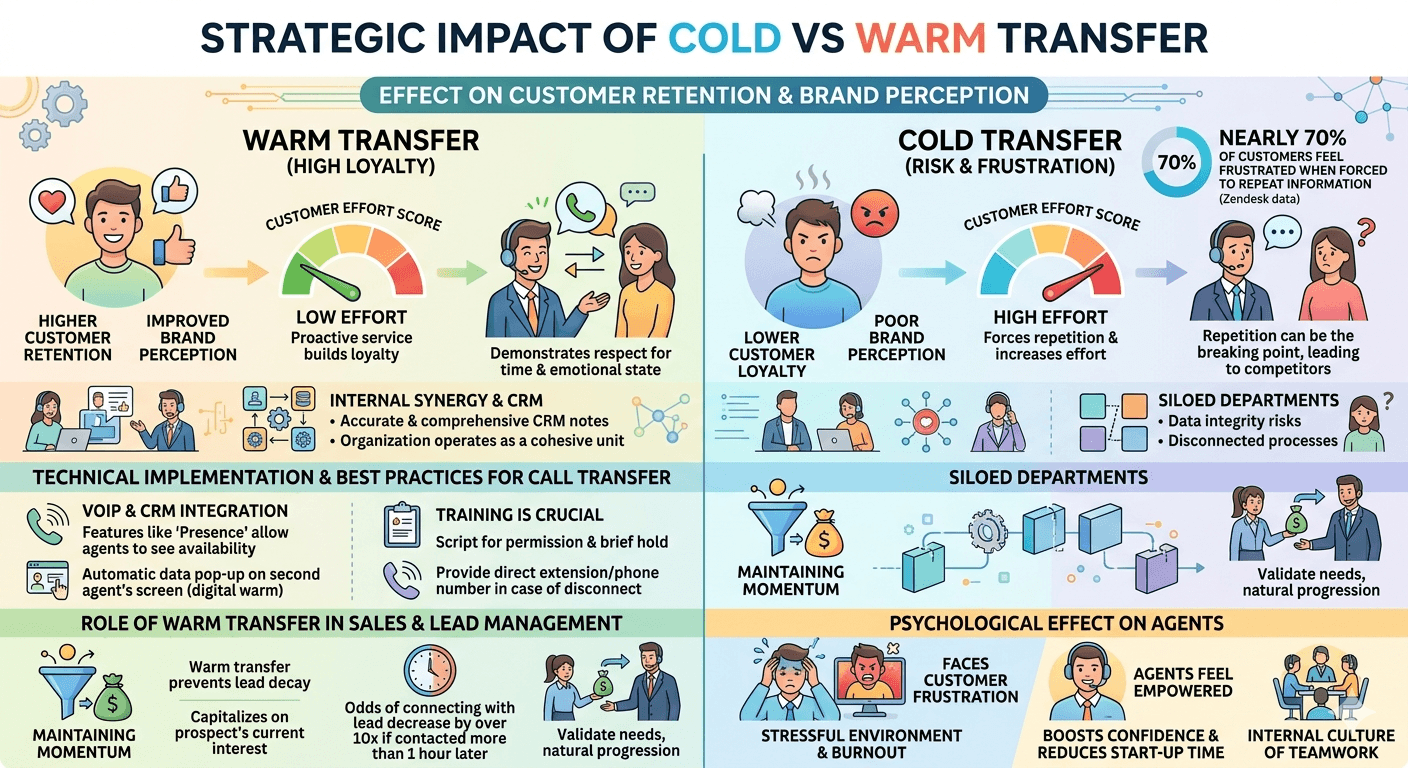
The choice of cold vs warm transfer has a direct impact on customer loyalty and brand perception. Customer retention is often tied to the “Customer Effort Score,” a metric that measures how hard a customer has to work to resolve their problem. When a business utilizes warm transitions, it takes the burden of information transfer off the customer and places it on the organization. This proactive service model is highly effective at building long-term loyalty because it demonstrates respect for the customer’s time and emotional state.
Research from Zendesk indicates that nearly 70% of customers feel frustrated when they are transferred to another department and have to repeat their information.
This repetition is a hallmark of the cold transfer. When a customer is already upset about a product failure or a billing error, being forced to explain the situation for a second or third time can be the breaking point that leads them to a competitor. By implementing a warm transfer strategy, companies can mitigate this frustration and turn a potentially negative experience into a positive demonstration of professional coordination.
Furthermore, the data collected during a warm handoff can be integrated into the CRM more effectively. As the two agents speak, they can ensure that the notes being entered into the system are accurate and comprehensive. This internal synergy ensures that the business maintains a high standard of data integrity. When the organization operates as a cohesive unit rather than a collection of siloed departments, the customer feels a sense of security and trust that is difficult to achieve through automated or disconnected processes.
Technical Implementation and Best Practices for a Call Transfer
To successfully execute a call transfer, businesses must equip their teams with the right tools and training. Modern VOIP systems are designed to make these transitions seamless. Features like “Presence” allow agents to see who is available, busy, or away before they even attempt a transfer. This prevents the “dead-end” transfer where a caller is moved to a person who isn’t even at their desk. Integrating the phone system with a CRM also allows the data gathered by the first agent to pop up on the second agent’s screen automatically, which can sometimes provide a “digital” warm transfer experience even if the agents don’t speak.
Training is equally important. Agents should be taught a specific script for warm transitions. This usually involves asking the caller for permission to place them on a brief hold, speaking to the recipient to provide the context, and then performing the introduction. For cold transfers, agents should be trained to provide the caller with the direct extension or phone number of the department they are being moved to. This acts as a safety net; if the call is disconnected during the move, the customer has the information they need to call back directly without going through the main menu again.
-
Identify the caller’s needs early in the conversation to determine if a transfer is necessary.
-
Check the availability of the receiving agent using the internal presence indicators.
-
For a warm handoff, summarize the caller’s name, account number, and specific problem.
-
Introduce the caller to the new agent by name to create a personal connection.
-
Wait for the new agent to acknowledge the information before disconnecting.
-
For a cold handoff, inform the customer exactly where they are going and why.
-
Provide the direct dial number in case the connection is lost.
Analyzing the Role of Warm Transfer in Sales and Lead Management
In the world of sales, the warm transfer is a powerful tool for maintaining momentum. When a lead is generated, the initial contact is often with a junior representative or a lead qualification team. If that lead is “hot,” meaning they are ready to buy, the goal is to get them to a senior salesperson as quickly as possible without losing the rapport that has been built. A warm transfer meaning in this context is the bridge that keeps the prospect engaged while the specialized closer enters the conversation.
This method prevents the “lead decay” that happens when a prospect is told they will receive a callback later. In the time it takes for a callback to occur, the prospect may lose interest or be contacted by a competitor. By using a warm handoff, the business capitalizes on the prospect’s current interest. The initial agent can say, “I have our specialist, Sarah, on the line who handles exactly the type of equipment you are looking for. I’ve already told her about your requirements.” This validates the prospect’s needs and makes the transition to the sales pitch feel like a natural progression rather than a restart.
Furthermore, statistics show that immediate transfers significantly increase the likelihood of a sale. According to research on lead response times, the odds of connecting with a lead decrease by over 10 times if the contact happens more than an hour after the initial inquiry. By using warm transfers to move qualified leads to closers in real-time, organizations can maximize their marketing spend and improve the overall efficiency of their sales funnel.
The Psychological Effect of Call Transfer on the Agent Experience
While much of the focus is on the customer, the type of call transfer used also affects the employees. Agents who are forced to use cold transfers for complex issues often face the brunt of customer frustration. When a customer has been moved blindly and has to repeat themselves, they are often angry by the time they reach the second agent. This creates a stressful work environment and can lead to agent burnout. Providing the tools and time for warm transfers can actually improve employee morale by allowing them to be more helpful and professional.
On the flip side, the receiving agent in a warm transfer scenario feels more empowered. They enter the conversation with the information they need to succeed, which boosts their confidence and reduces their “start-up” time on each call. This collaborative environment fosters a sense of teamwork between departments. Instead of feeling like they are “dumping” calls on each other, agents feel like they are working together to solve problems. This internal culture of support eventually translates into a better external experience for the customer.
-
Standardize the information shared during the “warm” phase to include account ID and issue summary.
-
Use internal chat tools to supplement the voice introduction if the system allows.
-
Monitor the “transfer success rate” as a KPI for agent performance.
-
Encourage agents to stay on the line until the customer and the new agent have successfully engaged.
-
Provide clear guidelines on which departments accept cold moves and which require warm introductions.
Comparing Cold Transfer vs Warm Transfer Technical Workflows
From a technical architecture standpoint, the cold transfer vs warm transfer distinction involves different signaling protocols within a PBX or VOIP system. In a cold transfer, the SIP (Session Initiation Protocol) message tells the server to move the media stream directly to a new endpoint. The originating agent’s session is terminated as soon as the command is sent. This is technically simple and puts very little strain on the network or the hardware, which is why it was the standard for many decades in the early days of telephony.
A warm transfer is more complex. It involves creating a second “leg” of the call while the first leg remains active but on hold. The agent manages two separate media streams simultaneously. When the agent decides to complete the move, the system must bridge the two legs and then remove the agent’s endpoint from the bridge without dropping the remaining two. Modern cloud platforms handle this via sophisticated back-end orchestration, but it still requires more bandwidth and processing power than a simple redirect.
Understanding these technicalities is important for IT managers when selecting a communication platform. A system that makes warm transfers difficult or clunky will inevitably lead to agents taking the “easy” route and performing cold moves, even when a warm one is warranted. The user interface must be intuitive, allowing for “one-click” toggling between callers and easy conferencing. When the technology supports the desired behavior, the staff is much more likely to follow the best practices laid out by management.
Fact-Based Research on Transfer Methods and Customer Satisfaction
Research consistently highlights the importance of the human touch in digital-first communication environments.
A study by the Call Centre Management Association (CCMA) found that “being passed between agents” is one of the top three frustrations for UK consumers.
The study noted that the frustration isn’t necessarily the transfer itself, but the loss of context that often accompanies it. This directly supports the implementation of warm transfers as a primary strategy for increasing customer satisfaction (CSAT) scores.
Another significant piece of data comes from the “State of Service” report by Salesforce, which indicates that 80% of customers expect a consistent experience across different departments. However, 68% say it feels like they are communicating with separate departments rather than one company. The cold transfer contributes heavily to this “siloed” feeling. By contrast, organizations that prioritize warm transfers are more likely to be perceived as a single, cohesive entity that is focused on the customer’s needs rather than its own internal convenience.
-
Fact 1: 70% of customers report frustration when repeating information to multiple agents during a single service interaction.
-
Fact 2: Organizations using warm transfers for complex issues see a 15% higher First Call Resolution (FCR) rate compared to those using cold methods.
Managing the Call Transfer in Niche Industries: Healthcare and Legal
In high-stakes industries like healthcare or legal services, the warm transfer is often the only acceptable method. In a healthcare setting, a patient may be calling in a state of distress or sharing sensitive medical information. A cold transfer in this situation is not just unprofessional; it can be perceived as negligent. A nurse or administrative assistant should always use a warm handoff to a doctor or specialist to ensure that the patient feels cared for and that critical details are not missed.
Similarly, in legal services, the details of a case are often complex and confidential. When a potential client calls a law firm, they are often looking for reassurance as much as legal advice. A warm transfer from the intake specialist to the attorney allows the specialist to relay the basic facts of the case, allowing the attorney to enter the conversation with a position of authority and preparation. This builds immediate trust, which is vital in a profession where the relationship between the client and the firm is based on confidence.
In these sectors, the “warm transfer meaning” extends beyond just a business process; it becomes a part of the professional ethics of the organization. It ensures that the chain of information remains unbroken and that the client or patient is never left “hanging” in a queue without a clear understanding of who they are talking to next. For these businesses, the extra time invested in the transfer is a direct investment in the professional reputation of the firm or practice.
Read More: Is WIFI Calling Free? A Deep Dive into wifi calling Technology
Final Thought
The choice between a warm vs cold transfer is more than a technical decision; it is a strategic one that defines the quality of a business’s customer service. While the cold transfer offers speed and efficiency for simple redirects, the warm transfer provides the context, professionalism, and care required for complex and high-value interactions. By understanding the nuances of cold transfer vs warm transfer, businesses can tailor their communication strategies to meet the specific needs of their callers. Ultimately, a balanced approach that prioritizes the customer’s experience while maintaining operational efficiency will lead to higher satisfaction, better retention, and a more cohesive internal culture. Investing in the right technology and training to support these transfers is a fundamental step toward building a world-class service organization.
Frequently Asked Questions
-
What is warm transfer vs cold transfer?
A warm transfer involves the agent speaking to the person receiving the call before handing it over, ensuring all information is shared. A cold transfer is a direct move where the agent disconnects immediately, leaving the caller to explain their situation again to the next person.
-
What is a warm transfer vs a cold transfer in terms of customer experience?
A warm transfer creates a seamless, professional experience where the customer feels supported and understood. A cold transfer is faster but can be frustrating for the customer because it often requires them to repeat information and wait in a new queue without an introduction.
-
Is a warm transfer better than a cold transfer?
In most cases involving complex issues or high-value customers, a warm transfer is superior because it improves satisfaction and resolution rates. However, a cold transfer is better for very simple redirects where speed is the primary concern for both the agent and the caller.
-
Are attended transfers, soft transfers, and warm transfers the same thing?
Yes, these terms are often used interchangeably in the telecommunications industry. They all refer to the process of an agent staying on the line to introduce the caller to the next representative before completing the transfer.
-
When should a business use a cold transfer?
A business should use a cold transfer for routine inquiries, such as moving a caller to a general billing department, an automated system, or a directory. It is most effective when the caller is in the wrong department and just needs a quick route to the correct one without needing to share a detailed history.