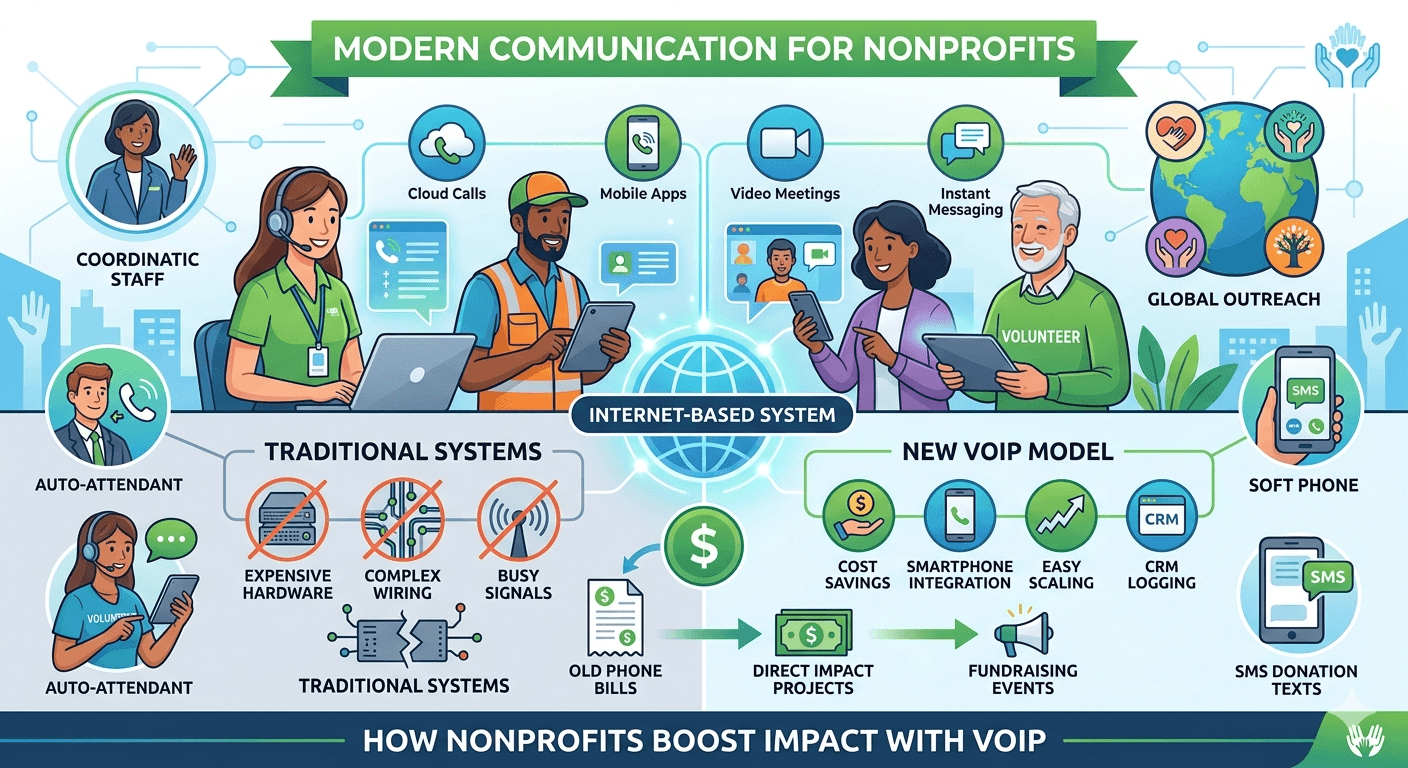
VoIP for nonprofits provides a modern solution for organizations looking to reduce overhead while maximizing community impact. By using the internet to make and receive calls, these organizations bypass the expensive hardware and maintenance associated with legacy landlines. This technology offers a wide range of features such as automated routing, video conferencing, and mobile integration, allowing staff to stay connected from any location. Implementing VoIP for nonprofits ensures that every dollar saved on telecommunications can be redirected toward core missions, fostering better donor relationships and improving operational efficiency across the entire charitable sector.
Why Are Nonprofits Ditching Their Traditional Phone Systems?
The transition from traditional landlines to digital solutions is driven by the need for more efficient resource allocation. Traditional systems are often rigid and expensive, making them a poor fit for the dynamic nature of modern charitable work. As organizations seek to modernize, they find that old-fashioned hardware simply cannot keep up with the demands of a mobile, tech-savvy workforce.
Many charities are realizing that maintaining on-premise PBX hardware requires specialized technicians and frequent parts replacements. These hidden costs quickly add up, draining funds that could be used for community outreach or program development. By moving to the cloud, organizations eliminate the physical constraints of wires and switchboards.
1. High operating costs
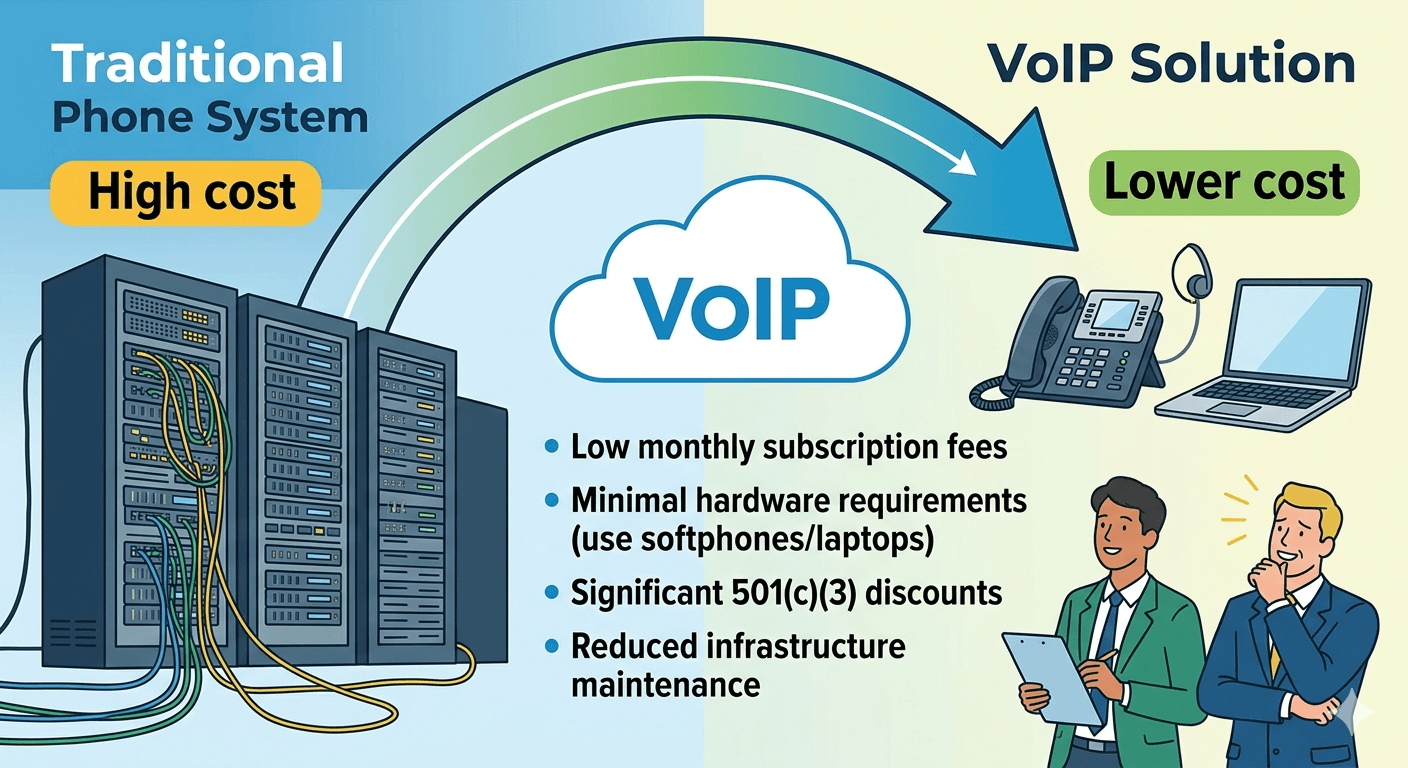
Traditional phone systems require significant upfront investments in hardware and ongoing maintenance fees. Nonprofits often struggle with high long-distance charges and per-minute rates that fluctuate based on call volume. This unpredictability makes it difficult to manage tight annual budgets effectively.
A study by Blueface indicates that organizations transitioning to cloud-based systems can save up to 30% on their monthly telecommunication bills. These savings come from:
Elimination of physical line rental fees.
Lower international and long-distance calling rates.
Reduced need for in-house IT support for phone repairs.
Bundled services that include voice, video, and messaging.
2. Lack of flexibility & scalability
Legacy systems are tied to a physical location, meaning staff must be at their desks to answer calls. When a nonprofit grows or adds seasonal volunteers, adding new lines to a traditional system is a slow and expensive process involving technicians and wiring.
VoIP allows for near-instant scalability, enabling administrators to add or remove users via a web dashboard. This flexibility is vital for organizations that experience seasonal peaks in activity, such as holiday food drives or annual fundraising galas. Staff can take their extensions with them on their smartphones, ensuring no important donor call is ever missed.
3. Limited call handling capacity
Old-school phone systems often have a limited number of lines, leading to busy signals during high-traffic periods. If multiple donors try to call at once during a televised fundraiser, a traditional system might crash or leave callers waiting indefinitely.
Digital systems handle high call volumes by utilizing the bandwidth of the internet. Features like virtual queues and automated attendants ensure that every caller is acknowledged and directed to the right department. This professional handling of calls helps build trust with supporters who expect a seamless interaction when they reach out to offer help.
4. Poor integration with CRMs
Traditional phones operate in a silo, meaning they do not communicate with the software used to track donor data. When a supporter calls, staff members have to manually search for their records, leading to slow response times and a disjointed experience.
Modern nonprofit phone system options integrate directly with popular Customer Relationship Management (CRM) tools. This integration allows for:
Automatic call logging within donor profiles.
Screen pops that display caller information before the agent picks up.
Click-to-dial functionality from within the database.
Better data accuracy for future fundraising campaigns.
5. Security concerns
Physical phone lines are susceptible to wiretapping and are often built on aging infrastructure that lacks modern encryption. For nonprofits handling sensitive donor information or working with vulnerable populations, this lack of security is a major liability.
Cloud-based providers prioritize security by implementing end-to-end encryption and multi-factor authentication. Regular software updates ensure that the system is protected against the latest cyber threats. This level of protection is essential for maintaining the confidentiality and integrity of organizational data.
6. Limited reporting & analytics
Without detailed data, it is nearly impossible for a nonprofit to measure the effectiveness of its communication strategy. Traditional systems rarely provide insights into call duration, peak hours, or geographic locations of callers.
VoIP service for non profit organizations offers robust analytics dashboards that track every interaction. Administrators can see which campaigns are driving the most calls and how long volunteers are spending on the phone. These insights allow for data-driven decisions that can significantly improve the return on investment for marketing efforts.
VoIP Benefits for Nonprofit Organizations
The shift to digital communication offers a plethora of advantages that extend far beyond simple cost savings. It empowers staff to work more effectively while providing a professional image to the public. By leveraging the power of the cloud, charities can compete with much larger entities in terms of technological sophistication.
Research from Statista highlights that the global VoIP market is expected to grow significantly as organizations prioritize digital transformation. This trend is especially beneficial for the social sector, where agility and efficiency are paramount. Transitioning to a non profit phone service allows for a level of connectivity that was previously out of reach for smaller groups.
1. Affordable communication
One of the most immediate benefits is the drastic reduction in monthly expenses. Most providers offer flat-rate monthly plans that include unlimited domestic calling, which provides the budget certainty that financial officers crave.
Low monthly subscription fees per user.
No need for expensive desk phones; software can be used on existing computers.
Significant discounts often available specifically for 501(c)(3) organizations.
Reduced infrastructure costs as the service provider handles all hardware maintenance.
2. Remote-ready phones
Modern nonprofit work often happens in the field, at event venues, or from the homes of volunteers. VoIP for nonprofits enables a truly mobile workforce by allowing users to access their professional phone system from any device with an internet connection.
This remote capability ensures that the organization remains operational even during emergencies or office closures. Whether a staff member is at a conference or working from a coffee shop, they can use the organization’s official caller ID. This maintains a professional appearance and keeps personal cell phone numbers private.
3. Improved donor engagement
Building strong relationships with donors is the lifeblood of any successful charity. VoIP systems help personalize these interactions by providing staff with the context they need before they even say hello.
When the phone system is connected to a donor database, the staff member can see the history of the caller’s contributions and previous conversations. This allows for a more personalized “thank you” and a more informed discussion about future goals. High-quality audio also ensures that every conversation is clear, reducing misunderstandings during important negotiations.
4. Added SMS messaging capabilities
In today’s digital age, many donors and volunteers prefer text messaging over voice calls. A nonprofit phone system often includes business SMS features, allowing the organization to send updates, reminders, and alerts via text.
Using a professional system for SMS is much better than having staff use their personal devices. It allows the organization to keep a record of all text communications and ensures that the branding remains consistent. Texting is an incredibly effective way to coordinate volunteer shifts or send quick links to donation pages.
5. Enhanced team collaboration
Internal communication is just as important as external outreach. VoIP platforms often include integrated tools for team chat, file sharing, and video conferencing. This all-in-one approach reduces the need for multiple expensive software subscriptions.
Instant messaging for quick internal queries.
Easy-to-launch video meetings for board presentations.
Shared presence indicators to see who is available or busy.
Centralized document sharing during active calls.
Top 10 Essential VoIP Features for Nonprofits
To get the most out of a digital phone system, organizations should look for specific features that cater to their unique workflows. Not all services are created equal, and some offer specialized tools that are particularly helpful for managing volunteers and large-scale donation drives.
Evaluating the telecommunications company get voip on plans & providers is a great way to compare these features side-by-side. The right feature set can transform a simple phone line into a comprehensive communication hub that drives organizational growth and community impact.
1. Auto-attendant
An auto-attendant acts as a virtual receptionist, greeting callers and providing them with a menu of options. This ensures that every call is answered professionally, even if the main office is closed or the staff is busy with other tasks.
For a charity, this might include options for “Press 1 to make a donation,” “Press 2 for volunteer opportunities,” or “Press 3 for media inquiries.” This self-service model saves time for administrative staff and helps callers get the information they need quickly. It also gives a smaller organization the appearance of being much larger and more established.
2. Call routing
Call routing ensures that incoming calls are directed to the right person based on predefined rules. This is particularly useful for organizations with multiple departments or those that utilize remote volunteers.
Time-based routing: Direct calls to an after-hours service or voicemail at night.
Skill-based routing: Send callers to the staff member most qualified to help them.
Simultaneous ring: Ring multiple phones at once so the first available person can answer.
Sequential ring: Try one staff member, then move to the next if they don’t pick up.
3. Conference calls & video meetings
Nonprofits frequently need to host board meetings, committee sessions, or community town halls. Built-in video conferencing eliminates the need for a separate Zoom or Teams subscription, saving the organization more money.
These tools allow for screen sharing, which is essential for presenting financial reports or project updates. High-definition video helps build a sense of community among remote team members and provides a more personal way to connect with major donors who may live in different cities.
4. Mobile & desktop softphones
A softphone is an application that allows a computer or smartphone to function as a full-featured desk phone. This is a game-changer for voip volunteerism, as it allows temporary help to use their own devices without the organization having to purchase new hardware.
Softphones provide access to the full company directory, call transfer capabilities, and voicemail management. This ensures that even when staff are out in the field, they have the same tools at their fingertips as they would in the office. It creates a seamless communication experience across all devices.
5. Voicemail to email
Checking voicemail can be a tedious task, especially if a staff member is constantly on the move. Voicemail to email automatically transcribes messages and sends them to the user’s inbox as an audio file or text.
This feature allows staff to quickly scan their messages during meetings or while traveling. It also makes it much easier to archive important messages or forward them to the appropriate colleague for follow-up. This ensures that donor requests are handled promptly, even if the intended recipient is busy.
6. SMS communications
Integrating SMS into the phone system allows for automated reminders and quick updates. For example, a church phone system can use SMS to send out weekly service reminders or emergency weather closures to the congregation.
Automated appointment reminders for service recipients.
Quick coordination of volunteer schedules.
Mass alerts for urgent fundraising needs.
Interactive text-to-donate links.
7. Interactive voice response (IVR)
IVR is a more advanced version of an auto-attendant that can interact with callers through voice or keypad inputs to gather information. This can be used to process simple donations or provide specific program information without human intervention.
An IVR system can be programmed to answer common questions about office hours, event locations, or tax-deductible status. This frees up human staff to focus on more complex tasks that require a personal touch. It is an excellent way to provide 24/7 service to the community.
8. Call analytics and reporting
Data-driven decision-making is essential for modern nonprofits. Analytics allow managers to see how many calls were missed, the average wait time for callers, and the peak times for incoming inquiries.
Tracking the success of specific marketing campaigns.
Monitoring volunteer performance and call quality.
Identifying staffing needs based on call volume trends.
Providing transparent reports for board members and grant providers.
9. CRM integration
Connecting the phone system to a CRM like Salesforce or HubSpot is one of the most powerful things a nonprofit can do. It ensures that every interaction is captured and that the entire team has a 360-degree view of the donor relationship.
This integration reduces manual data entry and helps prevent donors from being contacted multiple times by different people with the same request. It streamlines the workflow and ensures that the organization’s data remains clean and actionable. Many best cell phone plans for nonprofit organizations now include some level of software integration.
10. Call recording and transcription
Recording calls can be incredibly useful for training purposes or for keeping accurate records of verbal agreements. Transcriptions allow staff to quickly search through past conversations for specific details or keywords.
For nonprofits involved in advocacy or legal work, having a record of conversations can be a vital part of their documentation. It also allows managers to review how volunteers are handling donor objections, providing a valuable tool for coaching and improving communication skills.
Top-Rated VoIP Providers for Nonprofits
Choosing the right partner is just as important as choosing the right features. Several companies specialize in providing voip phone services for non-profit organizations, often offering significant discounts or specialized support teams.
When looking for an internet service for nonprofit organizations, it is helpful to look for providers that understand the unique challenges of the sector. The following providers are well-regarded for their reliability, feature sets, and commitment to social causes.
1. Nextiva
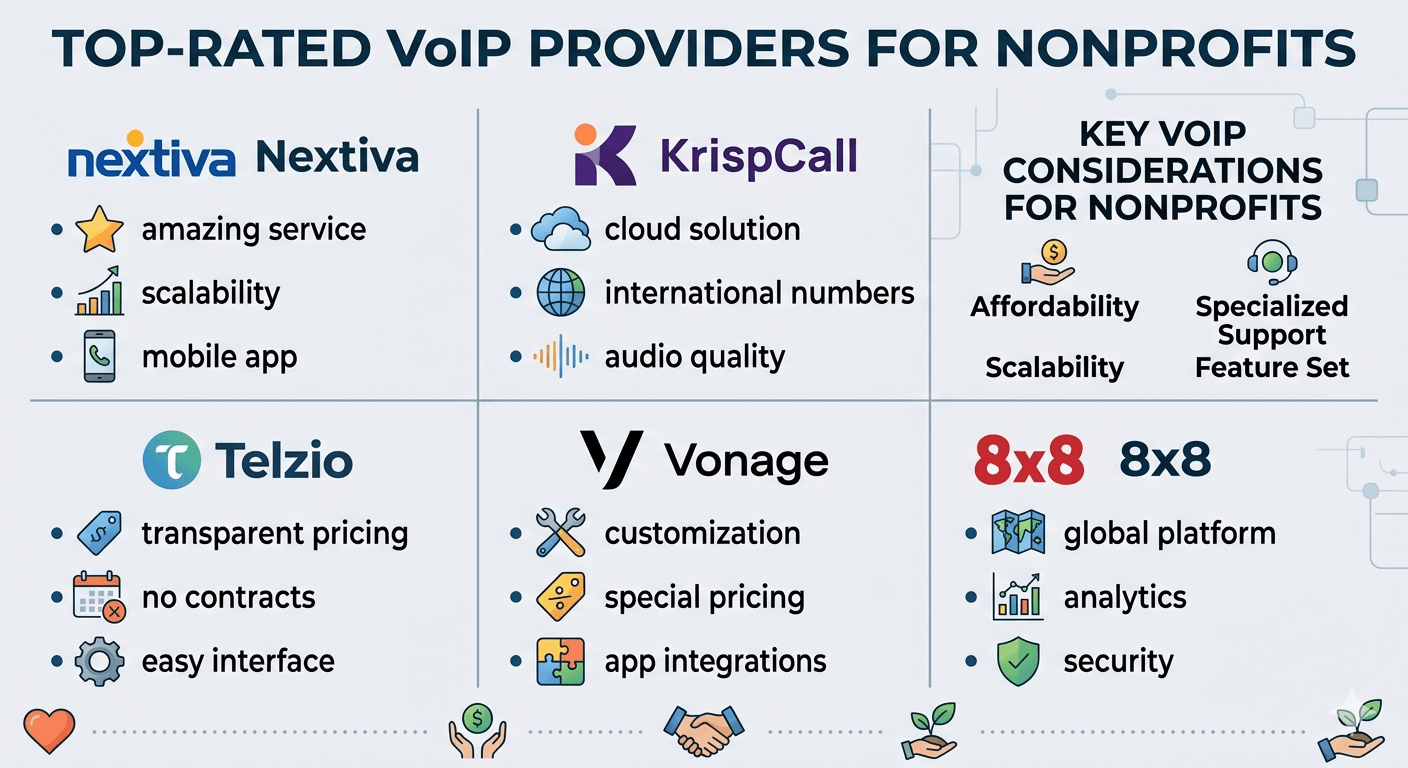
Nextiva is a leader in the unified communications space, offering a robust platform that combines voice, video, and messaging. They are known for their “Amazing Service” and have a dedicated team to help nonprofits set up and optimize their systems.
Their platform is highly scalable, making it a great choice for growing organizations. Nextiva also offers deep integrations with popular business tools, ensuring that your communication system works in harmony with your other software. Their mobile app is particularly well-reviewed for its ease of use.
2. KrispCall
KrispCall is an excellent option for organizations looking for a modern, cloud-based solution that is easy to set up. They offer a variety of international numbers, which is perfect for nonprofits that operate in multiple countries.
Their interface is intuitive, allowing administrators to manage users and settings without a background in IT. KrispCall also offers affordable pricing tiers, making it accessible for even the smallest community groups. Their focus on high-quality audio ensures clear communication regardless of location.
3. Telzio
Telzio is often cited as a top choice for nonprofits because of its transparent pricing and feature-rich platform. Unlike many providers that charge per user, Telzio offers usage-based pricing which can be much cheaper for organizations with many volunteers who only make occasional calls.
No long-term contracts, providing maximum flexibility.
All features included in every plan.
Easy-to-use web interface for managing call flows.
Exceptional customer support that is highly responsive.
4. Vonage
Vonage is a household name in the VoIP industry and offers a comprehensive suite of communication tools. They provide a high degree of customization, allowing organizations to build a system that fits their specific needs.
Through the Vonage for Nonprofits program, eligible organizations can access special pricing and support. Their App Center allows for easy integration with a wide variety of third-party applications, making it a very versatile choice for tech-forward organizations.
5. 8×8
8×8 offers a global communication platform that is ideal for nonprofits with an international presence. Their system is built on a highly secure and reliable infrastructure, ensuring uptime even in challenging conditions.
They provide advanced analytics and reporting tools that give deep insights into organizational performance. 8×8 also emphasizes security and compliance, which is a key consideration for nonprofits handling sensitive health or financial data. Their all-in-one solution simplifies the technology stack for busy administrators.
Read More: Cheap VoIP For Restaurants USA : A Comprehensive Guide
Final Words
Adopting VoIP for nonprofits is a strategic move that enables organizations to communicate more effectively while significantly reducing costs. The transition from legacy systems to the cloud opens up a world of possibilities, from remote work flexibility to advanced donor data integration. By choosing a provider that offers the right balance of features and affordability, a charity can ensure that its communication infrastructure supports its mission rather than draining its resources. In an era where every donation counts, leveraging modern technology is no longer optional; it is a vital component of sustainable success and community impact.
FAQs
What is VoIP for nonprofits?
VoIP for nonprofits is a cloud-based communication technology that allows charitable organizations to make and receive phone calls over the internet rather than through traditional landlines. This system provides access to advanced features like video conferencing, SMS, and auto-attendants at a fraction of the cost of legacy PBX systems, helping organizations stay connected with donors and volunteers more efficiently.
What is the least expensive VoIP service?
The least expensive service depends on your usage, but providers like Telzio or Google Voice for Workspace are often cited for their low entry costs. Many organizations find that usage-based pricing is cheaper than per-user pricing if they have a high number of staff who only make occasional calls. Always check for specific nonprofit discounts which can further lower the price.
Which VoIP provider is the cheapest?
There is no single “cheapest” provider as it depends on the number of users and required features. However, KrispCall and Nextiva are frequently mentioned for their competitive nonprofit rates. Organizations should compare the total cost of ownership, including any hardware needs and international calling rates, to determine which fits their budget best.
Is there a totally free VoIP for nonprofits?
While some services offer free versions, such as Google Voice or basic Skype, they usually lack the professional features and security required by an established organization. Some non-profit isp options may offer bundled credits, but a fully-featured business VoIP system typically requires a small monthly subscription to ensure reliability and support.
What is the alternative to VoIP?
The main alternative is the traditional Public Switched Telephone Network (PSTN), also known as landlines. Another alternative is using standard mobile cellular plans, but these often lack the centralized management, professional routing, and CRM integration features that a dedicated nonprofit phone system provides.
Can I keep my existing phone number when switching?
Yes, most providers support a process called “porting,” which allows you to move your current landline or mobile numbers to the new digital system. This ensures that your donors and partners can still reach you at the same number they have used for years without any service interruption.
How does a nonprofit switch to VoIP?
The process typically involves choosing a provider, selecting a plan, and then porting existing numbers. Once the account is active, you can install softphone apps on computers and smartphones or connect VoIP-compatible desk phones to your internet router. Most providers offer step-by-step onboarding to help with the transition.
Is VoIP secure for donor information?
Yes, reputable providers use high-level encryption and secure data centers to protect all voice and text communications. When integrated with a CRM, these systems often provide better security and data tracking than traditional paper-based or unintegrated phone systems, helping you comply with data privacy regulations.
What hardware is needed for nonprofit VoIP?
In many cases, no new hardware is required at all. Staff and volunteers can use their existing smartphones, tablets, or laptop computers via specialized apps. If you prefer physical desk phones, you can purchase IP-enabled phones that plug directly into your ethernet ports or use adapters for existing analog phones.