

Interactive marketing is a dynamic approach where brands encourage two-way communication between themselves and their audience. Unlike traditional one-way advertising, this method allows users to influence the outcome or the experience through their actions. By using tools like polls, quizzes, and immersive videos, companies can create a more personalized user experience. This strategy often leads to higher conversion rates and better brand loyalty because customers feel heard and valued. It shifts the focus from simple broadcasting to meaningful, real-time engagement that adapts to the specific needs and preferences of individual consumers in the digital age.
What is Interactive Marketing?
The core of interactive marketing revolves around the concept of a conversation rather than a lecture. In traditional media, a brand speaks, and the consumer listens. In the modern digital landscape, the consumer has the power to respond, choose, and even direct the path of the marketing message. This approach relies heavily on technology to track user actions and provide an immediate, relevant response. Whether it is a simple social media poll or a complex virtual reality experience, the goal is to involve the participant in the brand story.
This methodology thrives on the data generated during these interactions. Every click, choice, and comment provides valuable insights into consumer behavior and preferences. Brands use this information to refine their offerings and create more targeted campaigns. By focusing on the user experience, businesses can break through the noise of standard advertisements. It is not just about selling a product; it is about building a relationship where the customer feels active and engaged throughout their journey with the brand.
The Evolution of Digital Communication
Digital landscapes have shifted from static pages to living ecosystems. In the early days of the internet, websites were essentially digital brochures. Today, the expectation has changed as users demand more than just information; they want an experience. This shift is driven by the rise of social media and mobile technology, which have made instant communication the standard. Interactive marketing has emerged as the most effective way to meet these evolving expectations by providing content that is both entertaining and functional.
Research from the Content Marketing Institute indicates that 81% of marketers agree that interactive content is better at grabbing attention than static content. This statistic highlights the necessity for brands to adapt to a world where attention spans are shortening. As technology like artificial intelligence and augmented reality becomes more accessible, the opportunities for interaction will only grow. Companies that fail to adopt these two-way communication strategies risk becoming obsolete in an increasingly participatory market.
Core Benefits of Implementing Interactive Strategies
Implementing these strategies offers several advantages that go beyond simple engagement metrics. When a customer interacts with content, they are more likely to remember the brand and the message. This creates a deeper psychological connection and increases the likelihood of future purchases. Furthermore, interactive elements often lead to higher shares on social media, expanding the reach of the campaign organically without additional ad spend.
-
Improved data collection regarding specific customer preferences and buying habits.
-
Higher conversion rates as users move from passive observers to active participants.
-
Enhanced brand loyalty through personalized and memorable experiences.
-
Increased time spent on website or social media platforms.
-
Better lead qualification by tracking user choices in quizzes or assessments.
-
Reduced bounce rates because the content is more engaging and relevant.
Types of Interactive Marketing
There are various ways to implement these strategies across different digital channels. Each channel offers unique opportunities to engage the audience depending on the brand goals and the target demographic. Understanding which type of interaction fits your audience is crucial for success. From high-tech video solutions to simple email modifications, the range of tools available to modern marketers is vast and continues to expand every year.
Most successful campaigns combine multiple types of interaction to create a cohesive brand experience. For instance, a social media post might lead to an interactive landing page which then leads to a personalized email follow-up. The key is to ensure that every touchpoint offers some form of value or engagement that keeps the user moving forward. By diversifying the types of interaction, brands can reach consumers at different stages of the buying cycle and through their preferred media formats.
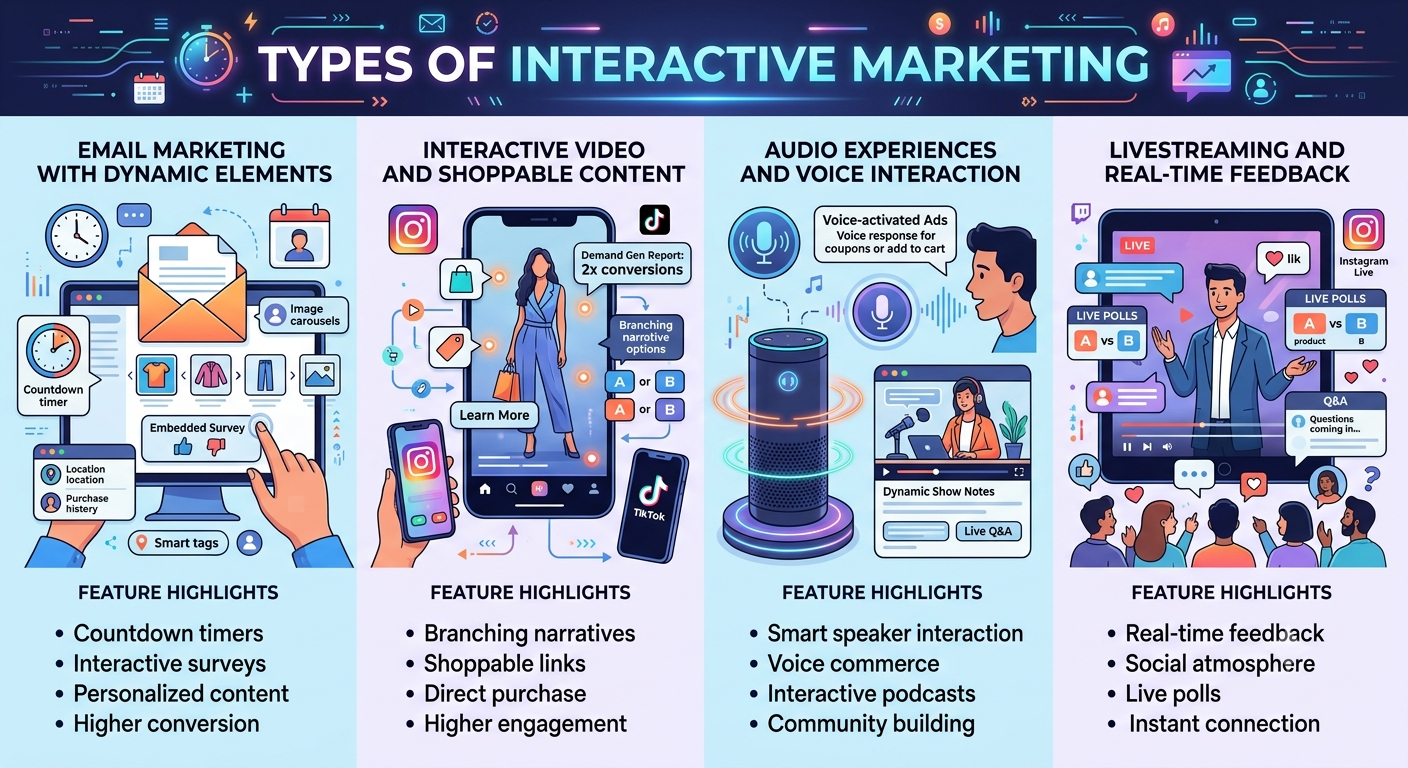
1. Email Marketing with Dynamic Elements
Email has evolved from simple text messages to highly interactive tools. Modern email campaigns often include elements like countdown timers, image carousels, and embedded surveys. These features allow the user to interact with the brand directly from their inbox without having to click through to a website. This reduction in friction makes it easier for customers to take action, leading to higher click-through rates and better overall performance for the campaign.
Personalization is a major factor in the success of interactive emails. By using data gathered from previous interactions, brands can send emails that change content based on the recipient’s location, past purchases, or even the time of day they open the message. This level of customization makes the communication feel more like a personal service rather than a generic mass mailing. It is a powerful way to keep the audience engaged and looking forward to future communications from the brand.
2. Interactive Video and Shoppable Content
Video content is no longer a passive viewing experience. Interactive video allows viewers to click on items within the frame to learn more or even make a purchase directly. Some videos use branching narratives, similar to a choose-your-own-adventure story, where the viewer decides what happens next. This type of content is highly engaging and keeps the audience watching for longer periods as they explore different possibilities and outcomes within the video environment.
According to a report by Demand Gen, interactive content generates twice as many conversions as passive content.
This is particularly true for shoppable videos where the path from discovery to purchase is almost instantaneous. By removing the steps between seeing a product and buying it, brands can capitalize on the initial impulse of the consumer. This technology is becoming increasingly popular on platforms like Instagram and TikTok, where short-form video is the primary method of communication.
3. Audio Experiences and Voice Interaction
As smart speakers become common in households, audio is becoming a vital channel for interactive marketing. Voice-activated ads allow users to respond to a prompt by speaking, which can trigger a variety of actions like sending a coupon to their phone or adding an item to a shopping cart. This hands-free interaction is perfect for consumers who are multitasking or on the go. It represents a new frontier in how brands can enter the personal space of their customers in a helpful way.
Audio interaction also includes podcasts with interactive show notes or live audio rooms where the audience can ask questions in real time. These formats foster a sense of community and direct connection between the brand and the listener. As voice recognition technology improves, the complexity and effectiveness of these audio campaigns will continue to rise. It provides a unique opportunity for brands to develop a literal voice and personality that resonates with their target audience.
4. Livestreaming and Real-Time Feedback
Livestreaming has become one of the most powerful tools for real-time engagement. Platforms like Twitch, YouTube Live, and Instagram Live allow brands to host events where they can talk directly to thousands of people at once. The audience can participate through chat, polls, and live Q&A sessions. This creates an atmosphere of transparency and authenticity that is hard to replicate with pre-produced content. It allows for immediate feedback and helps brands pivot their message based on the live response.
The social aspect of livestreaming is a major draw for younger demographics. It turns a marketing event into a social gathering where fans can interact with each other as well as the brand. Many companies use influencers to host these streams, leveraging their existing trust and connection with the audience. Whether it is a product launch or a behind-the-scenes look at the company, livestreaming offers a raw and engaging way to connect with consumers on a human level.
Examples of Interactive Marketing
Looking at real-world applications helps illustrate the power of these strategies. Many global brands have successfully moved away from traditional advertising to embrace more engaging methods. These examples show how different industries can use technology to create unique experiences that resonate with their specific audiences. By studying these cases, other businesses can find inspiration for their own interactive campaigns and understand the technical requirements for success.
Both Samsung and Hyundai have demonstrated that providing value through an experience is often more effective than simply listing product features. These campaigns focus on the lifestyle and interests of the target consumer, making the brand a part of their daily activities. The success of these initiatives is measured not just in sales, but in the massive amounts of positive brand sentiment and user-generated content they produce. They serve as benchmarks for what is possible when creativity meets technology in the digital space.
-
Samsung Italy’s Twitch Streaming Event
Samsung Italy utilized the power of Twitch to connect with the gaming community in a highly effective way. They created a live event that wasn’t just an ad for their products but an actual gaming competition that people wanted to watch. By integrating their hardware into the gameplay and allowing the audience to influence certain aspects of the event through chat commands, they ensured that the viewers were active participants. This approach helped build credibility within a community that is often skeptical of traditional advertising.
The event focused on the performance of their devices in a high-stakes environment, proving their value to gamers through action rather than words. This type of interactive marketing builds trust because the audience can see the product in use in a relatable context. The high engagement rates and the large number of concurrent viewers proved that creating an experience tailored to the platform’s culture is the key to success. It turned a simple product showcase into a cultural event for the gaming community.
-
The Hyundai Evolve Showroom on Amazon
Hyundai partnered with Amazon to create a virtual showroom called Hyundai Evolve. This interactive experience allowed potential buyers to explore different car models, customize features, and even book a test drive through a local dealer, all from the Amazon interface. This moved the car-buying process into a digital space where consumers already spend a significant amount of time. By providing a low-pressure environment to explore their options, Hyundai made the initial stages of car shopping much more accessible.
The showroom used high-quality visuals and interactive tools to give a comprehensive view of the vehicles. Users could change colors, view the interior in 360 degrees, and compare different trim levels with a few clicks. This level of interaction provides a personalized user experience that helps the consumer feel more confident in their choices. It also provided Hyundai with valuable data on which models and features were most popular, allowing them to optimize their inventory and marketing efforts accordingly.
Interaktive: A Case Study in Social Support and Community Building
Beyond the world of corporate sales, the term Interaktive is also associated with meaningful social support systems. In Surrey and Sutton, Interaktive is a well-known charity that provides vital services for children with autism and other learning difficulties. This organization demonstrates how interaction is not just a marketing tool but a fundamental human need. They offer holiday schemes, after-school clubs, and family support events that encourage engagement and social development among children who might otherwise feel isolated.
The success of such an organization relies on the same principles of interactive communication found in the digital world. By creating environments where children and their families can interact, share experiences, and support one another, they build a strong, resilient community. Their programs are designed to be inclusive and responsive to the specific needs of each child, ensuring that every participant gets the most out of the experience. This real-world application of interactive principles shows the profound impact that focused engagement can have on people’s lives.
Steps to Create a Successful Interactive Campaign
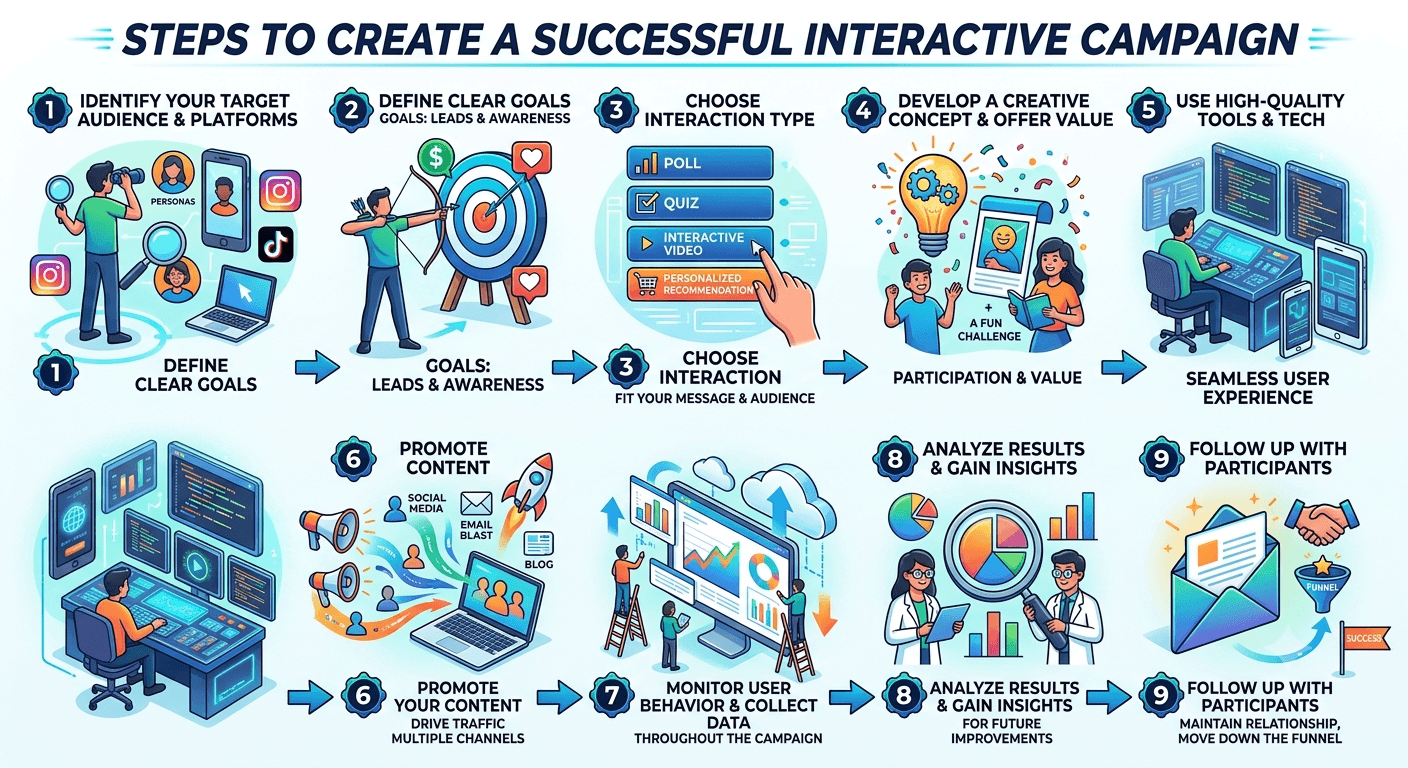
Building an interactive campaign requires careful planning and a deep understanding of your audience. You cannot simply add a poll to a page and expect massive results. The interaction must be meaningful and provide some kind of benefit to the user, whether that is entertainment, information, or a personalized recommendation. It is important to start with clear goals and a strategy that aligns with your overall brand message.
-
Identify your target audience and the platforms where they are most active.
-
Define the specific goals you want to achieve, such as lead generation or brand awareness.
-
Choose the type of interaction that best fits your message and audience preferences.
-
Develop a creative concept that encourages participation and offers value.
-
Use high-quality tools and technology to ensure a seamless user experience.
-
Promote your interactive content through multiple channels to drive traffic.
-
Monitor user behavior and collect data throughout the campaign.
-
Analyze the results and use the insights to improve future interactions.
-
Follow up with participants to maintain the relationship and move them further down the funnel.
Challenges to Consider in Modern Marketing
While the benefits are significant, there are challenges to consider when implementing interactive marketing. One of the primary concerns is the technical complexity involved. Creating high-quality interactive videos or virtual showrooms requires a higher budget and more specialized skills than traditional content. There is also the risk of technical glitches that can frustrate users and harm the brand’s reputation if the experience is not smooth and intuitive.
Another challenge is the need for data privacy and security. Because these campaigns rely on collecting user data, brands must be transparent about how that information is used and ensure they are compliant with all regulations. Furthermore, there is the challenge of maintaining the user’s attention. If the interaction is too long or too complicated, users will drop off before completing the experience. Striking the right balance between engagement and simplicity is a constant struggle for digital marketers.
The Role of Personalization in User Experience
Personalization is the engine that drives modern interactive marketing. When a user feels that the content they are interacting with was made specifically for them, they are much more likely to engage. This can be as simple as using their name in an email or as complex as a website that changes its layout based on their browsing history. The goal is to make every interaction feel relevant and timely, which builds a sense of trust and rapport between the consumer and the brand.
Advancements in machine learning are making it easier for brands to offer this level of personalization at scale. By analyzing vast amounts of data, AI can predict what kind of interaction a user is most likely to respond to and serve it to them in real time. This proactive approach ensures that the marketing efforts are always aligned with the user’s current needs. In a world where consumers are overwhelmed with generic ads, personalized interaction is the only way to truly stand out.
Future Trends in Interactive Digital Media
The future of interaction lies in more immersive and integrated experiences. Augmented reality is already starting to play a major role, allowing consumers to see how products look in their own homes before they buy. As VR headsets become more affordable, we may see the rise of entirely virtual shopping malls where users can interact with products and brand representatives in a digital space. These technologies will make the boundary between the physical and digital worlds even more porous.
Artificial intelligence will also become more sophisticated, allowing for more natural and complex voice and text interactions. We can expect to see AI-driven characters that can hold full conversations with users, providing a level of service and engagement that was previously impossible. The key trend will be the move toward “frictionless interaction,” where the technology becomes so integrated into our daily lives that we don’t even realize we are participating in a marketing campaign. For more insights on digital trends, you can explore the latest reports at HubSpot.
Read More: 5g Network Slicing: Types, Benefits, Working and Examples
Final Thought
Interactive marketing is no longer just an optional strategy; it is a necessity for any brand that wants to remain relevant in a digital-first world. By moving away from passive communication and embracing two-way engagement, businesses can create more meaningful connections with their audience. Whether it is through a high-energy Twitch stream, a virtual car showroom, or a supportive community program for children, the goal remains the same: to involve the person in a way that provides value and builds a lasting relationship. As technology continues to evolve, the possibilities for creative and impactful interaction are limited only by our imagination.
Frequently Asked Questions
-
What is the main goal of interactive marketing?
The primary objective is to engage consumers in a two-way dialogue that encourages active participation rather than passive consumption. By doing so, brands can create a more memorable and personalized user experience that leads to higher brand loyalty, better data collection, and increased conversion rates. This approach focuses on building a relationship with the customer by making them feel like a part of the brand story, which is much more effective than traditional one-way advertising methods in the modern digital landscape.
-
How does interactive marketing differ from traditional marketing?
Traditional marketing usually involves a one-way flow of information where the brand broadcasts a message to a large audience. Interactive marketing, however, relies on a two-way exchange where the consumer’s actions or inputs change the experience or the message they receive.
-
Can small businesses afford to use interactive strategies?
Yes, many tools like social media polls, simple quizzes, and basic interactive emails are very affordable. While high-end VR or custom video projects can be expensive, the core principles of engagement can be applied on a budget using existing platforms.
-
What are the most common tools for creating interactive content?
Marketers often use specialized software for quizzes, interactive video players, and email automation platforms that support dynamic elements. Social media platforms also provide built-in tools like stickers and polls that are very effective for quick interactions.
-
Is interactive marketing better for B2B or B2C?
It is highly effective for both. In B2C, it often focuses on entertainment and quick conversions, while in B2B, it is used for lead qualification, education, and providing personalized solutions through assessments or calculators.
-
How do you measure the success of an interactive campaign?
Success is measured through engagement metrics like click-through rates, time spent on the page, completion rates for quizzes, and the number of social shares. It also provides qualitative data through the choices users make during the interaction.
-
What role does social media play in these strategies?
Social media is often the primary channel for interactive content because these platforms are built for engagement. Features like live stories, polls, and comments allow for immediate interaction between a brand and its followers.
-
Does interactive marketing help with SEO?
Indirectly, yes. Because interactive content keeps users on your site longer and reduces bounce rates, search engines view your site as more valuable and relevant, which can lead to higher rankings in search results.
-
What is the charity called Interaktive?
Interaktive is a charity based in Surrey and Sutton that supports children with autism and learning difficulties. They provide social opportunities and holiday schemes that allow children to interact and grow in a supportive, inclusive environment.