
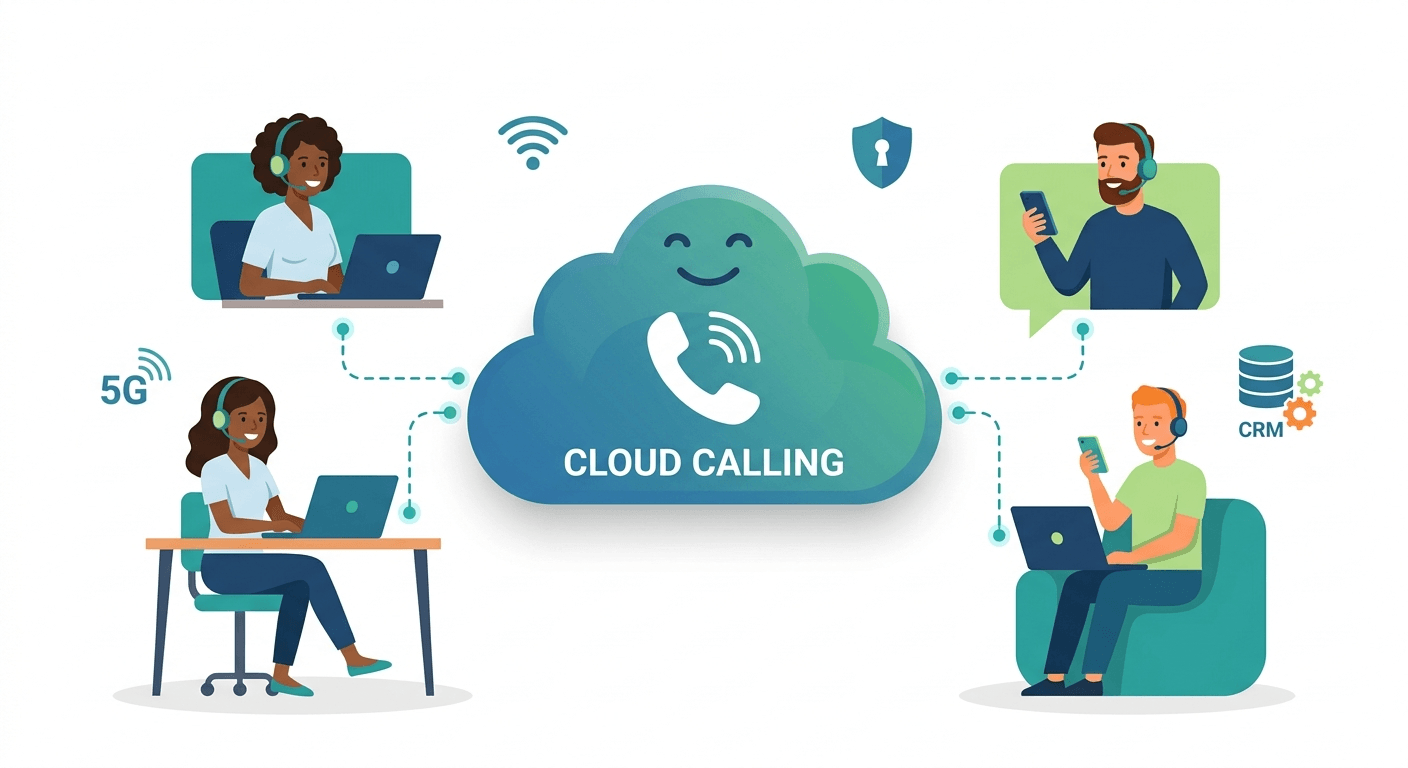
In the modern era of rapid digital transformation, the traditional office environment has undergone a radical shift. The days of being tethered to a physical desk with a tangled web of copper wires and heavy hardware are quickly fading into obsolescence. Taking its place is a more agile, scalable, and intelligent solution: cloud calling. This technology has moved from a “nice-to-have” innovation to a fundamental cornerstone of global business communication. By leveraging the power of the internet, cloud telephony allows organizations to handle voice communication with a level of flexibility that was previously unimaginable.
To understand the current communication landscape, one must grasp the intricacies of a cloud based telephone system. It is not merely a different way to dial a number; it is an entirely new architecture for how voice data is processed, managed, and integrated into other business tools. Whether you are a small startup looking to establish a professional presence or a global enterprise managing a remote workforce, understanding what is cloud telephony and how to optimize cloud voice services is the key to maintaining a competitive edge in an increasingly connected world.
Understanding the Concept: What is a Cloud Phone System?
At its core, cloud based telephony refers to a phone system that operates over an internet connection rather than traditional physical phone lines. Unlike the legacy Public Switched Telephone Network (PSTN), which relies on underground wires and physical switches, digital calling uses Voice over Internet Protocol (VoIP) to convert sound into digital data packets. These packets are then transmitted via the cloud to the recipient, where they are converted back into audio.
When people ask what is a cloud phone system, they are often referring to a hosted service. In this model, the “brain” of the phone system—the Private Branch Exchange (PBX)—lives in a secure data center managed by a provider rather than in a server closet in your office. This transition to cloud based telephony solutions removes the burden of maintenance, hardware upgrades, and complex wiring from the business owner and places it in the hands of specialized cloud telephony services.
The shift toward cloud calls has been accelerated by the rise of the mobile workforce. Because the system lives in the cloud, a user’s “extension” is no longer tied to a physical handset. It can be accessed via a laptop, a smartphone app, or a desk phone, provided there is an internet connection. This “location-independent” nature is the primary reason why cloud calling solutions have become the standard for modern organizations.

The Mechanics of a Cloud Calling System: How Does It Function?
The technical framework of a cloud calling system is built upon several layers of internet-based protocols. The most common is the Session Initiation Protocol (SIP), which handles the “signaling” of the call—essentially finding the recipient and establishing the connection. Once the connection is made, the actual audio is transmitted via Real-time Transport Protocol (RTP). This high-speed exchange happens in milliseconds, ensuring that the digital calling experience is as smooth, if not smoother, than traditional analog lines.
A critical component of the cloud call system is the data center infrastructure. Reputable cloud telephony providers maintain multiple redundant servers across different geographic regions. This means that if one server goes down due to a natural disaster or technical failure, your cloud voice services automatically failover to another location. This level of reliability is nearly impossible to achieve with a traditional on-premise system without massive financial investment in backup generators and secondary lines.
Furthermore, cloud telecom infrastructure allows for advanced integration with other cloud-based software. Because the voice data is already digital, it can be easily synced with Customer Relationship Management (CRM) tools, email platforms, and project management software. When a call comes in through your cloud calling solution, the system can automatically pull up the caller’s history, recent purchases, and open tickets, providing the agent with immediate context. This synergy is a hallmark of cloud based telephone system efficiency.
Key Advantages of Migrating to Cloud Based Telephony
The move to cloud based telephony offers several transformative benefits that go beyond simple cost savings. One of the most significant is scalability. In a traditional environment, adding a new employee meant calling a technician to install a physical line. With a cloud telephony system, adding a new user is as simple as clicking a button in a web-based dashboard. This agility allows businesses to grow or shrink their communication capacity in real-time, matching their actual needs.
Cost efficiency is another primary driver for adopting cloud telephony services. Because there is no expensive on-site hardware to buy or maintain, the initial capital expenditure (CAPEX) is virtually zero. Instead, businesses move to an operating expenditure (OPEX) model, paying a predictable monthly subscription fee. Most cloud calling services also include unlimited local and long-distance calling, which significantly reduces the monthly overhead for businesses with high call volumes.
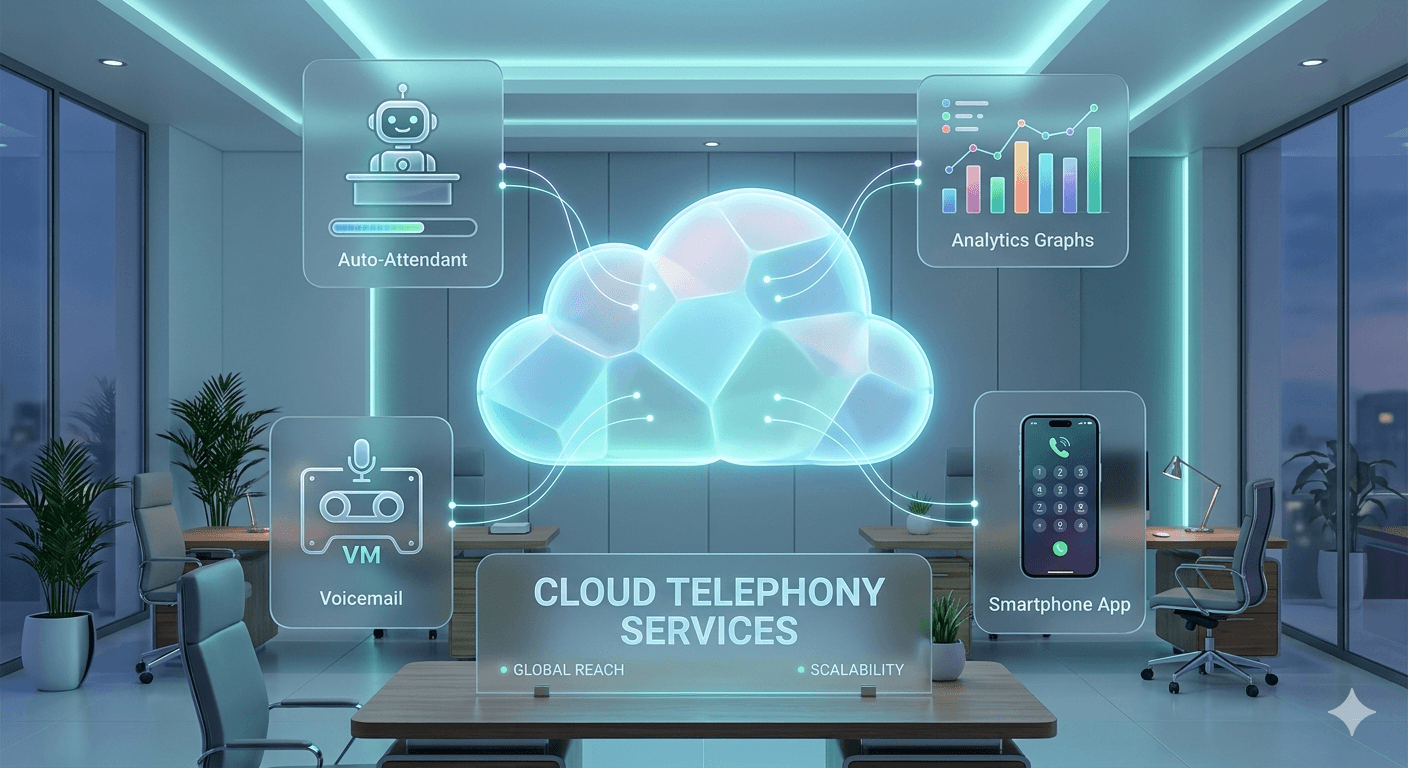
Additionally, the feature set provided by cloud calling solutions is vastly superior to legacy systems. Features that were once “premium” add-ons, such as:
Auto-attendants and IVR: Helping direct callers to the right department without a human receptionist.
Voicemail-to-Email: Converting voice messages into text or audio files sent directly to your inbox.
Call Recording and Analytics: Providing deep insights into call volume, peak times, and agent performance.
Mobile Integration: Allowing employees to take business calls on their personal devices while keeping their private numbers hidden.
These features come standard with most cloud based telephony solutions, empowering small businesses to project the same professional image as a Fortune 500 company.
Transforming Business Operations with Cloud Telephony Services
Implementing a cloud based telephone system changes the fundamental way a team operates. It fosters a culture of “presence,” where team members can see who is available, who is on a call, and who is away, regardless of their physical location. This is especially vital for businesses utilizing virtual showing or virtual open houses in real estate, where agents are constantly on the move but need to remain reachable for high-value leads.
In the context of virtual home selling, an agent can use a cloud telephony service to set up a dedicated local number for a specific property listing. When a potential buyer calls, the system can automatically route the call to the agent’s mobile device. If they are in the middle of a virtual showing, the system can intelligently forward the call to an assistant or a professional voicemail that promises a callback within minutes. This ensures that no lead is ever dropped, which is critical for maximizing the ROI of a virtual open house.
Furthermore, cloud voice services provide a unified communication platform. Instead of using one app for video, another for internal chat, and a physical phone for calls, cloud telephony often bundles these together. This reduces “app fatigue” for employees and ensures that all communication data is stored in one central, searchable location. Whether a team member is trying to show a house via video or discussing a contract over a voice call, the entire interaction is captured within the cloud calling system.
Why is Wifi Calling Not Working? A Comprehensive Guide to Fixes and Optimizing Wifi Calling
As more businesses move to cloud telephony, they become increasingly dependent on Wi-Fi for their digital calling needs. However, a common frustration is when the connection fails. If you are wondering why is wifi calling not working, the issue usually lies in a few technical areas: network congestion, router settings, or device-specific configurations. Understanding how to fix these issues is essential for optimizing wifi calling and ensuring your cloud based telephone system remains reliable.
One of the most frequent causes of failed Wi-Fi calls is a feature called “SIP ALG” (Application Level Gateway). While intended to help with VoIP traffic, it often corrupts the data packets, leading to one-way audio or dropped calls. Disabling SIP ALG in your router settings is often the first step in optimizing wifi calling. Additionally, ensuring that your router prioritizes voice traffic through Quality of Service (QoS) settings can prevent a large file download or a high-def video stream from interfering with your cloud calls.
Other common fixes include:
Checking Firewall Rules: Ensure that the ports required for cloud voice services (typically UDP 5060/5061) are not blocked by your office firewall.
Updating Firmware: Both your smartphone and your Wi-Fi router need the latest updates to handle modern cloud calling protocols efficiently.
Emergency Address (E911) Registration: Many carriers will block Wi-Fi calling if an emergency address is not correctly registered on the device.
Signal Interference: Switching to the 5GHz band rather than the cluttered 2.4GHz band can significantly improve the stability of your digital calling.
By systematically addressing these issues, you can transition from asking why is wifi calling not working to enjoying a flawless, high-definition communication experience. Optimizing wifi calling is a continuous process of ensuring your network environment is “voice-ready.”
Integrating Cloud Voice Services with Modern Workflows
The true power of cloud telephony is realized when it is integrated into a broader digital ecosystem. For instance, cisco cloud calling and similar high-end cloud telephony providers offer deep integrations with tools like Salesforce, Microsoft Teams, and Slack. This means that a call is no longer an isolated event; it is a data point that triggers actions across your organization. When a cloud calling system is linked to a CRM, every interaction is automatically logged, saving agents hours of manual data entry.
Consider the role of digital calling in the modern sales funnel. A lead might visit a website to look at a virtual open house. They click a “Call Now” button, which triggers a cloud call to the sales team. Because the systems are integrated, the agent sees exactly which property the lead was viewing on their screen before they even say “hello.” This level of contextual awareness is the gold standard of customer service and is only possible through sophisticated cloud based telephony solutions.
Moreover, telephony as a service (TaaS) models allow for geographic expansion without physical presence. A company based in London can acquire local cloud calling numbers in New York, Tokyo, and Sydney. When customers in those cities call, they pay local rates, and the calls are routed to the London office via the cloud based telephone system. This allows businesses to establish a global footprint overnight, providing local accessibility to an international audience through the power of cloud telecom.
Research and Facts: The Growth of Cloud Telephony
The adoption of cloud telephony is supported by significant market data. According to research by Gartner, by 2024, 75% of enterprise users will not be using a traditional desk phone, up from 30% in 2020. This shift is driven by the flexibility of cloud voice services. Furthermore, a study by Frost & Sullivan indicates that the global cloud telephony market is expected to grow at a CAGR of over 15% through 2026. This growth is fueled by the benefits of voice over ip and the increasing demand for remote work solutions.
Supporting material from Nemertes Research also shows that organizations that move to cloud calling solutions see an average reduction of 30% in total cost of ownership (TCO) over a five-year period. These facts highlight that cloud based telephony is not just a technological upgrade; it is a financial and operational imperative. The move to cloud telephony is a fundamental shift that enables businesses to be more resilient, responsive, and cost-effective in a volatile global market.
Selecting the Best Cloud Telephony Provider for Your Needs
With so many cloud telephony providers in the market, choosing the right one requires careful evaluation. You must look beyond just the price per user and consider the “uptime guarantee” and the quality of their customer support. A professional cloud calling solution should offer at least 99.999% uptime (the “five nines”), ensuring that your business is never unreachable. Additionally, evaluate the provider’s security protocols, including end-to-end encryption for your cloud calls.
When searching for what is telephony support in the modern age, look for providers that offer:
Intuitive Admin Portals: Allowing you to manage users and features without a degree in IT.
Global Reach: The ability to provide local numbers in the countries where you do business.
Comprehensive Analytics: Real-time dashboards that show call volume, wait times, and customer satisfaction scores.
Integration Support: Pre-built connectors for the software your team already uses.
Whether you choose nice telephony or another major cloud based telephony brand, the goal is to find a partner that can scale with your business and provide a stable foundation for your digital calling strategy. A great cloud telephony solution should feel invisible—it just works, allowing your team to focus on their conversations rather than the technology behind them.
The Future of Digital Calling and Cloud Telecom
The future of cloud calling is deeply intertwined with Artificial Intelligence (AI). We are already seeing cloud telephony services that offer real-time transcription, sentiment analysis, and automated meeting summaries. Imagine a cloud call system that can listen to a sales conversation and automatically suggest the next best action for the agent based on the customer’s tone and keywords. This is the next frontier of cloud voice services.
As 5G networks become more prevalent, the reliability and quality of digital calling will reach even higher peaks. The distinction between “mobile” and “office” calls will vanish completely. Cloud based telephony will become the central nervous system of business communication, integrating voice, video, text, and data into a single, seamless experience. By embracing cloud telephony today, organizations are not just upgrading their phone system; they are preparing themselves for a future where communication is instant, intelligent, and infinite.
Read More: Internet Telephony: The Future of VoIP Telephony or IP Telephony
Final Thought
Cloud calling is more than just a trend; it is the inevitable evolution of telecommunications. By moving away from legacy hardware and embracing the cloud based telephone system, businesses unlock a world of scalability, cost savings, and advanced features. From optimizing wifi calling to integrating cloud telephony services with a virtual showing, the applications are vast and varied. As we have explored, the journey toward cloud based telephony is a path toward greater organizational agility and professional excellence. The ability to connect from anywhere, on any device, with high-definition clarity is the new standard, and cloud calling is the engine that makes it all possible.
Frequently Asked Questions (FAQs)
What is cloud calling, and how does it work?
Cloud calling (or cloud telephony) is a phone system that runs through your internet connection rather than a traditional analog phone line. It works by using VoIP technology to turn your voice into digital data packets. These packets travel through the cloud to a hosted PBX managed by a cloud telephony provider, which then routes the call to the recipient. This allows for calls to be made from anywhere with an internet connection using a computer, smartphone, or VoIP-enabled desk phone.
What are the main benefits of using a cloud-based phone system?
The main benefits include significant cost savings (no hardware to buy or maintain), unmatched scalability (add or remove users instantly), and advanced features like voicemail-to-email and auto-attendants. Additionally, cloud telephony supports a remote workforce, allowing employees to stay connected to the business phone system regardless of their physical location.
Is cloud calling reliable for business communications?
Yes, cloud based telephony is highly reliable. Major cloud telephony services maintain redundant data centers across the globe. If one center experiences an outage, your calls are automatically rerouted to another, ensuring constant availability. However, the reliability also depends on your internet connection; optimizing wifi calling and having a stable broadband connection are essential for the best experience.
How much does cloud calling cost?
Most cloud telephony providers operate on a subscription model, charging a monthly fee per user. Prices typically range from $15 to $50 per month, depending on the features and the volume of calls. Because there are no installation fees or expensive on-site PBX hardware costs, the total cost of ownership is generally much lower than a traditional landline system.
What features should I look for in a cloud calling solution?
When evaluating cloud based telephony solutions, look for high-definition (HD) audio quality, multi-device support, mobile apps, call recording, and real-time analytics. Crucially, ensure the system integrates with your existing software, such as your CRM or helpdesk tools. You should also verify that the provider offers robust security features like end-to-end encryption and multi-factor authentication.