
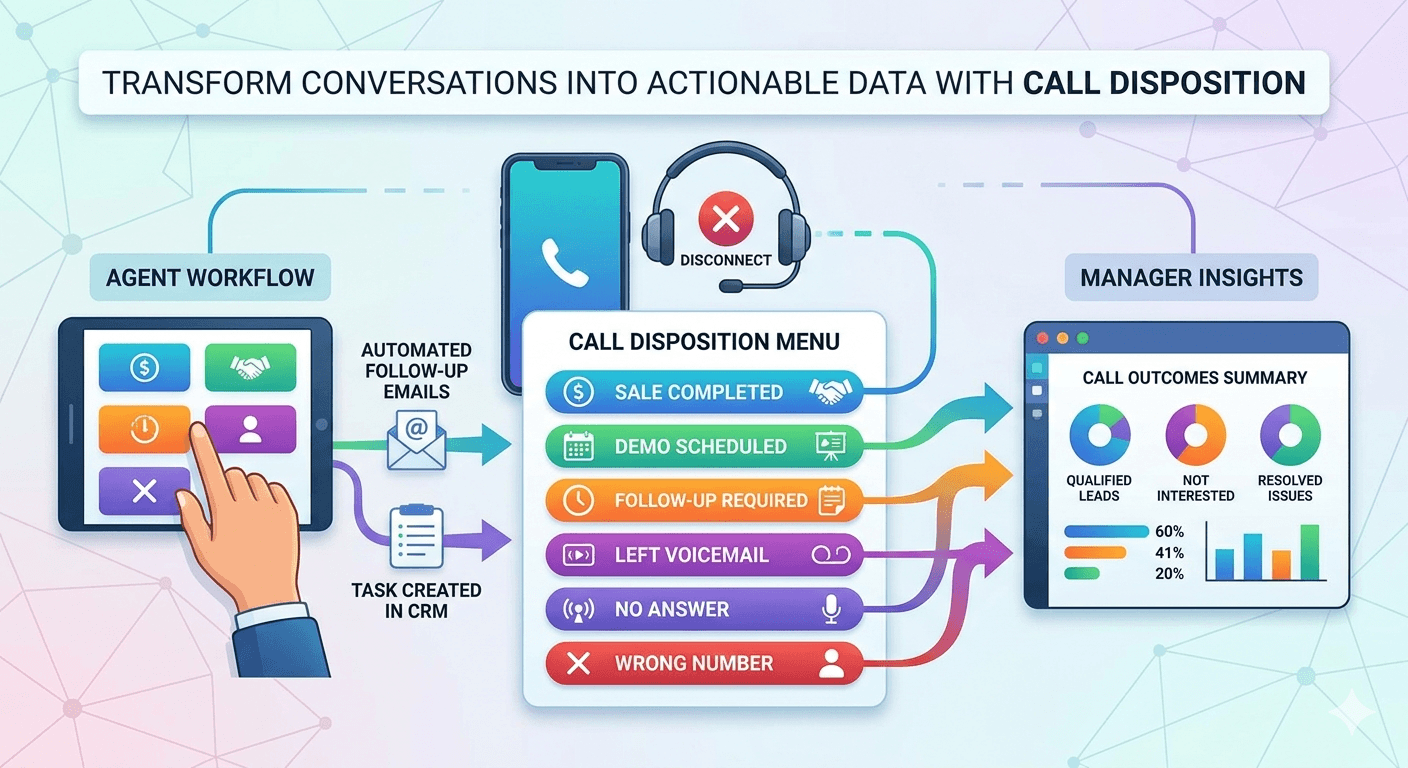
Call disposition is a label or outcome assigned to a phone call that describes what happened during the interaction. Contact centers and sales teams use call dispositions—such as “Answered,” “No Answer,” “Voicemail,” “Sale Completed,” or “Follow-Up Required”—to track call results, improve reporting, and streamline customer service workflows.
Call disposition is a critical component of modern telecommunications and customer relationship management. It refers to the specific label or status assigned to a telephone interaction once the conversation has concluded. This categorization allows businesses to track the outcome of every interaction, whether it was an outbound sales call or an inbound support request.
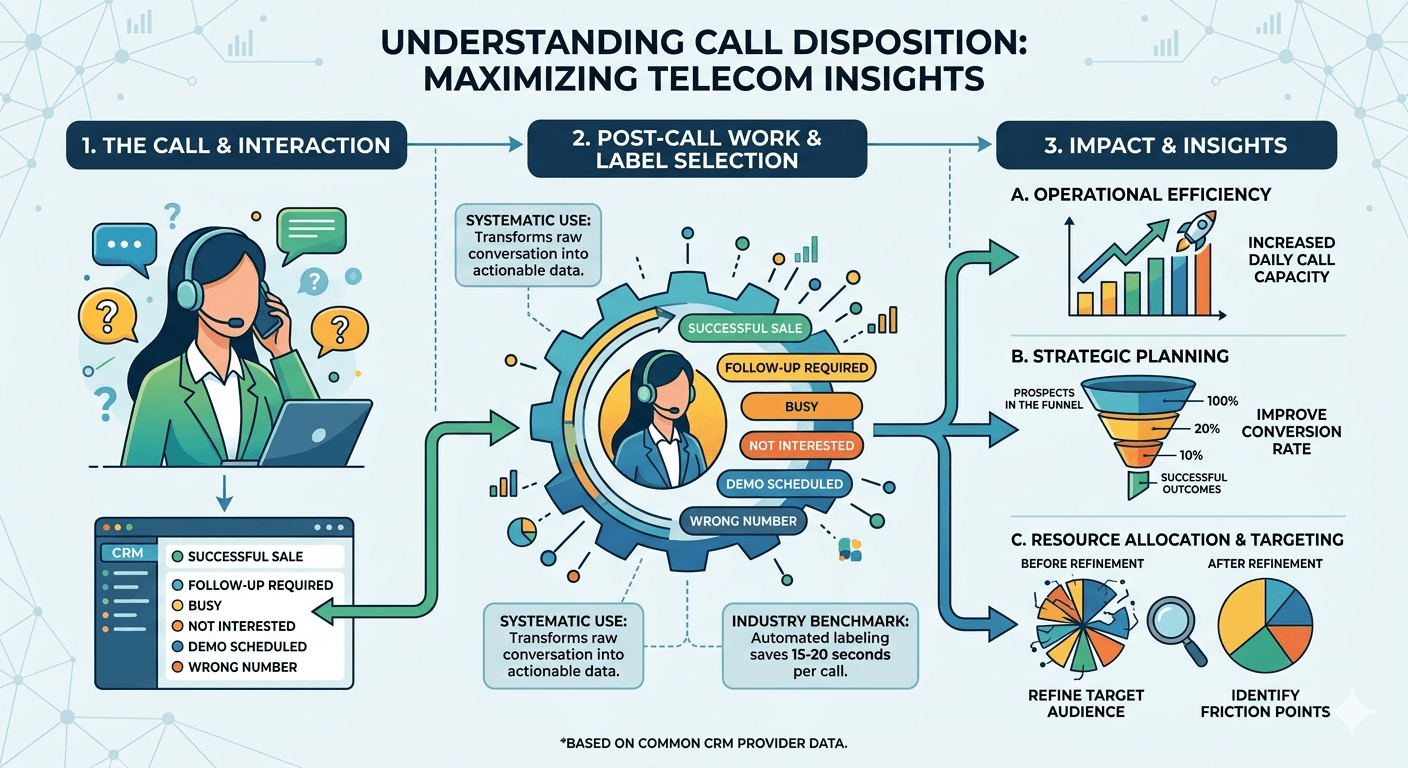
Industry benchmarks from major CRM providers indicate that implementing automated call labeling can reduce the average post-call work time by 15 to 20 seconds, significantly increasing the daily call capacity of each agent.
The systematic use of these labels ensures that every team member understands the current state of a lead or a customer issue. When a representative finishes a call, they might mark it as a successful sale, a request for a callback, or perhaps a wrong number. This immediate classification prevents information from being lost and ensures that follow-up actions are triggered automatically. In a fast-paced environment, having a clear record of what happened during previous encounters is essential for maintaining continuity and providing a high-quality experience for the person on the other end of the line.
Defining Call Disposition: Meaning in Modern Communication
When delving into call disposition meaning, it is important to recognize how it impacts different levels of an organization. For the individual agent, it provides a structured way to close out a task and move on to the next. For the manager, it offers a high-level view of team performance and campaign progress. For the executive, it provides the data necessary to make long-term investment decisions regarding staffing and technology. This multi-layered significance makes it one of the most valuable data points collected in a call center or sales department.
Call disposition is the process of assigning a predefined outcome or status to a phone call after it ends. It summarizes the result of the interaction—such as whether the call was answered, a sale was completed, a follow-up is needed, or no one answered. Businesses use call dispositions to organize customer interactions, improve reporting, measure agent performance, and ensure the next steps are handled efficiently.
Importance of the Disposition Call Process
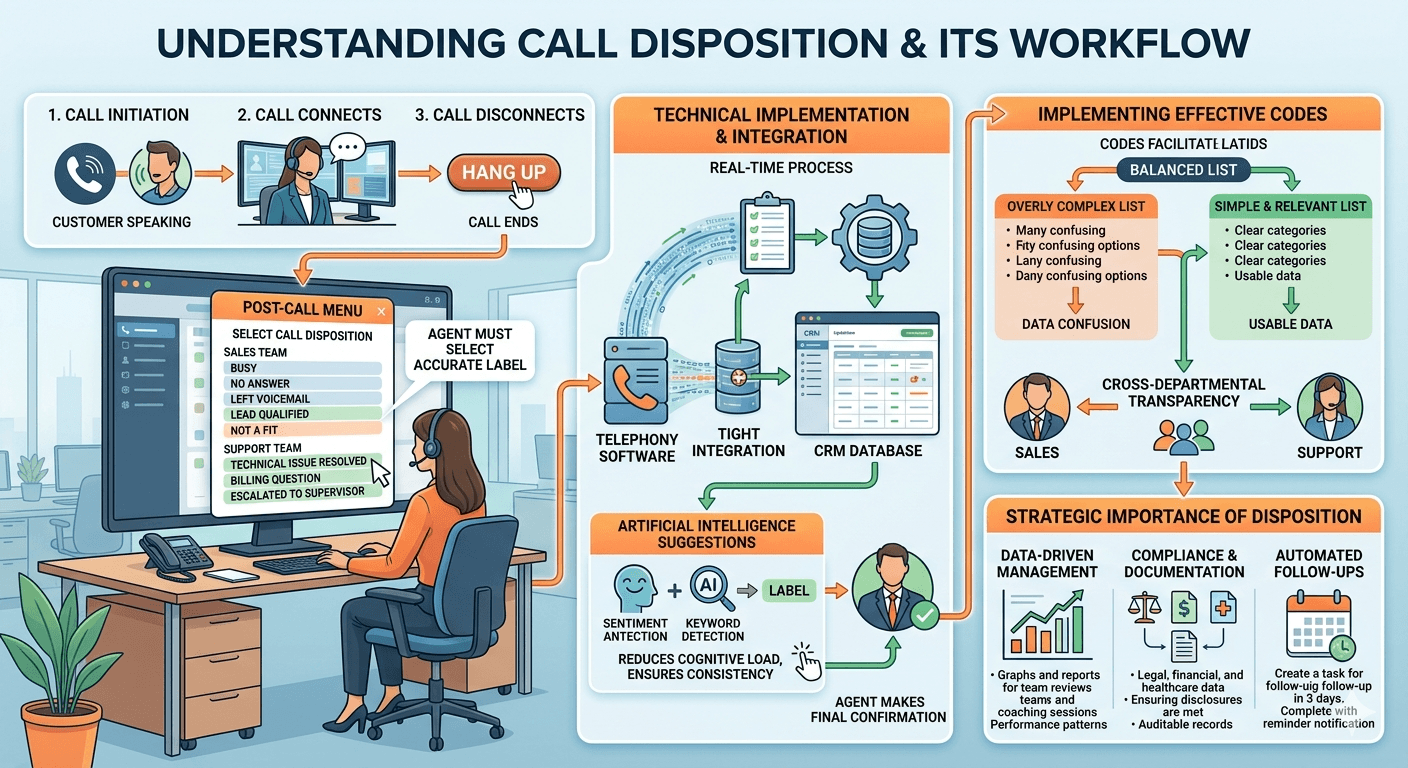
A disposition call refers to the final stage of the interaction where the status is officially recorded. This moment is the bridge between the conversation and the database. It is a period of reflection for the agent, allowing them to summarize the key points of the interaction and ensure that the next steps are clearly defined. In many organizations, this is also the time when agents leave detailed notes that provide context to the selected label, such as specific objections raised by the customer or personal details that could be useful in a future conversation.
The value of the disposition call process is most evident during team reviews and coaching sessions. Managers can look at the distribution of labels for each agent to identify patterns. If one agent has a disproportionately high number of disconnected numbers, it might suggest an issue with the lead source they are working from. If another agent has a high rate of successful demos, their peers can learn from their techniques. This data-driven approach to management replaces guesswork with objective facts, leading to a more fair and effective evaluation process.
Furthermore, the disposition call stage is crucial for maintaining compliance in certain industries. For example, in financial services or healthcare, it may be a legal requirement to document whether certain disclosures were made or if a customer’s privacy preferences were updated. By including these requirements in the post-call workflow, a business can ensure that it is meeting its regulatory obligations with every interaction. This creates a permanent and auditable record that protects both the company and the customer.
How Does Call Disposition Work to Streamline Operations?
The way call disposition works involves a continuous loop of data collection, analysis, and action. Once an agent selects a code, that data flows into a reporting dashboard where it is aggregated with thousands of other calls. Analysts can then look for trends over time, such as a sudden increase in a specific type of complaint or a drop in successful sales during a certain time of year. This macro-level view allows the company to adjust its tactics on the fly, responding to changes in the market or customer behavior with agility.
Another way it works is by triggering automated workflows within the company’s software ecosystem. Modern platforms can be configured so that a specific label initiates a sequence of events without any further input from the agent. If a call is dispositioned as a sale closed, the system can automatically send a welcome email, update the billing records, and notify the implementation team to start the onboarding process. This reduces the administrative burden on sales staff, allowing them to spend more time talking to prospects and less time on manual data entry.
In terms of team productivity, the system works by providing a clear structure for the workday. Agents know that every call must be closed out with a status, which helps them maintain a steady pace. It also provides a sense of accomplishment, as they can see their progress through a list of leads or tickets in real-time. This structural benefit is often overlooked but is essential for maintaining morale and focus in a high-pressure communication environment.
Using Call Dispositions in Business Operations and Scaling
For a business that is looking to scale its operations, implementing a robust call labeling system is not optional. As the team grows, it becomes impossible to manage interactions through memory or informal notes. Standardized labels provide a common language that everyone can understand, regardless of their role or tenure at the company. This consistency is what allows a business to maintain a high level of quality and service even as it doubles or triples its call volume.
When scaling, call center disposition codes become the foundation for sophisticated routing and lead management rules. For instance, a company might decide that any lead labeled as high priority by an initial screener should be automatically routed to the most senior sales representative. Or, they might use the data to identify which agents are best at handling difficult support cases and route those specific types of calls to them. This level of optimization is only possible when every interaction is accurately labeled and tracked.
The power of one-click call dispositions is particularly relevant for scaling businesses. These are specialized buttons within the call interface that allow an agent to apply a label and move to the next call with a single tap. This minimizes the time spent in the wrap-up state, which is a major bottleneck in many call centers. Research indicates that companies using automated or one-click labeling systems can reduce their average handle time by as much as 15% to 20%. This efficiency gain translates directly into lower operating costs and higher revenue potential.
Benefits of Call Dispositions for Sales and Support Teams
The benefits of using these labels are numerous and impact every facet of the communication process. One of the most significant advantages is the improvement in data integrity. Because the labeling process is built into the workflow, it ensures that every call is accounted for. This creates a much more accurate picture of the company’s activities than relying on agents to manually update records at the end of the day. Accurate data is the prerequisite for any meaningful business analysis or performance improvement initiative.
According to a study by InsideSales, teams that accurately track call outcomes and use that data to optimize their outreach timing see a 341% increase in their total conversion rates.
Another major benefit is the ability to conduct more effective training and coaching. By reviewing an agent’s call distribution, a manager can identify specific areas where they might be struggling. If an agent has a high number of calls that result in a not interested status very early in the conversation, the manager can work with them on their opening pitch. If they have trouble closing the sale despite getting deep into the conversation, the coaching can focus on overcoming objections. This targeted approach to development is much more effective than general training.
List of Call Disposition Codes for Managing Inbound and Outbound Calls
Developing a comprehensive list of call disposition codes requires separate considerations for inbound and outbound interactions. For outbound calls, the focus is often on lead progression and sales outcomes. The list might include:
Busy signal
Call back later
Demo scheduled
Left voicemail
No answer
Not a fit
Sale completed
Wrong number
For inbound calls, the codes are usually centered around issue resolution and customer satisfaction. These might include:
Billing inquiry resolved
Technical support provided
Product information requested
Escalated to management
Complaint filed
Refund processed
General inquiry
Having these distinct lists allows the system to provide the most relevant options to the agent based on the type of call they are handling. It also allows the business to run separate reports for sales and support, giving each department the specific metrics they need to manage their operations. For example, the sales team will be very interested in the ratio of demo scheduled to total calls, while the support team will focus on the percentage of issues that were resolved during the first interaction.
What Challenges are Associated with the Call Disposition List?
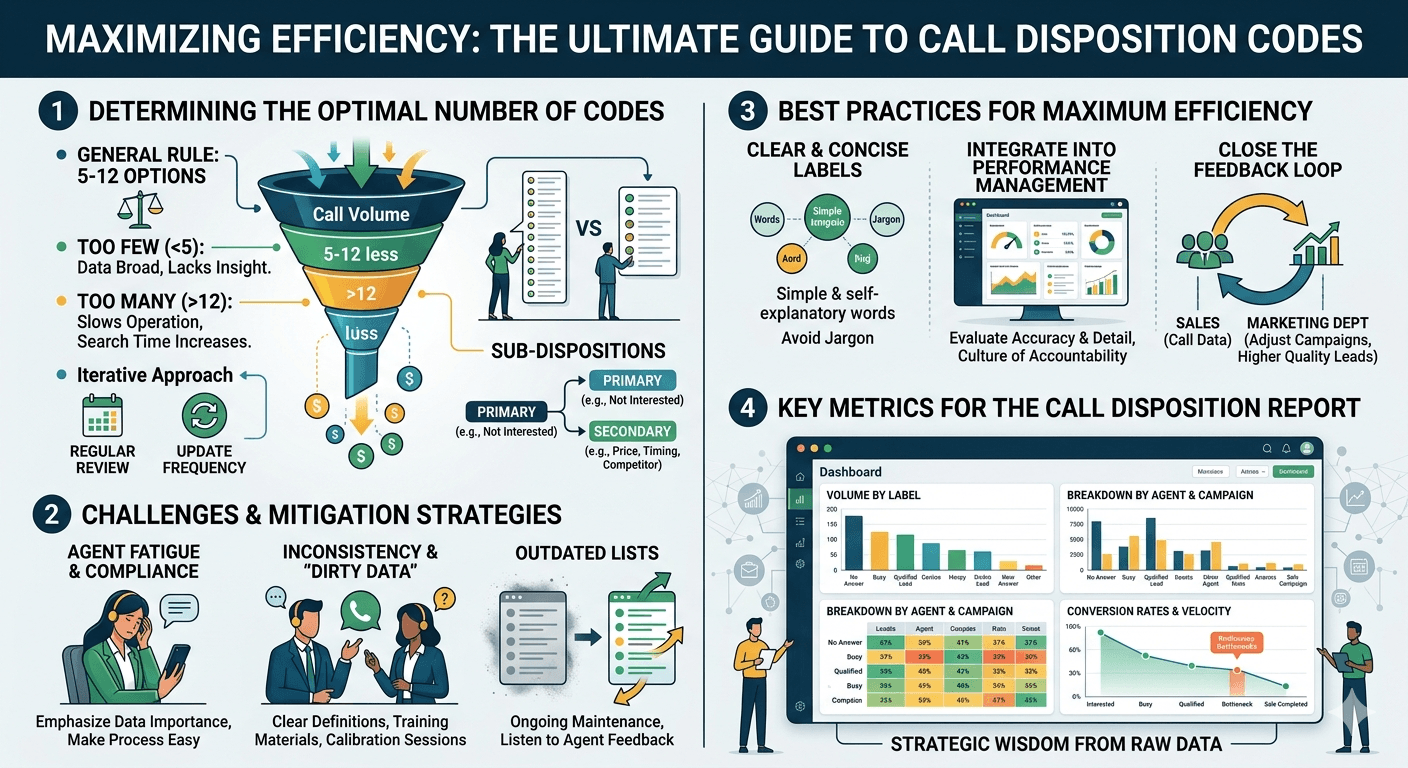
Despite the many benefits, there are several challenges that organizations face when implementing a labeling system. The most common is agent fatigue or lack of compliance. In a high-pressure environment, agents may feel that the labeling process is a distraction from their primary goal of making calls. To overcome this, it is essential to emphasize the importance of the data and to make the process as easy as possible through technology. When agents see how the data is used to improve their own workflows and lead quality, they are more likely to take the process seriously.
Another challenge is inconsistency in how different agents interpret the codes. What one person considers a qualified lead, another might label as just interested. This leads to “dirty data” that can skew reports and lead to poor decision-making. To mitigate this, companies should provide clear definitions for every code and include examples in their training materials. Regular calibration sessions, where the team reviews calls together and discusses the most appropriate label, can also help ensure that everyone is on the same page.
Finally, there is the risk of the list becoming outdated. As a company launches new products or enters new markets, the existing codes may no longer capture the full range of outcomes. A static list that was designed two years ago may not be sufficient for today’s operations. This requires a commitment to ongoing maintenance and a willingness to listen to feedback from the agents who use the system every day. They are often the first to notice when a list is no longer meeting the needs of the department.
Call Disposition Best Practices for Maximum Efficiency
To get the most out of a labeling system, businesses should follow a set of established best practices. First and foremost, keep the labels clear and concise. Each code should be self-explanatory so that an agent can understand it at a glance without having to refer to a manual. Avoid using internal jargon that might be confusing to new hires. The easier the labels are to understand, the more accurate the resulting data will be.
Second, integrate the labeling process into the overall performance management system. If agents are only evaluated on the number of calls they make, they will likely rush through the disposition stage. However, if they are also evaluated on the accuracy and detail of their records, they will take the time to do it correctly. This creates a culture of accountability where data quality is seen as a core part of the job rather than an afterthought.
Third, use the data to close the feedback loop with other departments. If the sales team is consistently seeing a high number of not interested labels from a specific lead source, that information should be shared with the marketing department immediately. This allows marketing to adjust their campaigns and provide the sales team with higher-quality leads. This level of cross-functional cooperation is one of the most powerful applications of call labeling data and can lead to significant improvements in overall business performance.
How Do Call Dispositions Work with Salesforce and Other CRMs?
The integration with a CRM like Salesforce is what makes the labeling process truly powerful. When an agent dispositions a call, the system can automatically update the contact record in Salesforce, ensuring that everyone in the company has access to the latest information. This eliminates the need for manual data entry and reduces the risk of errors. Furthermore, the data from the labels can be used to trigger sophisticated automation rules within the CRM.
For example, in Salesforce, a call labeled as lead qualified can automatically move that contact to a new stage in the sales pipeline and alert a senior account executive. Or, a call labeled as unhappy customer can trigger an immediate notification to the customer success manager. This ensures that the most important interactions receive the attention they deserve without any delay. The CRM becomes a living, breathing map of all customer interactions, guided by the labels applied during the communication process.
Using call dispositions in Salesforce also allows for more advanced reporting. Businesses can combine call data with other information stored in the CRM, such as purchase history or marketing engagement. This provides a 360-degree view of the customer and allows for much more sophisticated analysis. For example, a company could see if customers who have attended a webinar are more likely to result in a sale completed label than those who haven’t. This level of insight is only possible through the tight integration of telephony and CRM systems.
Why Is Call Disposition Data Important for Sales Teams?
For a sales team, this data is the lifeblood of their operations. It provides the feedback necessary to refine their approach and maximize their revenue potential. Without it, they are essentially flying blind, with no way to know which of their efforts are paying off. The data allows them to focus on the activities that are most likely to lead to a sale, rather than wasting time on unproductive tasks. This increases both the efficiency and the morale of the team, as they can see a direct correlation between their actions and their results.
The data also plays a crucial role in lead prioritization. By analyzing previous interactions, a sales team can identify which leads are “hot” and which are “cold.” A lead that has been dispositioned as interested multiple times is clearly a higher priority than one that has never answered the phone. This allows the team to allocate their time more effectively, ensuring that they are always working on the opportunities with the highest probability of closing.
Finally, call disposition data is essential for accurate sales forecasting. By looking at the number of leads in each stage of the funnel—as indicated by their labels—a manager can predict with a high degree of accuracy how much revenue the team will generate in the coming months. This information is vital for the overall financial planning of the company and allows for more confident decision-making regarding hiring, expansion, and investment.
Read More: Wireless IP Phones vs. Mobile Apps: Deciding What’s Best for Your Remote Workforce
Final Thought
The effective management of telephone interactions through systematic labeling is a cornerstone of modern business success. By understanding call disposition meaning and implementing clear call disposition codes, organizations can turn every conversation into a valuable data point. This data informs everything from daily agent coaching to long-term strategic planning. Whether through manual selection or the efficiency of one-click systems, the act of dispositioning a call ensures that no opportunity is lost and that every customer interaction is handled with the professionalism and care it deserves. As communication technology continues to evolve, those who master the art and science of call labeling will be best positioned to thrive in an increasingly data-driven world.
Frequently Asked Questions
What is call disposition in the context of sales?
In a sales environment, it is the process of labeling the outcome of an outreach attempt. These labels help track where a prospect is in the sales funnel, whether they need a follow-up, if a meeting was scheduled, or if the lead is not a good fit for the product. It provides the data necessary to measure conversion rates and sales team productivity.
Why is call disposition meaning important for managers?
Managers rely on these labels to understand the performance of their team at both an individual and a collective level. It allows them to identify which agents are excelling at certain tasks, which lead sources are providing the best value, and where in the sales or support process customers are experiencing the most friction. This information is essential for effective coaching and resource allocation.
How do you use call disposition codes in a CRM like Salesforce?
Within a CRM, these codes act as triggers for automated workflows. When an agent selects a code after a call, the CRM can automatically update the contact’s status, send out follow-up emails, or assign tasks to other team members. This ensures that the data is always up-to-date across the organization and that no manual data entry is required to keep the sales or support pipeline moving.
What are some common call disposition examples for support teams?
Support teams often use labels that describe the nature and resolution of an inquiry. Common examples include Issue Resolved, Escalated to Tier 2, Billing Inquiry, Refund Processed, and Pending Customer Info. These labels help the team manage their ticket volume and ensure that every customer’s problem is tracked until it is fully resolved.
How many call disposition codes should a team use?
While it varies by industry, a best practice is to keep the list between five and twelve options. This range is usually sufficient to capture all major outcomes without overwhelming the agent. If the list is too long, it can slow down the wrap-up process and lead to inconsistent labeling. If it is too short, the data may be too vague for meaningful analysis.