
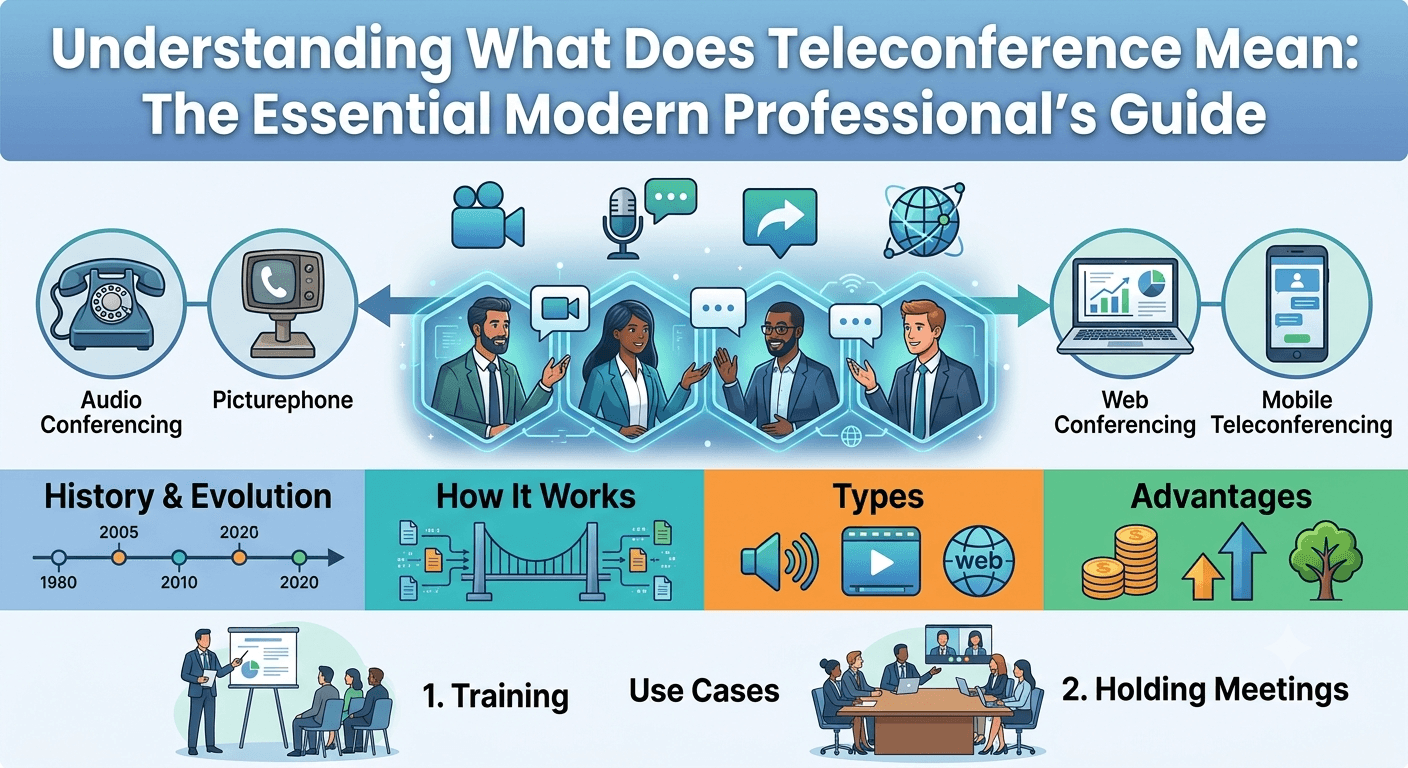
Understanding what does teleconference mean is essential for any professional navigating the modern digital landscape. At its core, a teleconference is a live, interactive exchange between two or more people in different geographical locations using electronic communication systems. Unlike a standard two-way phone call, it typically involves multiple participants and can incorporate various media, such as voice, video, and data sharing. This technology bridges the gap between remote teams, allowing for real-time collaboration that mimics the intimacy and efficiency of in-person gatherings. By leveraging telecommunication channels, businesses can conduct meetings, seminars, and training sessions without the logistical burden of travel.
What is teleconferencing?
To fully grasp what does teleconference mean, one must look at it as a versatile tool that encompasses several forms of remote communication. While the teleconference meaning is often associated with audio-only calls, the modern teleconference definition has expanded significantly to include video teleconferencing and web-based collaboration. The primary goal is to facilitate a “tele-conference” where participants feel as though they are in the same room. A teleconference call meaning usually refers to a group session conducted over a telephone conference line, allowing for clear audio exchange among dozens or even hundreds of attendees simultaneously.
The definition of teleconferencing emphasizes the ability to connect people via telecommunication services, regardless of the hardware used. Whether you are using a teleconference telephone in a boardroom or a mobile device, the concept remains the same: a synchronized meeting across distances. For many organizations, understanding what is a teleconference is the first step toward digital transformation. By implementing a reliable teleconferencing service, companies can unify their communications, ensuring that a telemeeting is just as productive as a physical encounter. This technology is often referred to as a teleconf or a telecon in casual business jargon, highlighting its ubiquity in the daily workflow.
History of teleconferencing
The journey to understanding what does teleconference mean begins long before the internet era. The earliest forms of this technology can be traced back to the 1950s and 60s when AT&T began experimenting with “Picturephone” technology. However, the true teleconference meaning started to take shape with the advent of dedicated telephone conference bridges, which allowed multiple callers to join a single line. In the early 1980s, video teleconferencing began to emerge, though it was prohibitively expensive and required massive hardware setups. These early systems were the precursors to the seamless video teleconference experiences we have today, serving as the foundation for the teleconference define standards.
As digital networks evolved from analog lines to ISDN and eventually to IP-based systems, the teleconferencing definition shifted toward software-centric solutions. The 1990s saw the rise of web conferencing, which added data sharing to the audio-visual mix. By the early 2000s, the introduction of VoIP (Voice over Internet Protocol) revolutionized how we answer the question of what is teleconferencing. It reduced costs and made the technology accessible to small businesses, not just large corporations. This evolution paved the way for the high-definition telepresence meaning we recognize today, where the goal is to create a truly immersive environment that feels indistinguishable from a face-to-face interaction.
How Teleconferencing Works?
To explain what does teleconference mean in technical terms, we must look at the infrastructure that supports it. A teleconference works by converting sound waves and video signals into digital data packets. These packets are transmitted over the internet or a traditional phone network to a central server or bridge. This bridge acts as the “meeting room,” receiving data from all participants and redistributing it so that everyone can hear and see each other in real time. For a teleconference call, a central service provider usually hosts the teleconference line, ensuring that the audio levels are balanced and that participants can be added or removed without disrupting the flow.
The underlying technology often relies on SIP (Session Initiation Protocol) or H.323 standards to manage the connection. When you engage in a video teleconference, your device uses codecs to compress the large amount of video data, making it easier to transmit across varying internet speeds. This process ensures that what is a teleconference call remains fluid and clear. Modern teleconference services also incorporate encryption to protect sensitive business data. By understanding the mechanics of teleconferencing, organizations can better troubleshoot issues and optimize their teleconference telephone setups for maximum clarity.
Types of Teleconference
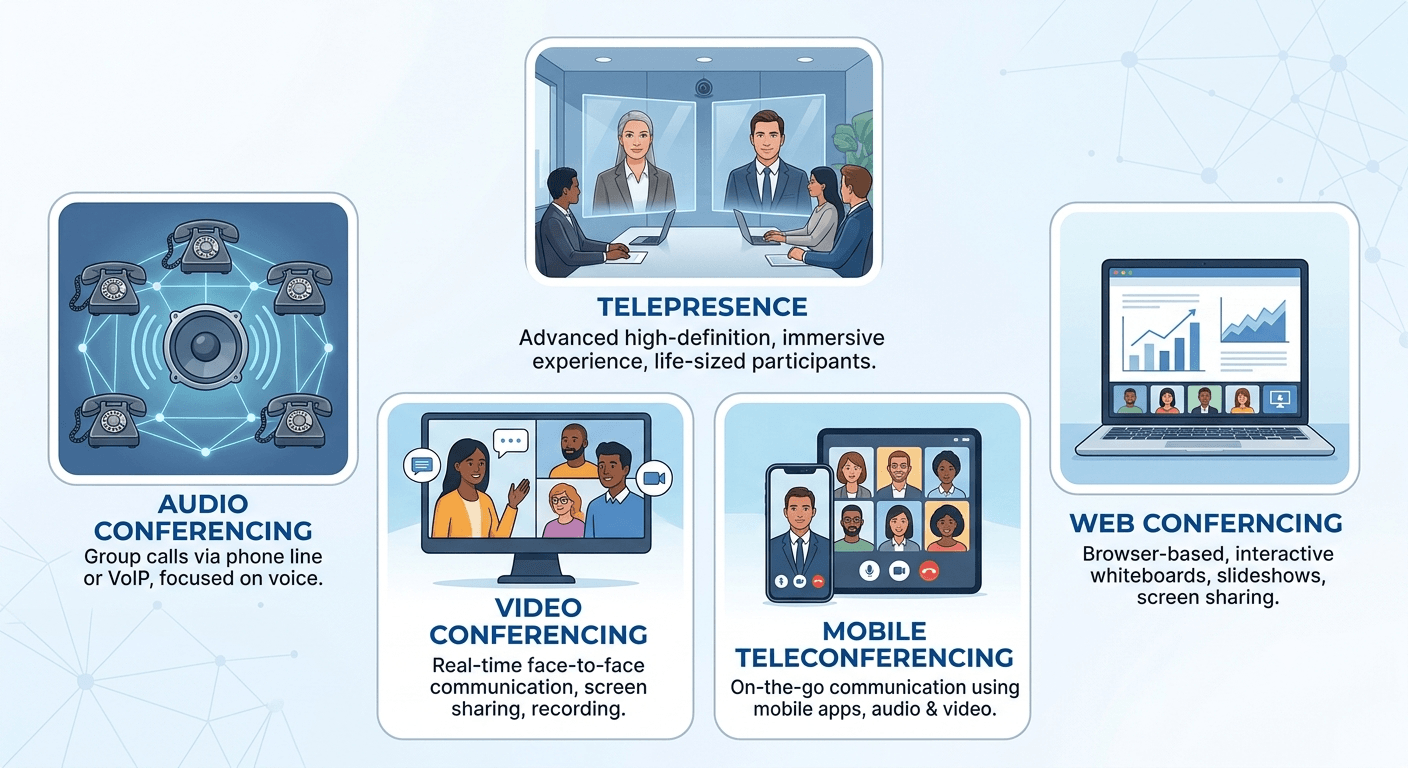
Understanding what does teleconference mean requires a look at the different formats available to users. Depending on the business needs, a tele-conference can take many forms, ranging from simple audio bridges to complex telepresence rooms.
-
Audio Conferencing: This is the most basic form, often called a phone teleconference, where participants connect via a teleconference telephone or mobile device to speak in a group setting.
-
Video Conferencing: This involves the transmission of synchronized video and audio, allowing participants to see facial expressions and body language.
-
Web Conferencing: Usually conducted through a browser, this type allows for screen sharing, slideshows, and interactive whiteboards during a tele meeting.
-
Telepresence: An advanced version of video conferencing that uses high-end hardware to create a life-sized, high-definition experience.
-
Mobile Teleconferencing: Specifically designed for users on the go, such as learning how to teleconference on android or iOS devices.
1. Audio Conferencing
Audio conferencing is often the entry point for those asking what does teleconference mean in a professional setting. It remains highly popular because of its simplicity and low barrier to entry. All a participant needs is a standard phone or a VoIP connection to join. The teleconference meaning in this context focuses on vocal clarity and the ability for a moderator to manage a large group of listeners. Many businesses use this for weekly check-ins or “all-hands” meetings where visual aids are not strictly necessary. It is a cost-effective way to utilize telephone conferencing without requiring high-speed fiber optics for video streaming.
Despite being the “older” technology, audio conferencing has seen significant upgrades. Modern teleconference services offer features like noise cancellation and spatial audio, which makes it easier to tell who is speaking. When we define teleconference in an audio-only capacity, we often think of the teleconference line provided by specialized vendors. These services provide a dial-in number and a unique access code, making it easy for anyone to join from anywhere in the world. This accessibility is a major reason why the teleconferencing meaning remains so tied to voice communication in many corporate cultures.
2. Video Conferencing
When most people ask what does teleconference mean today, they are likely thinking of video teleconferencing. This medium has become the standard for remote work, providing a richer experience than audio alone. By incorporating cameras and screens, a video teleconference enables better engagement and reduces the “out of sight, out of mind” phenomenon often found in remote teams. It allows for the use of visual cues, which account for a significant portion of human communication. High-quality video teleconferencing tools also allow for features like background blur, recording, and real-time chat, further expanding the what is teleconference definition.
The rise of high-speed internet has made video teleconferencing available to everyone. It is no longer just for the boardroom; it is now used for telehealth, education, and social gatherings. When you consider what is a teleconference in the 21st century, the integration of video is almost mandatory for effective collaboration. Modern software handles the complex task of synchronizing audio and video to prevent lag, ensuring that the teleconference meaning is preserved across different time zones. This technology has significantly reduced the need for physical travel, contributing to both environmental sustainability and corporate efficiency.
Advantages and disadvantages of teleconference
Exploring what does teleconference mean involves weighing the pros and cons of replacing physical meetings with digital ones. While the technology offers unprecedented freedom, it also presents unique challenges that organizations must manage.
According to a report by Vonage, businesses can save up to 30% on travel costs by switching to a robust teleconference service.
This financial benefit is a primary driver for the adoption of teleconferencing across global industries. However, the human element can sometimes be lost if the technology is not utilized correctly or if the connection quality is poor.
-
Advantages of teleconference
The advantages of teleconferencing are numerous and impact various levels of an organization. First and foremost is the significant reduction in travel time and expenses. Employees no longer need to spend hours in transit for a one-hour meeting. This leads to increased productivity, as the time saved can be redirected toward core business tasks. Another major benefit is the ability to connect a global workforce instantly. When you understand what is teleconferencing, you realize it breaks down geographical barriers, allowing a company in London to collaborate seamlessly with a team in Tokyo. This global reach is essential for modern market expansion.
-
Cost Efficiency: Eliminates the need for flights, hotels, and meal reimbursements for attendees.
-
Increased Participation: More people can join a teleconference than might be able to attend a physical meeting.
-
Environmental Impact: Reducing travel lowers the corporate carbon footprint, supporting green initiatives.
-
Flexibility: Meetings can be scheduled and launched at a moment’s notice to address urgent issues.
-
Recording and Documentation: Most teleconference services allow for easy recording, providing a permanent record of the discussion.
-
Information Sharing: Real-time screen sharing and file transfers make collaborative work much faster.
-
Disadvantages of teleconference
Despite the benefits, there are certain disadvantages of teleconferencing that need to be addressed. The most common issue is technical failure. A poor internet connection can lead to dropped calls, frozen video, or distorted audio, which can derail a high-stakes tele meeting. Furthermore, the lack of physical presence can sometimes lead to a lack of focus. Participants might be tempted to multitask, leading to a decrease in the overall effectiveness of the session. Understanding what does teleconference mean also involves recognizing these “soft” challenges, such as the difficulty in reading subtle body language or the “zoom fatigue” associated with back-to-back video calls.
-
Technical Issues: Problems with hardware, software, or network bandwidth can disrupt communication.
-
Lack of Personal Touch: It can be harder to build deep rapport and trust without physical interactions.
-
Time Zone Challenges: Coordinating a teleconference across multiple continents requires careful scheduling.
-
Security Risks: Without proper encryption, a teleconference line could be vulnerable to unauthorized access.
-
Equipment Costs: High-quality video teleconferencing systems and telepresence setups can require significant initial investment.
-
Distractions: Remote participants may face interruptions from their home or local environment.
Use cases for teleconferences
A teleconference has a wide range of use cases. Whether it is for a small startup or a multinational corporation, knowing what does teleconference mean in practice helps in choosing the right tools. Here are three top examples:

1. Holding conferences
The most obvious use case of teleconferencing is that it enables businesses to hold conferences remotely. Thanks to its ability to facilitate high capacity calls, a teleconference may also be more practical than a physical conference. Large-scale events that previously required renting expensive halls and logistics can now be hosted via a teleconference service. This allows for a much larger audience to attend, as there are no physical space constraints. Organizers can use breakout rooms and interactive polls to keep the audience engaged, making the definition of teleconferencing in an event context very dynamic and scalable.
2. Training
With video teleconferencing, employees can conduct training without the need to travel, which may be impractical for remote workforces. This is particularly useful for onboarding new hires or rolling out new software updates across different branches. A teleconference allows the trainer to share their screen, demonstrate processes in real-time, and answer questions instantly. This “telemeeting” format ensures that everyone receives the same information simultaneously, maintaining consistency in training standards. Furthermore, recorded sessions can be added to a library for future reference, maximizing the value of the teleconference meaning.
3. Hosting meetings
With a teleconference, you’re no longer restricted by location. You can meet with anyone, anywhere in the world (as long as they have an internet or phone connection). This is vital for project management where daily or weekly syncs are required. Instead of waiting for a monthly visit, teams can have a teleconference to discuss updates, resolve bottlenecks, and brainstorm new ideas. This frequency of communication, enabled by understanding what is a teleconference call, leads to faster decision-making and a more agile business model. It also supports the modern “work from anywhere” culture that many top-tier talents now expect.
How to run an effective teleconference
Knowing what does teleconference mean is only half the battle; running one effectively is where the real value lies. An ineffective meeting is a waste of time, whether it is in person or via a teleconference line. To ensure that your digital gatherings are productive, you must follow a set of best practices that account for the unique nature of remote communication. Preparation is key, as is the ability to manage the flow of conversation when people cannot see each other clearly.
-
Make your meeting count, and set an agenda.
Every teleconference should have a clear purpose and a structured agenda. Without a plan, a teleconference can easily devolve into unstructured chatter, wasting valuable time. Distribute the agenda at least 24 hours in advance so that participants know what to expect and what is a teleconferencing goal for the session. This helps in keeping the discussion on track and ensures that all critical points are covered. A well-defined agenda also helps participants understand the teleconference meaning and their specific role within the meeting, leading to higher engagement levels.
-
Practice using the technology ahead of the meeting
Nothing kills the momentum of a telemeeting faster than technical difficulties. Before the scheduled start time, the host should test the teleconference service, camera, and microphone. This is especially important if you are using new software or a different teleconference telephone system. Encourage participants to do the same, particularly if they are unfamiliar with how to teleconference on android or other mobile platforms. By minimizing technical hitches, you ensure that the focus remains on the content of the meeting rather than the tools used to facilitate it.
-
Share key documents ahead of time.
To maximize the efficiency of your video teleconference, share any necessary documents, reports, or presentations before the call begins. This allows participants to review the material beforehand, so the meeting time can be spent on discussion and decision-making rather than reading. When you define teleconference success, it often comes down to how well-informed the participants are. Providing these materials early also serves as a backup in case screen sharing fails during the live session, ensuring the teleconferencing definition of “exchange of information” is still met.
-
Be conscious of noise disruption.
Background noise is one of the biggest distractions during a teleconference call. Participants should be encouraged to stay on mute when they are not speaking, especially if they are in a noisy environment. The host should also use a high-quality teleconference service that offers noise-suppression features. Being mindful of noise disruption shows respect for other participants and ensures that the teleconference meaning is not lost in a sea of static or household sounds. Choosing a quiet location for the call is a fundamental part of what is a teleconference etiquette.
Remember to record your meeting.
One of the greatest features of modern teleconferencing is the ability to record sessions. This is incredibly useful for those who could not attend and for maintaining an accurate record of what was discussed and decided. Most video teleconferencing platforms offer a simple one-click recording feature. Having a recording ensures that the details of the teleconference are preserved, which is helpful for accountability and for future reference. It also allows participants to be more present in the moment, as they don’t have to worry about taking exhaustive notes while trying to contribute to the discussion.
Future of teleconference
The future of what does teleconference mean is being shaped by rapid advancements in artificial intelligence and extended reality. We are moving toward a world where teleconferencing is no longer just about seeing and hearing someone on a screen, but about feeling as though you are physically present in their space. AI is already being integrated into teleconference services to provide real-time translation, automated transcription, and even meeting summaries. This makes the teleconferencing meaning even more inclusive, breaking down language barriers and making information more accessible to everyone involved.
Furthermore, the rise of 5G technology will solve many of the bandwidth issues currently associated with video teleconferencing. We can expect to see more widespread use of 3D holograms and virtual reality (VR) environments, which will redefine the telepresence meaning. Research indicates that the global video conferencing market is expected to reach nearly $19 billion by 2030, driven by these technological innovations. As we look ahead, the answer to what is teleconferencing will continue to evolve, moving toward a truly immersive and seamless global communication network that connects us more deeply than ever before.
Read More: Scim vs SSO: Crucial Differences Explained for IT Teams
Conclusion
Understanding what does teleconference mean is fundamental for success in the modern, interconnected world. From its humble beginnings as a simple audio bridge to the high-definition video teleconferencing solutions of today, this technology has transformed how we work, learn, and collaborate. While there are challenges like technical disruptions and “zoom fatigue,” the benefits of cost savings, global reach, and increased flexibility far outweigh the drawbacks. By following best practices—such as setting clear agendas and mastering the technology—businesses can ensure that every teleconference is a productive and engaging experience.
As we move into the future, the teleconference definition will only grow more sophisticated, incorporating AI and immersive realities to bridge the gap between physical and digital spaces. Whether you are using a teleconference telephone for a quick check-in or a complex telepresence system for a board meeting, the goal remains the same: clear, effective communication. By embracing these tools, organizations can stay agile and connected, regardless of where their team members are located. Ultimately, the teleconference meaning is about more than just technology; it is about bringing people together to achieve common goals in an increasingly virtual world.
FAQs
-
What is a teleconference?
A teleconference is a live communication session between two or more people located in different areas, using telecommunications technology to share audio, video, or data. It serves as a virtual meeting space that eliminates the need for physical travel while allowing for real-time interaction and collaboration among participants across the globe.
-
How to set up a teleconference call
Setting up a call requires choosing a reliable teleconference service provider and obtaining a dedicated dial-in number or meeting link. The host then schedules the meeting and invites participants by sharing the access details. Most modern platforms allow you to set this up through a web browser or a dedicated mobile application.
-
How do you join a teleconference?
To join, you simply need to click the meeting link provided by the host or dial the teleconference line number from your phone. If it is a secured meeting, you may be prompted to enter a passcode or wait in a virtual lobby until the host grants you access to the session.
-
Is a teleconference a virtual meeting?
Yes, a teleconference is a type of virtual meeting. While the term “virtual meeting” is a broad category that includes any interaction happening online, a teleconference specifically refers to the synchronous, interactive nature of these sessions, whether they are audio-only or include video and screen sharing.
-
Is teleconference a phone call?
While a teleconference can be conducted over a phone, it differs from a standard phone call because it involves three or more people and often includes additional features. While a basic audio conference is technically a group phone call, the modern teleconference definition usually implies a more structured business communication setup.
-
What is the meaning of tele conferencing?
Teleconferencing refers to the act of holding a conference via telecommunications. It is the process of using electronic channels—such as telephone lines or internet data streams—to facilitate a meeting between people who are not in the same physical room, focusing on live, two-way communication.
-
Is Zoom a teleconference?
Yes, Zoom is a popular software platform used for video teleconferencing. It provides the tools necessary to host audio and video meetings, share screens, and record sessions, making it one of the most widely recognized teleconference services in the world today.
-
Is a webinar a teleconference?
A webinar is a specific type of teleconference that is typically more of a presentation or seminar. While a standard teleconference is usually a multi-way conversation, a webinar is often one-to-many, where a host speaks to a large audience with limited interactive elements like Q&A or polls.