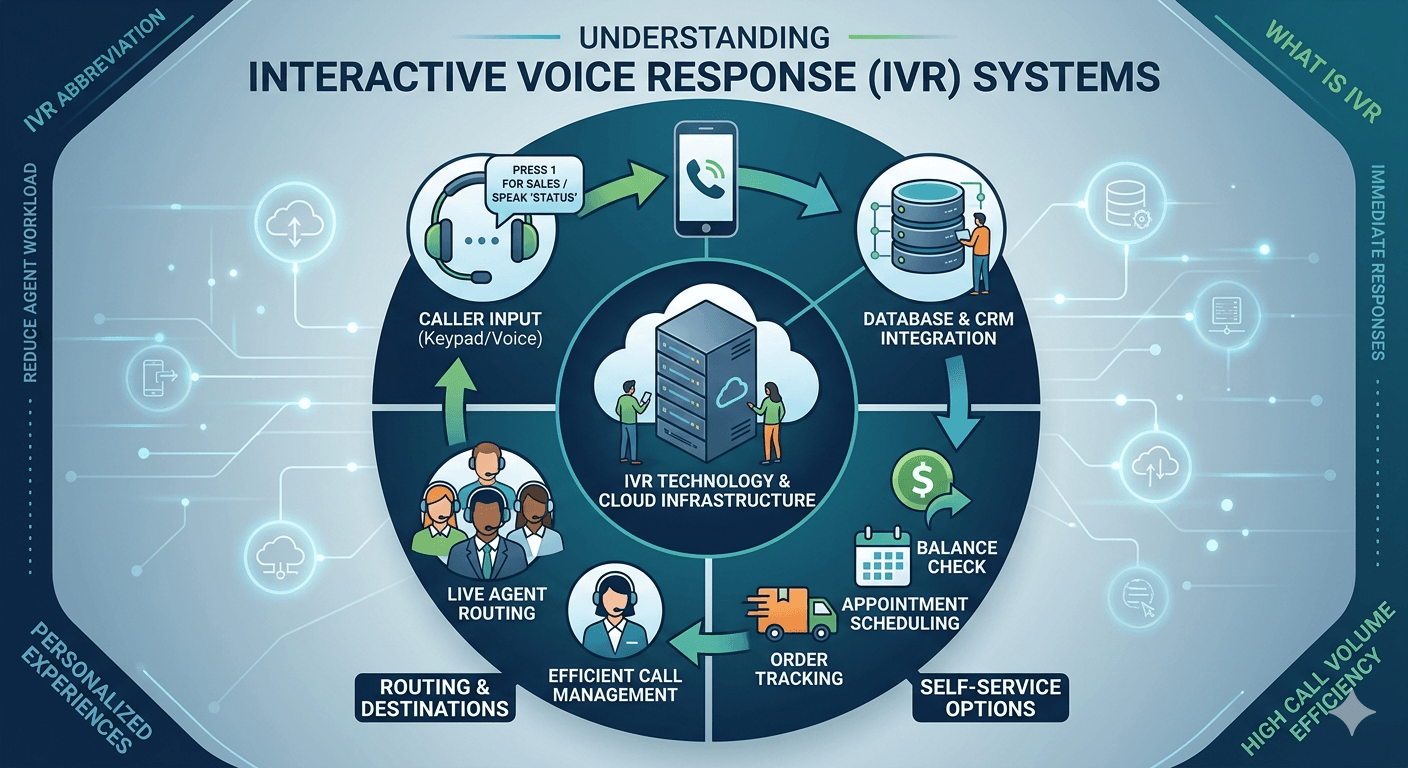
Interactive voice response technology is an automated telephony system that interacts with callers, gathers necessary information, and routes calls to the appropriate destinations. It functions through a combination of pre-recorded voice prompts and touch-tone keypad entry or voice recognition. This system allows businesses to manage high call volumes efficiently by providing self-service options for routine inquiries like balance checks or appointment scheduling. By utilizing this technology, organizations reduce the workload on human agents while ensuring that customers receive immediate responses. Modern versions often integrate with cloud databases to deliver personalized experiences, making them a fundamental component for modern customer service operations.
Understanding Interactive Voice Response (IVR) Systems
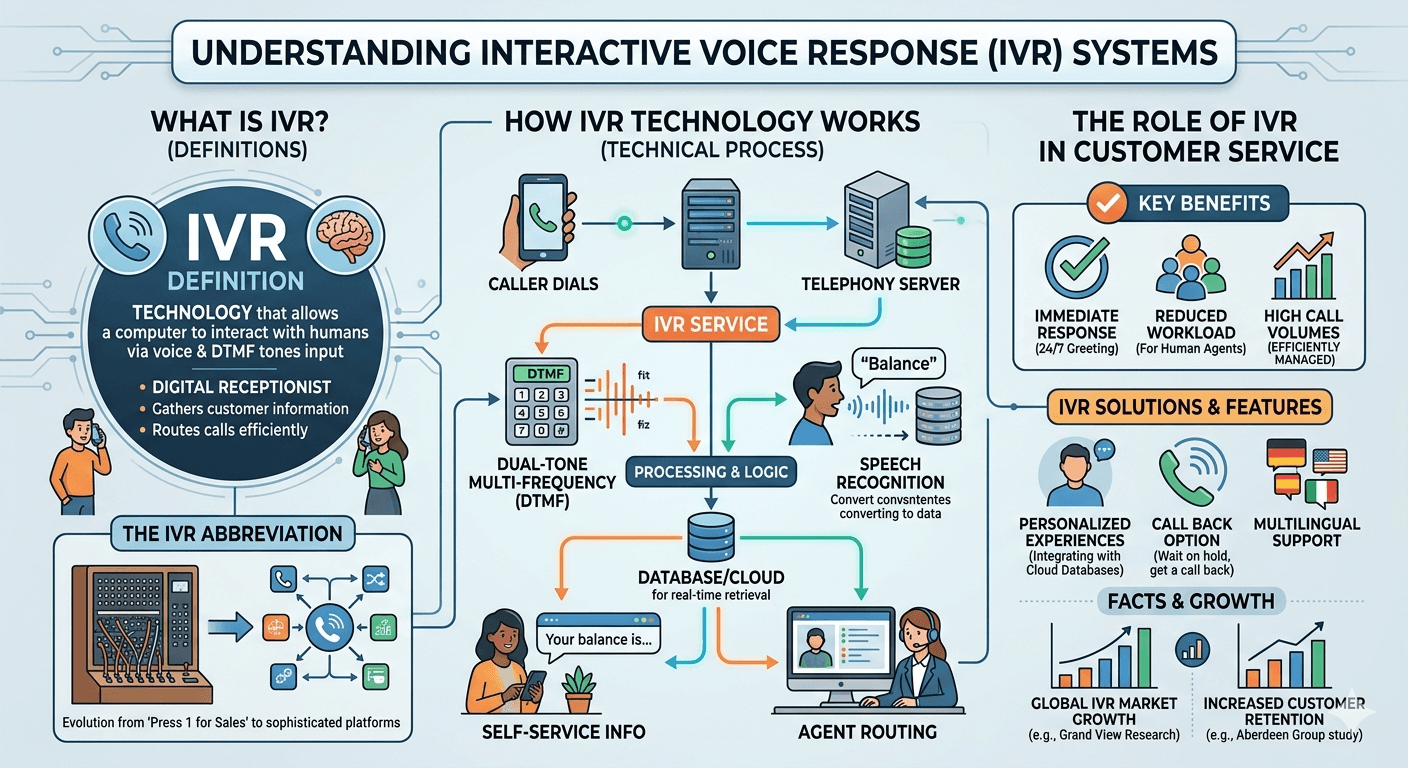
The basic ivr meaning refers to a technology that allows a computer to interact with humans through the use of voice and DTMF tones input via a keypad. When a customer dials a business number, the system answers with a professional greeting and presents a menu of options. This automated voice response system acts as a digital receptionist, ensuring that every caller is greeted instantly regardless of the time of day. The ivr abbreviation is one of the most recognized terms in the telecommunications industry, representing a shift from manual switchboards to sophisticated digital routing.
Knowing what is ivr involves looking at it as a bridge between the caller and the information they seek. In a standard ivr call, the system plays a recorded file or uses text-to-speech technology to communicate. If a user wants to check their order status, they might press one, or they might speak the word status if the system supports voice recognition. This interaction provides a streamlined path for the user while gathering data that can be used by the business to improve service delivery. Essentially, ivr means providing a structured interface for voice-based data exchange.
The evolution of what is ivr in call center environments has moved from simple “press one for sales” menus to complex conversational interfaces. Modern systems can identify a caller based on their phone number and provide personalized greetings or account-specific information immediately. This level of sophistication transforms the ivr phone meaning from a simple routing tool into a comprehensive customer engagement platform. Whether used for outbound notifications or inbound support, these systems are designed to maximize the efficiency of every connection made over the telephone network.
How Interactive Voice Response Technology IVR Systems Work
The technical process of an ivr calling system begins when the telephony server receives an incoming signal. The system then executes a script that dictates the interaction flow, starting with an audio prompt. The caller responds either by pressing a key on their telephone or by speaking. If the user uses the keypad, the system detects the specific frequency of the tone, known as Dual-Tone Multi-Frequency signaling. If the user speaks, the ivr service utilizes speech recognition software to convert the audio into data that the computer can understand and process.
Once the input is received, the ivr interactive voice response software checks the information against a database or passes it to a routing engine. For instance, if a caller provides an account number, the system can retrieve the associated balance and read it back to the caller without ever involving a human representative. This demonstrates how an ivr phone system serves as a front-end interface for complex back-end data systems. The communication between the telephone network and the internal business database is seamless, allowing for real-time information retrieval and updates.
-
The caller dials the business number and the call is intercepted by the automated server.
-
An audio menu is played, providing various options based on the department or service required.
-
The caller provides input via voice or keypad, which is then processed by the system logic.
-
The system either provides the requested information directly or routes the call to a live agent with the gathered data already displayed on their screen.
Research by Grand View Research indicates that the global IVR market size was valued at USD 4.2 billion in 2020 and is expected to grow significantly.
This growth is attributed to the increasing demand for self-service options and the integration of artificial intelligence into cloud based ivr solution platforms. Another study by the Aberdeen Group found that companies using advanced automated systems see a 12.1% increase in customer retention rates compared to those that rely solely on manual routing. These facts highlight the critical role that automated voice technology plays in modern business sustainability.
The Role of Best Interactive Voice Response IVR Systems in Customer Service
Implementing a high-quality ivr solution is essential for businesses that want to maintain high levels of customer satisfaction. When a customer encounters a well-designed menu, they feel that their time is respected and that the business is organized. The ivr customer service experience depends heavily on the clarity of the voice prompts and the simplicity of the menu structure. If a system is too complex, it can lead to caller frustration, but a streamlined system ensures that users reach the right department on the first attempt, reducing the need for multiple transfers.
The best ivr system designs prioritize the most common reasons for calling, placing them at the beginning of the menu. This approach minimizes the time a caller spends listening to irrelevant options. Furthermore, an ivr solution often includes features like “callback,” where a customer can hang up and wait for an agent to call them back instead of staying on hold. This feature is particularly valuable during peak hours, as it reduces the perceived wait time and improves the overall perception of the brand’s service quality.
-
Self-service capabilities allow customers to complete transactions, such as paying bills or activating cards, without waiting for a human agent.
-
Data collection features ensure that when a call is eventually routed to an agent, the agent already has the caller’s account details and the reason for the call.
-
Multilingual support enables businesses to serve a diverse customer base by offering menus in different languages based on the caller’s preference or geographic location.
Different Types of IVR Systems
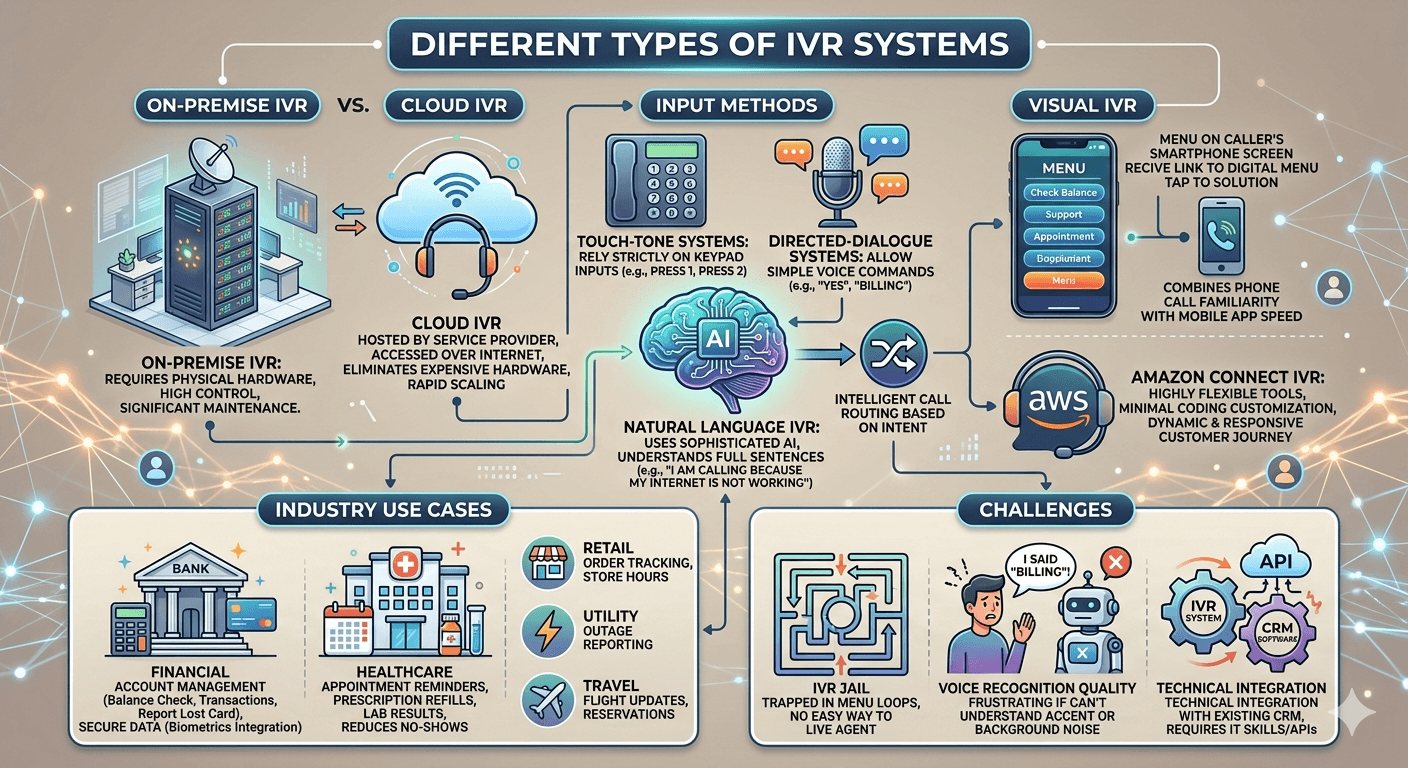
Businesses can choose from several different types of setups depending on their technical requirements and budget. A traditional on-premise ivr system requires physical hardware located within the company’s office, which offers high levels of control but requires significant maintenance. In contrast, a cloud ivr is hosted by a service provider and accessed over the internet. This model is increasingly popular because it eliminates the need for expensive hardware and allows for rapid scaling as the business grows.
Another distinction exists between touch-tone systems and directed-dialogue systems. Touch-tone systems rely strictly on keypad inputs, whereas directed-dialogue setups allow for simple voice commands like “yes” or “billing.” The most advanced version is the natural language ivr, which uses sophisticated AI to understand full sentences. This type of interactive voice response system allows a caller to state their problem in their own words, such as “I am calling because my internet is not working,” and the system intelligently routes the call based on the intent of the statement.
Visual IVR is a newer variation that provides a menu on a caller’s smartphone screen instead of an audio-only experience. When a customer calls, they receive a link to a digital menu where they can tap their way to a solution. This hybrid approach combines the familiarity of a phone call with the speed of a mobile app. For companies looking for a cloud based ivr solution, platforms like amazon connect ivr provide highly flexible tools that can be customized with minimal coding, allowing for a more dynamic and responsive customer journey.
Industry Use Cases for IVR Technology
In the financial sector, what is ivr phone system functionality is used most frequently for account management. Customers can call their bank to check balances, review recent transactions, or report a lost credit card. Because these systems are secure and can be integrated with biometrics, they provide a safe way to handle sensitive data. The banking industry relies on these automated systems to handle the massive volume of daily inquiries that do not require the specialized knowledge of a human bank teller.
The healthcare industry also benefits significantly from ivr uses, particularly for appointment reminders and prescription refills. Patients can receive automated calls reminding them of an upcoming doctor’s visit and can confirm or cancel the appointment by pressing a key. This reduces the number of no-shows and allows clinic staff to focus on patient care rather than administrative tasks. Additionally, healthcare providers use these systems to deliver lab results securely, ensuring that patients get their information quickly and privately.
-
Retailers use automated systems for order tracking and providing store hours or location information to callers.
-
Utility companies deploy them for outage reporting, allowing thousands of customers to report a power failure simultaneously without crashing the call center.
-
Travel and hospitality businesses use them for flight status updates, hotel reservations, and automated check-in processes.
Challenges of Implementing IVR Systems
While the benefits are numerous, there are several challenges associated with an interactive voice response call center setup. One of the most common issues is “ivr jail,” where a caller becomes trapped in a loop of menus without an easy way to speak to a live person. This often happens when a business tries to automate too many processes without providing a clear exit strategy for complex problems. To avoid this, businesses must ensure that the option to speak with an agent is always available and easy to find within the menu structure.
Another challenge is the quality of the voice recognition. If an ivr calling system cannot understand a caller’s accent or if there is background noise, the interaction can quickly become frustrating. This requires companies to invest in high-quality speech engines and to regularly test their scripts with diverse groups of users. Furthermore, maintaining the content of the menus is essential; outdated information or broken links within the menu system can damage a company’s reputation and lead to a loss of customer trust.
The technical integration of an ivr system with existing CRM software can also be a hurdle. For the system to be truly effective, it needs to be able to read and write data to the company’s central records in real-time. This often requires specialized IT skills or the use of modern APIs. However, once the integration is complete, the benefits of having a unified view of the customer journey far outweigh the initial difficulties of the setup process.
Essential Features of Top-Tier IVR Software
When looking for the best interactive voice response ivr systems, businesses should prioritize platforms that offer robust reporting and analytics. Understanding how callers navigate the menu, where they drop off, and how long they spend in each section is crucial for continuous improvement. These insights allow managers to refine the menu structure and eliminate bottlenecks that might be causing friction in the customer experience. Analytics can also reveal peak calling times, helping businesses staff their live agent teams more effectively.
Dynamic routing is another essential feature of modern ivr services. This allows the system to change the call flow based on external factors, such as the caller’s geographic location or the current wait time in the queue. For example, if the wait time for technical support is over ten minutes, the system could automatically offer the caller a callback or suggest they visit the online help center. This level of responsiveness makes the automated voice response system feel more like an intelligent assistant rather than a static recording.
-
Standardized API access allows for easy connection to third-party tools like Salesforce, Zendesk, or internal proprietary databases.
-
Text-to-speech engines enable the system to read out dynamic information, such as names or specific dollar amounts, in a natural-sounding voice.
-
Advanced security protocols, including voice biometrics and multi-factor authentication, ensure that customer data remains protected during the call.
The Future of Interactive Voice Response Technology IVR Systems
The future of these systems is closely tied to the advancement of artificial intelligence and machine learning. As natural language processing becomes more accurate, the distinction between talking to a bot and talking to a human will continue to blur. Future ivr interactive voice response software will likely be able to detect the emotional state of a caller through their tone of voice and adjust the interaction accordingly. If a system detects frustration, it could automatically escalate the call to a senior manager to prevent further dissatisfaction.
We are also seeing a shift toward omnichannel integration, where the ivr system is just one part of a unified communication strategy. A customer might start a conversation with a chatbot on a website and then transition to an ivr call, with all their previous information being carried over seamlessly. This provides a consistent experience across all touchpoints. As more businesses adopt cloud based ivr solution models, the ability to deploy these advanced features quickly and cost-effectively will become a standard requirement for any competitive organization.
The integration of video and screen-sharing into the voice interface is also an emerging trend. In some specialized support scenarios, a caller might start with a voice menu and be prompted to switch to a video call for better troubleshooting. This evolution ensures that interactive voice response technology ivr systems remain a vital part of the business landscape, adapting to the changing preferences of a digital-first consumer base. By staying informed about these trends, companies can ensure their communication infrastructure remains relevant and effective.
Read More: What is Visual Voicemail? How to Check Voicemail on Android
Final Thought
Interactive voice response (IVR) systems have evolved from simple automated menus into sophisticated, AI-driven platforms that are essential for modern business. By choosing the right ivr solution and focusing on the user experience, companies can significantly reduce operational costs while providing faster, more personalized service to their customers. Whether you are looking for a basic ivr call center setup or a complex cloud-based system, the key to success lies in simplicity, integration, and continuous optimization based on real-world caller data.
FAQs
-
What does IVR stand for?
IVR stands for Interactive Voice Response. It is a technology that allows callers to interact with a computer-operated telephone system through the use of voice or a touch-tone keypad. This system is designed to route calls, provide information, and handle routine tasks without the need for a live human agent.
-
How do you set up an IVR?
To set up a system, you first need to choose between an on-premise or cloud-based provider. You then map out your call flow, which is a diagram of the different menu options and where they lead. After that, you record your voice prompts or use text-to-speech tools, and finally, you integrate the system with your existing phone lines and customer database.
-
Are IVR calls recorded?
Most modern systems have the capability to record both the automated interaction and the subsequent conversation with a live agent. These recordings are typically used for quality assurance, training purposes, and maintaining a record of customer transactions. Businesses usually notify callers that the call is being recorded at the start of the interaction.
-
How much does IVR cost?
The cost varies widely depending on the complexity of the system and whether it is hosted in the cloud or on-premise. Cloud-based solutions often charge a monthly fee per user or per minute of use, which can range from a few dollars to several hundred depending on features. On-premise systems involve higher upfront costs for hardware and installation but may have lower ongoing monthly fees.
-
What’s the difference between IVR and an auto-attendant?
An auto-attendant is a basic system that simply routes calls to different extensions or departments (e.g., “Press 1 for Sales”). An IVR is a more advanced system that can interact with databases to provide or collect information, such as checking a bank balance or processing a payment, making it a much more functional tool for customer self-service.