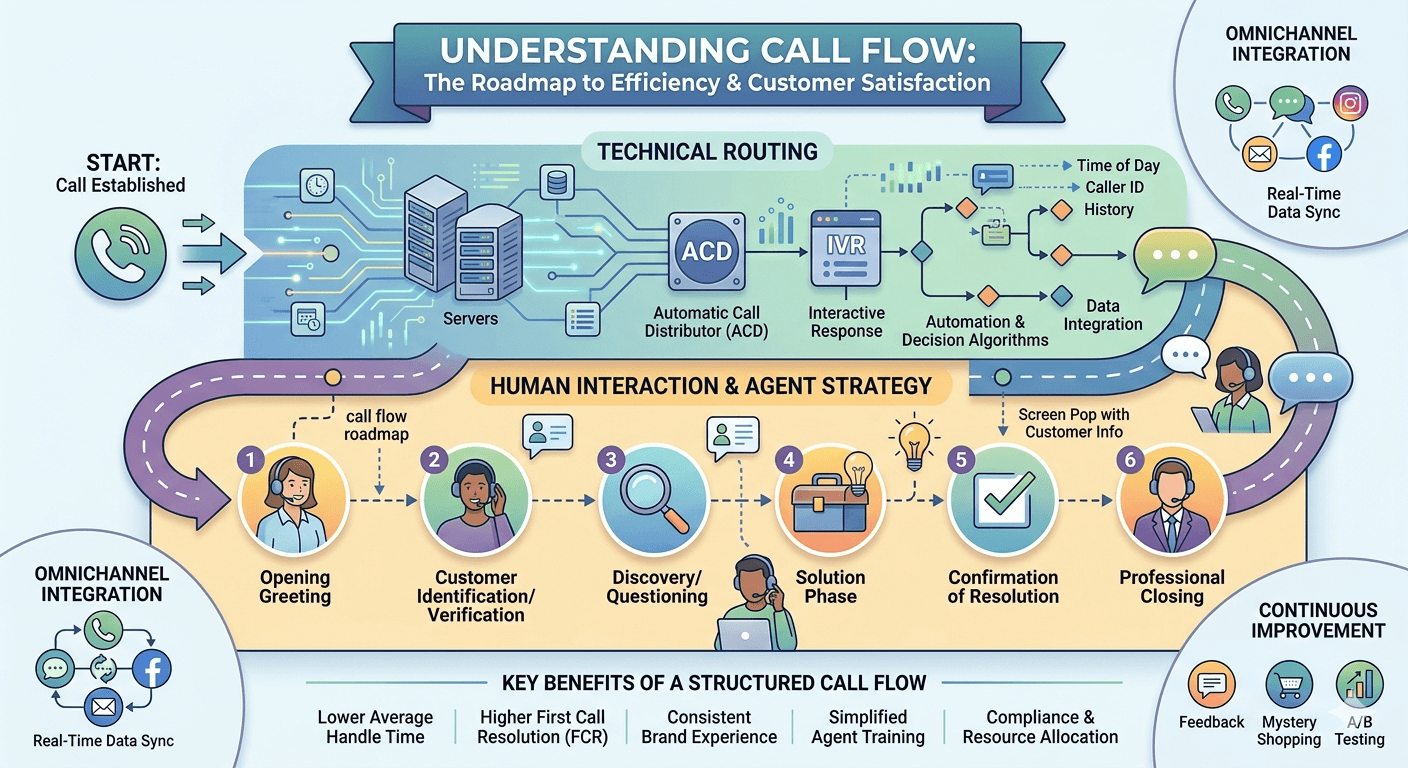
Understanding the call flow meaning is essential for any organization that relies on telecommunications to interact with its audience. At its core, this concept represents the entire journey a phone call takes from the moment the connection is established until the interaction concludes. It is a dual-layered system that combines technical routing with human communication strategies. The technical side focuses on how the hardware and software handle the signal, while the procedural side dictates how an agent manages the conversation to achieve a specific outcome. By mapping out this journey, businesses can identify bottlenecks, improve efficiency, and ensure that every caller receives a consistent level of service regardless of which department they reach.
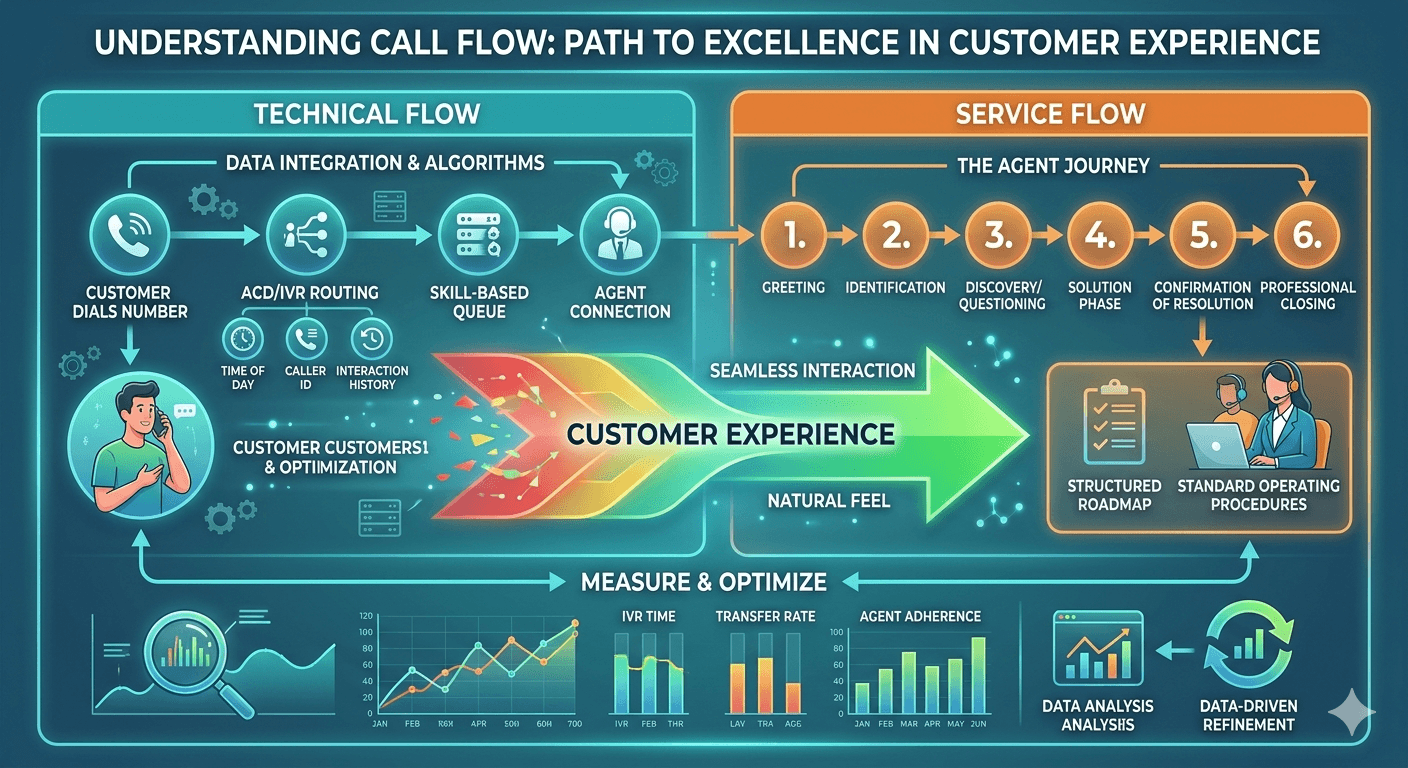
Modern communication systems have evolved far beyond simple point-to-point connections. Today, what is call flow involves complex layers of automation, data integration, and decision-making algorithms. When a customer dials a number, the system must decide where to send that call based on factors like time of day, caller ID, and previous interaction history. This initial phase of the call flows is critical because it sets the tone for the entire experience. If the routing is too complex, the caller becomes frustrated before they even speak to a human. If it is too simple, the call may end up with an agent who lacks the necessary skills to resolve the issue, leading to unnecessary transfers and delays.
A well-designed call flow process acts as a blueprint for success in a high-pressure environment. It provides agents with a structured roadmap, allowing them to focus on empathy and problem-solving rather than wondering what steps to take next. In a call center, these flows are often visualized using diagrams that show every possible turn a conversation might take. From the initial greeting to the final closing, every step is scrutinized to ensure it adds value to the customer journey. Understanding this call flow meaning allows managers to create a more resilient and scalable operation that can adapt to changing customer needs and technological advancements.
What is Call Flow and How Does it Define Customer Experience?
The term call flow meaning refers to the comprehensive path a call takes through a telephony system and the subsequent conversation between the caller and the representative. It is the architectural design of a communication session. From a technical perspective, it involves the Automatic Call Distributor (ACD) and Interactive Voice Response (IVR) systems that categorize and route incoming signals. From a service perspective, it outlines the standard operating procedures that an agent follows to identify, troubleshoot, and resolve a customer inquiry. When these two elements work in harmony, the result is a seamless interaction that feels natural to the caller while remaining highly efficient for the business.
A clear call flow process 6 steps often forms the backbone of training programs for new staff. These steps generally include the opening greeting, customer identification, discovery or questioning, the solution phase, the confirmation of resolution, and the professional closing. By breaking down the interaction into these segments, a call flow call center can monitor performance at a granular level. For example, if data shows that calls are stalling during the discovery phase, management can provide targeted coaching on how to ask better probing questions. This level of detail is what separates a professional service operation from one that is disorganized and reactive.
Furthermore, the call flow meaning extends into the realm of data collection and analytics. Every transition in the flow is a data point that can be measured. How long did the caller spend in the IVR? How many times were they transferred? Did the agent follow the prescribed sequence of troubleshooting steps? By analyzing these metrics, organizations can refine their what is a call flow strategy to reduce friction. In the digital age, customers expect immediate and accurate responses, and a robust flow is the only way to meet these expectations at scale. It ensures that the collective knowledge of the organization is available to every agent, regardless of their individual experience level.
What are the Benefits of a Call Flow System for Modern Businesses?
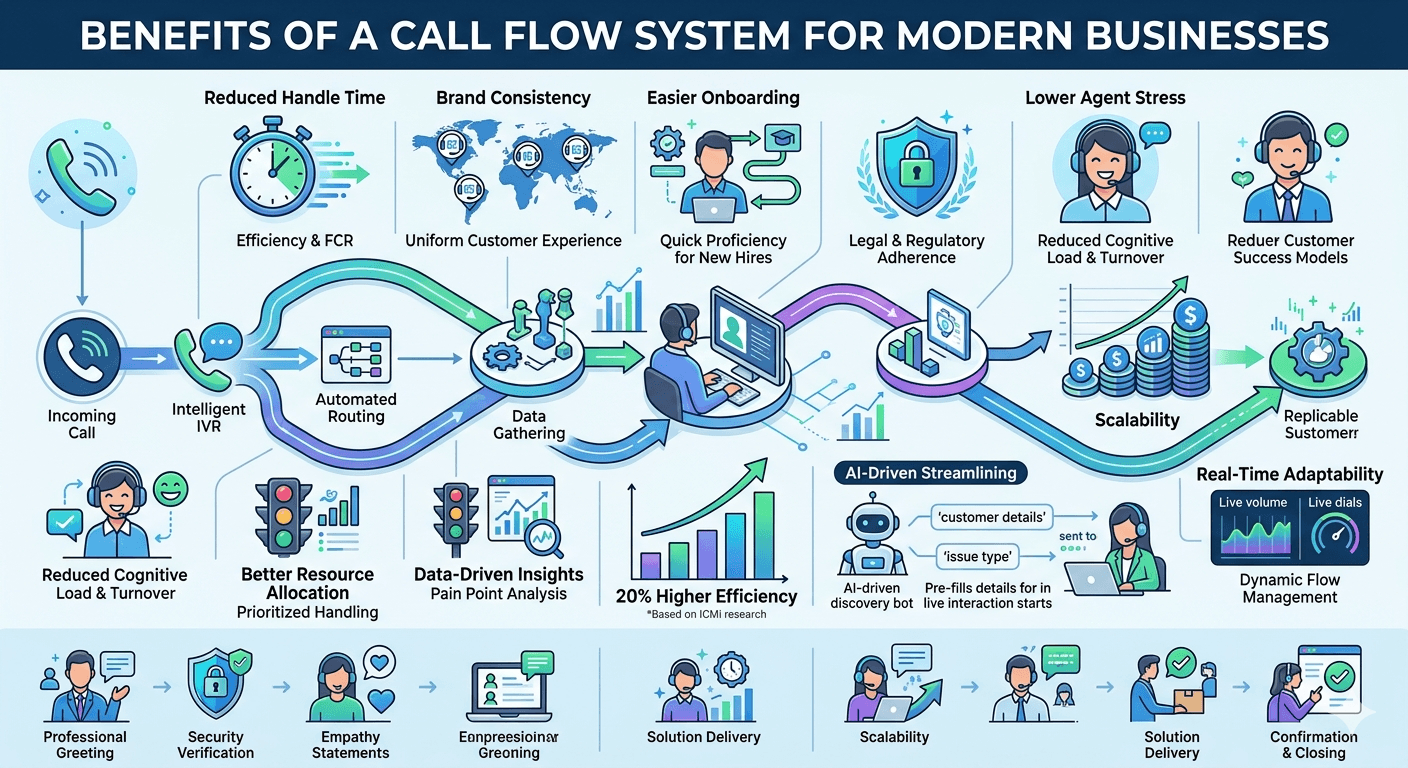
Implementing a structured call flow system offers a wide range of operational advantages that directly impact the bottom line. One of the most significant benefits is the reduction in average handle time without sacrificing service quality. When agents have a clear call flow for customer service to follow, they spend less time navigating internal systems and more time helping the caller. This consistency also leads to higher First Call Resolution (FCR) rates, as the flow ensures that the most qualified agent handles the inquiry from the start. A streamlined process minimizes the need for multiple follow-ups, which is a major driver of customer satisfaction and operational cost reduction.
The call flow meaning also includes the ability to maintain brand consistency across large teams. In a globalized world where agents might be located in different time zones or countries, a standardized call flow in call center environments ensures that every customer receives the same experience. This uniformity builds trust and reinforces the professional image of the brand. Moreover, a structured system makes it much easier to onboard new employees. Instead of relying on intuition or vague guidelines, new hires have a concrete call flow process to follow, which reduces their time to proficiency and minimizes early-career errors that could alienate customers.
-
Standardized flows ensure that all legal and regulatory compliance requirements are met during every interaction.
-
Clear roadmaps reduce the cognitive load on agents, leading to lower stress levels and decreased employee turnover.
-
Automated routing within the flow allows for better resource allocation, ensuring high-priority callers are handled first.
-
Data gathered from optimized flows provides deep insights into common customer pain points and product issues.
-
Scalability becomes easier as the organization can replicate successful flow models across new departments or locations.
-
The use of call flow software allows for real-time adjustments based on current call volumes and agent availability.
Research published by the International Customer Management Institute (ICMI) suggests that companies with highly defined call center call flow procedures see a 20 percent higher efficiency rating than those with informal processes. This efficiency stems from the elimination of redundant steps and the optimization of the handoff between automated systems and live agents. By treating the call flow meaning as a living document that is constantly updated based on feedback and data, businesses can stay ahead of customer expectations. This proactive approach to communication management is a key differentiator in competitive markets where service quality is often the primary factor in consumer choice.
Streamline Call Flow with an Intelligent IVR and Automation
Beyond the technical architecture, the success of a modern call flow depends on maintaining a consistent brand persona and real-time adaptability. Ensuring the automated voice reflects the company’s unique character fosters a sense of continuity, while regularly updating IVR prompts to address seasonal shifts or system outages provides immediate clarity to the caller. This proactive communication reduces frustration by keeping customers informed the moment they connect, preventing them from being trapped in loops that could otherwise damage the brand’s reputation for reliability.
The shift toward AI-driven discovery also fundamentally redefines the agent’s workspace, turning the call center into a hub of specialized solution providers rather than data entry points. With AI-driven bots gathering essential details before the live interaction starts, the agent can step into a “solution provider” role immediately, armed with a comprehensive customer history. This blend of automated preparation and human empathy not only handles high volume spikes with ease but also creates a superior, high-tech experience that respects the time of both the customer and the professional.
Call Flow as a Customer Service Roadmap for Agent Excellence
For a representative, the call flow meaning is that of a supportive roadmap that guides them through the complexities of customer psychology and technical troubleshooting. A well-constructed call flow for customer service doesn’t just tell an agent what to say; it tells them how to think through a problem. It provides a logical progression that starts with building rapport and ends with ensuring the customer is satisfied. Without this structure, interactions can become aimless, leading to longer call times and missed opportunities to resolve the underlying issue. The flow acts as a safety net, ensuring that even under pressure, the agent remembers to follow all necessary steps, such as verifying the account or offering an upsell.
The psychological aspect of the call flow process is just as important as the technical one. A good flow incorporates moments for empathy and active listening. For instance, after the customer explains their problem, the flow might prompt the agent to paraphrase the issue back to them. This simple step, embedded in the customer service call flow, validates the customer’s feelings and ensures both parties are on the same page. This prevents the common frustration where a customer feels that the agent is just reading from a script without truly understanding their situation. In this way, the call flow meaning is about creating a human connection within a structured framework.
-
The greeting sets the tone and establishes professional authority while remaining welcoming and helpful.
-
The verification phase ensures security and builds trust by protecting the customer’s sensitive information.
-
Probing questions allow the agent to dig deeper into the call flow meaning of the customer’s actual problem.
-
The empathy statement acknowledges the customer’s perspective and de-escalates potential conflict.
-
The solution phase presents the fix in a way that is easy for the customer to understand and follow.
-
The recap ensures that there are no lingering questions and that the customer knows exactly what the next steps are.
-
The closing leaves a lasting positive impression, reinforcing the brand’s commitment to service excellence.
To truly excel, organizations must treat their call flows as dynamic tools. High-performing teams often hold regular workshops to review call flow examples and discuss what is working on the front lines. Agents who are using the flow every day often have the best insights into where it could be improved. By involving them in the design of the call flow in call center operations, management not only gets a better process but also gains higher buy-in from the staff. When agents see that the flow actually makes their jobs easier and leads to better customer feedback, they are more likely to adhere to it consistently.
Setting up an Omnichannel Call Flow for a Unified Strategy
In the modern landscape, the call flow meaning has expanded beyond voice calls to include chat, email, and social media messaging. An omnichannel call flow ensures that a customer can switch between these channels without having to restart their journey. For example, a customer might start an interaction with a chatbot on a website, but then decide they need to speak to a person. An integrated call flow process will pass all the chat history to the phone agent, allowing the conversation to continue seamlessly. This level of integration is what defines a modern, customer-centric organization. It requires a unified software platform that can track a single “ticket” across multiple communication mediums.
Developing an omnichannel flow requires a deep understanding of how different channels complement each other. Voice calls are often preferred for complex or emotional issues, while chat is ideal for quick technical questions or status updates. The call flow meaning in an omnichannel context involves creating rules for when and how to transition a customer between these channels. If an agent on a chat session realizes the issue is too complex for text, they should have a button that allows them to immediately call the customer, maintaining the flow of the interaction. This reduces the effort required from the customer and demonstrates a high level of technical sophistication.
-
Ensure that customer data is synchronized in real-time across all platforms to prevent information silos.
-
Maintain a consistent tone of voice and brand personality whether the customer is calling, chatting, or emailing.
-
Use call flow software that provides agents with a 360-degree view of the customer’s previous interactions across all channels.
-
Implement “intelligent escalation” rules that move high-priority issues from automated chat to live voice agents based on keywords.
-
Track metrics like the “Customer Effort Score” to see how well the omnichannel transitions are working within the flow.
The ultimate goal of an omnichannel call flow meaning is to provide a “frictionless” experience.
According to a report by Gartner, 96% of customers who experience a high-effort interaction become disloyal, compared to only 9% who have a low-effort experience.
By using a call flow for call center operations that bridges the gap between different communication tools, businesses can significantly lower the effort required for a customer to get an answer. This holistic approach to the call flow meaning recognizes that the customer doesn’t see “departments” or “channels”—they see one brand, and they expect that brand to know who they are and what they need, regardless of how they choose to get in touch.
Creating a Script for Customer Service Within the Flow
The evolution of modern customer service has transformed the traditional understanding of a call flow from a rigid, robotic script into a dynamic architectural framework. A common misconception persists that these two concepts are synonymous; however, a script is merely a localized tool within a broader strategic flow. In a high-performing environment, the most effective call flow strategies prioritize “flexible scripting” or “talking points” over verbatim recitation. This distinction is critical because it empowers agents to maintain a natural human cadence, adapting their tone to match the caller’s unique personality and pace. While the call flow dictates the structural “what” and “when” of an interaction—such as the mandatory timing of a loyalty offer—the agent is responsible for the “how,” using their emotional intelligence to choose phrasing that aligns with the conversation’s mood.
To achieve this balance, the language used within scripts must intentionally avoid corporate jargon and stifling formality. The primary objective is to facilitate a connection between two humans rather than a transaction between a user and a machine. Well-designed scripts act as a safety net, specifically engineered to navigate common objections and difficult questions. This preparation gives agents the confidence to remain composed and professional even when a call becomes challenging. Furthermore, by embedding these responsive scripts directly into call flow software, organizations ensure that the necessary information appears on the agent’s screen at the exact moment of relevance. This technological integration is vital for eliminating “dead air” and maintaining a brisk, professional pace that respects the customer’s time.
Effective scripting also leans heavily into the psychology of “positive language,” which focuses on what an agent can accomplish for a customer rather than highlighting limitations. In sales or retention contexts, the inclusion of “rebuttal sections” provides agents with pre-vetted strategies to handle hesitations effectively without sounding combative. Structurally, these scripts should be short and impactful—particularly during greetings and closings—and should utilize “branching” logic, where the agent’s prompts change dynamically based on the customer’s specific answers. This prevents the agent from asking redundant questions and keeps the interaction focused on the customer’s immediate needs.
Continuous improvement is the final pillar of a successful call flow. Organizations should regularly record and analyze high-performing calls to identify organic, successful phrases used by top agents, which can then be institutionalized into official talking points. The ultimate success of a script is measured by its utility in reaching a resolution; a script that is overly dense will likely be ignored or result in a robotic delivery, while one that is too vague offers no support. Through constant testing and the analysis of call center data, managers can determine which specific iterations lead to the highest conversion and satisfaction rates. This data-driven approach ensures the call flow remains a functional asset to the agent, fostering a communication environment that is both efficient and authentically human.
Helpful Call Flow Tips for Continuous Improvement
Maintaining a high-quality call flow meaning requires a commitment to continuous improvement. One of the most helpful tips is to regularly perform “mystery shopping” on your own phone lines. By calling in as a customer, managers can experience the flow firsthand and identify areas where the IVR is confusing or where the hold times are too long. This outside-in perspective is invaluable for spotting issues that might not show up in traditional data reports. It also helps in understanding the emotional journey of the customer, which is a critical part of the overall call flow meaning.
Another tip is to lean heavily on the feedback of the agents who are on the front lines every day. They are the first to know when a part of the call flow process is outdated or when customers are consistently asking questions that the flow doesn’t cover. Implementing a simple feedback loop where agents can flag issues with the call flow software or the procedural steps can lead to rapid improvements. This also empowers agents, making them feel like partners in the business’s success rather than just cogs in a machine. A culture of feedback ensures that the call flow customer service remains agile and responsive to the real-world needs of the market.
-
Review your call flows at least once a quarter to ensure they still align with your business goals and product offerings.
-
Use heatmaps or pathing reports in your call flow software to see where customers most frequently drop off or ask for a human.
-
A/B test different greetings or IVR structures to see which ones lead to better customer sentiment scores.
-
Ensure your call flow meaning includes specific paths for “worst-case scenarios,” such as system failures or natural disasters.
-
Train agents not just on the flow itself, but on the logic behind the flow so they understand why each step is necessary.
Finally, remember that the call flow meaning is ultimately about people. While technology and data are essential, they should serve to enhance the human interaction, not replace it. The most successful call flow call center operations are those that use automation to handle the mundane tasks, allowing their human talent to shine where it matters most: in building relationships and solving complex problems with empathy. By keeping the human element at the center of your what is call flow strategy, you create a service environment that is both highly efficient and deeply satisfying for your customers and your employees alike.
Read More: What is Call Disposition: Call Disposition Meaning, and examples
Final Thought
The call flow meaning is a fundamental pillar of modern organizational communication, bridging the gap between technical infrastructure and human interaction. A well-designed call flow not only optimizes internal operations by reducing handle times and improving accuracy but also significantly enhances the customer journey by providing a structured, reliable, and empathetic experience. Whether through an intelligent IVR, an omnichannel strategy, or flexible agent scripting, the goal remains the same: to move a caller from a state of inquiry to a state of resolution with as little friction as possible. As technology continues to evolve, businesses that prioritize a deep and data-driven understanding of their call flows will be best positioned to build lasting loyalty and achieve sustainable growth. By treating the call flow as a dynamic roadmap rather than a static document, companies can ensure they are always meeting the ever-rising expectations of the modern consumer.
Frequently Asked Questions
-
What is a call flow and why is it important?
A call flow is the structured roadmap that a phone call follows from the initial dial to the final disconnection. It is important because it ensures consistency, reduces wait times, and provides agents with the tools they need to resolve customer issues efficiently, leading to higher satisfaction and lower operational costs.
-
How does a call flow work in a technical sense?
Technically, a call flow works by using an Automatic Call Distributor (ACD) and Interactive Voice Response (IVR) to route signals based on pre-defined rules. These rules consider the caller’s input, the time of day, and agent availability to direct the call to the most appropriate destination.
-
What are the 6 steps of a call flow process?
The 6 steps typically include the initial greeting, customer identification and verification, discovery through probing questions, the resolution or solution phase, a final recap to ensure satisfaction, and a professional closing to end the interaction on a positive note.
-
What is the difference between a call flow and a script?
A call flow is the overall strategy and sequence of an interaction, while a script is the specific language or talking points used within that flow. Think of the call flow as the map and the script as the specific turn-by-turn directions that an agent can follow or adapt.
-
How can a business quickly update its call flows?
Businesses can quickly update their call flows by using modern call flow software that offers a drag-and-drop interface for changing IVR menus and routing rules. This allows managers to respond in real-time to high call volumes, technical issues, or changes in business strategy without needing extensive IT support.