
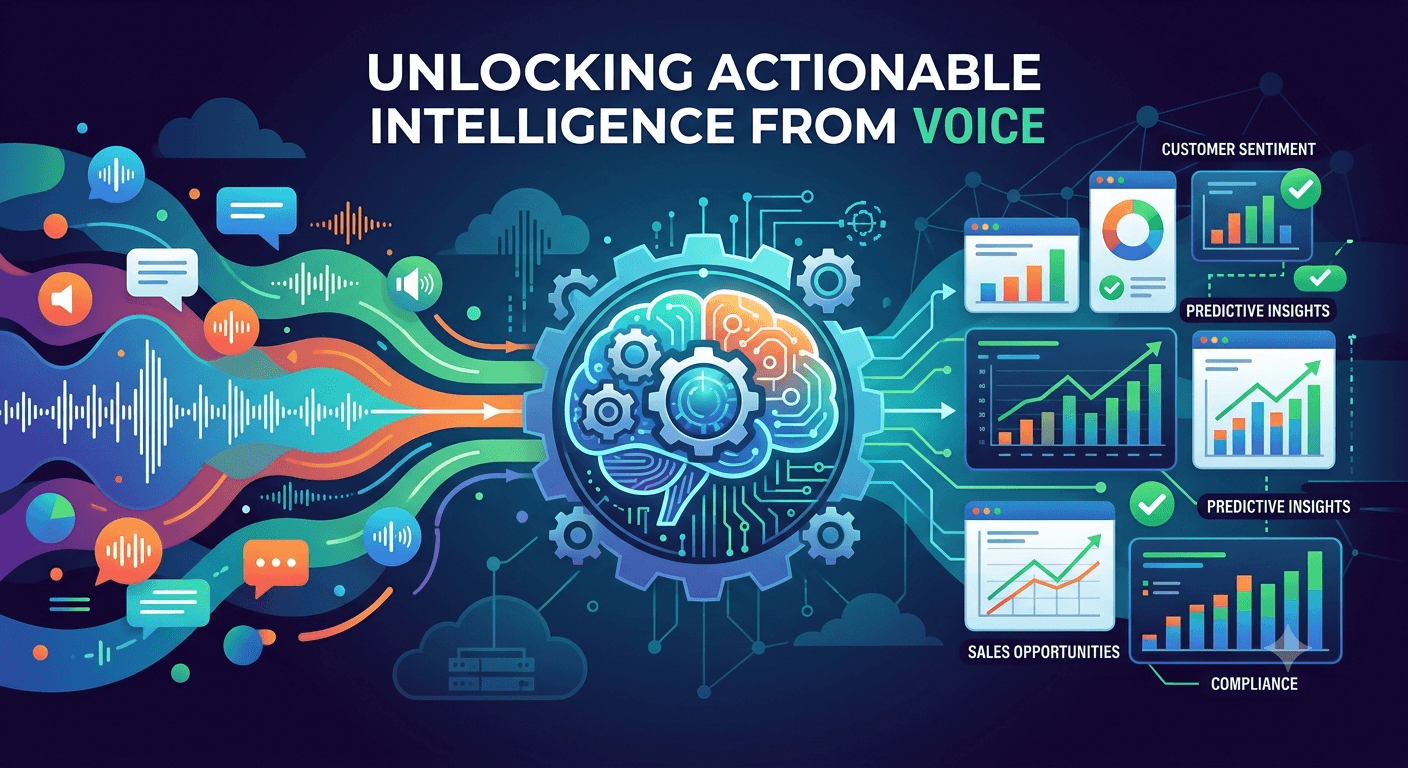
VoiceBase is a cloud-based speech analytics platform that uses advanced machine learning to convert spoken audio into actionable data. By providing high-quality speech-to-text, sentiment analysis, and predictive insights, it helps businesses unlock the value hidden within customer conversations. Developers and enterprises use its scalable API stack for compliance, sales coaching, and customer experience optimization. The platform stands out for its open architecture, allowing seamless integration with business intelligence tools like Tableau. Ultimately, understanding what is VoiceBase involves recognizing its ability to transform unstructured voice recordings into structured, searchable, and insightful business intelligence for modern enterprises.
Defining the Core Concept of VoiceBase
When exploring what is VoiceBase, it is essential to view it as a bridge between raw audio and strategic decision-making. The platform specializes in processing massive volumes of spoken content, turning every call, meeting, or recording into a text-based asset that can be analyzed for specific patterns. This technology is primarily delivered through a robust set of APIs, making it a favorite for software developers who need to embed voice intelligence into their own applications without building complex machine learning models from scratch.
Modern enterprises generate thousands of hours of audio daily, yet much of this remains a black box of information. By answering the question of what is VoiceBase, companies discover a tool that provides industry-leading accuracy in transcription while maintaining incredible turnaround times. The platform does not just transcribe; it interprets the intent, emotion, and outcome of every conversation, ensuring that no valuable customer insight is ever lost to the ether of unrecorded data.
The Evolution of Cloud Based Voice Analytics
The shift toward cloud based voice solutions has fundamentally changed how organizations manage their communication data. Historically, analyzing voice recordings required manual auditing, which was slow, expensive, and prone to human error. VoiceBase leverages the cloud to provide a highly scalable environment where thousands of concurrent calls can be processed simultaneously, providing real-time or near-real-time feedback to managers and analysts.
According to research by MarketsandMarkets, the global speech analytics market size is projected to grow from USD 1.5 billion in 2020 to USD 3.8 billion by 2025.
This growth highlights the increasing reliance on cloud-native platforms that can handle the sheer volume of data generated by modern contact centers. By utilizing a cloud infrastructure, VoiceBase ensures that enterprises can scale their operations without the need for significant on-premise hardware investments, facilitating a more agile business model.
Core Functionality and Features
To understand the platform deeply, one must look at the specific features that make it unique. It is not just about turning audio into text; it is about the layers of intelligence added to that text. The system is designed to handle the complexity of human speech, which includes different accents, background noise, and varying speaking speeds.
1. Advanced Speech-to-Text Capabilities
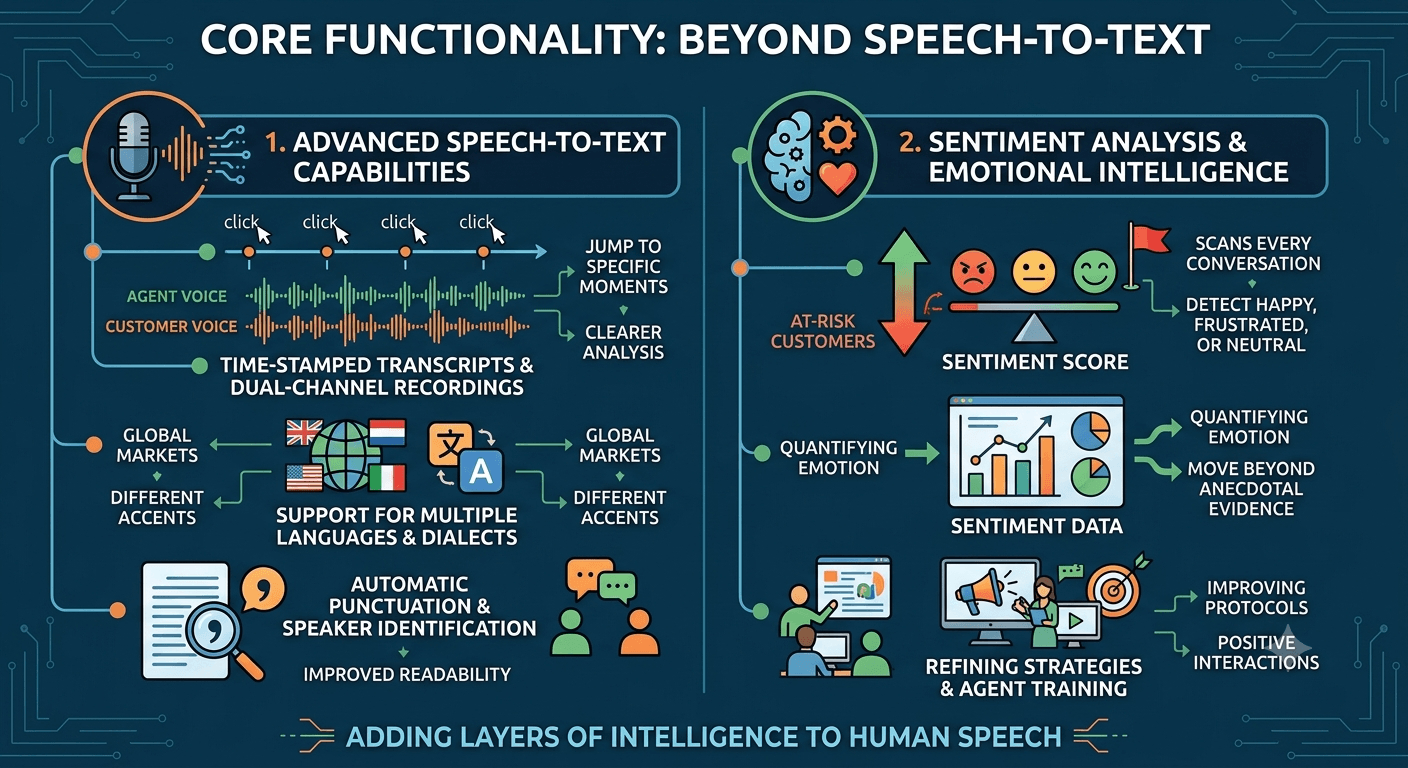
The foundation of the platform lies in its sophisticated speech-to-text engine. This feature uses deep learning to convert audio into time-stamped transcripts, allowing users to jump to specific moments in a conversation simply by clicking a word. The accuracy of these transcripts is enhanced by the platform’s ability to handle dual-channel recordings, which separates the agent’s voice from the customer’s voice for clearer analysis.
High-fidelity transcription with time-stamped text for easy navigation.
Support for multiple languages and dialects to serve global markets.
Automatic punctuation and speaker identification for improved readability.
2. Sentiment Analysis and Emotional Intelligence
Beyond simple words, understanding what is VoiceBase involves looking at its ability to detect human emotion. Sentiment analysis scans every conversation to gauge whether a customer is happy, frustrated, or neutral. This feature is crucial for identifying at-risk customers before they churn, as the system can flag calls where the sentiment score drops below a certain threshold.
By quantifying emotion, the platform allows businesses to move beyond anecdotal evidence. Instead of guessing how customers feel about a new product or a policy change, companies can look at aggregated sentiment data across thousands of calls. This objective view of the customer experience helps in refining marketing strategies and improving agent training protocols to ensure more positive interactions in the future.
Security and Compliance Standards
Security is a major concern for any enterprise handling sensitive information, and this is where the platform truly shines. The infrastructure is built to meet the rigorous demands of the financial and healthcare sectors. It ensures that while data is being analyzed, the privacy of the individuals involved is never compromised.
1. PCI and PII Redaction Protocols
The platform includes automatic PCI and PII redaction technology. This system identifies sensitive data points, such as credit card numbers or social security numbers, and scrubs them from both the audio recording and the text transcript. This is vital for maintaining compliance with global privacy regulations and protecting customer identity.
Automatic detection of sensitive numerical patterns during the transcription process.
Physical redaction of audio segments to prevent data breaches in stored files.
Compliance with global privacy regulations like GDPR and CCPA through secure data handling.
2. Custom Vocabularies for Specialized Industries
A key part of the technology is its ability to support custom vocabularies. Businesses can upload their specific terminology to the platform, ensuring that the AI recognizes and correctly transcribes industry-specific language. This specialized training ensures that the cloud based voice data is as useful as possible for the specific needs of the organization.
This customization is particularly valuable in the medical, legal, and technical sectors where precision is paramount. By training the model on specific product names or technical specifications, companies ensure that their transcripts are not only accurate but also highly relevant for internal searching and reporting. This ensures that the voicebase system understands the unique language of your business.
How VoiceBase Processes Audio Data
To fully grasp the mechanics, one must understand the technical workflow behind the platform. The process begins when an organization uploads audio or video files or connects their live phone network to the API. The system then ingests this raw audio and passes it through its neural networks for transcription and analysis. Once processed, the data is structured into a JSON format.
The platform functions through flexible developer APIs. Enterprises and software developers connect their phone networks and contact center systems to the API, which processes the audio and categorizes it based on business definitions. This modularity allows businesses to control costs while ensuring they have the specific insights they need for different departments or projects without over-complicating the setup.
Strategic VoiceBase Integrations
A significant advantage of the platform is the wide range of voicebase integrations available. It is designed to work seamlessly with leading communication providers, allowing businesses to layer voice intelligence on top of their existing infrastructure. These integrations mean that companies don’t have to overhaul their entire phone system to start benefiting from advanced speech analytics.
1. Partnering with Vonage for Better Connectivity
Vonage provides its customers with reliable connectivity and high-quality dual-channel recordings. Through a simple integration with the analytics stack, those calls are processed where the resulting transcripts, call categories, and predictive insights are returned as JSON data. This allows the enterprise to mash up what agents and customers are actually saying with their other internal datasets.
This partnership is essential for delivering a better customer experience. By having high-quality audio source material from Vonage, the analytics engine can produce much more accurate transcripts. This synergy ensures that the data being analyzed is a true reflection of the customer interaction, leading to more reliable business intelligence.
2. Building with Twilio and Open APIs
The collaboration with Twilio allows developers to build sophisticated voice applications using a highly scalable and secure stack of speech analytics APIs. Developers can use these tools for compliance, agent QM, and sales coaching. The open architecture allows enterprise customers to make great use of their own call data that can be visualized using their favorite BI tool.
Seamless connection to Twilio programmable voice streams.
Real-time data extraction for immediate agent feedback.
Flexible API endpoints for custom application development.
Practical Use Cases for Enterprises
The versatility of the platform allows it to be used across various departments, from marketing to legal. By understanding the practical applications, a business can better justify the investment in cloud based voice technology. Each use case targets a specific pain point in the modern enterprise workflow.
Compliance and Regulatory Monitoring
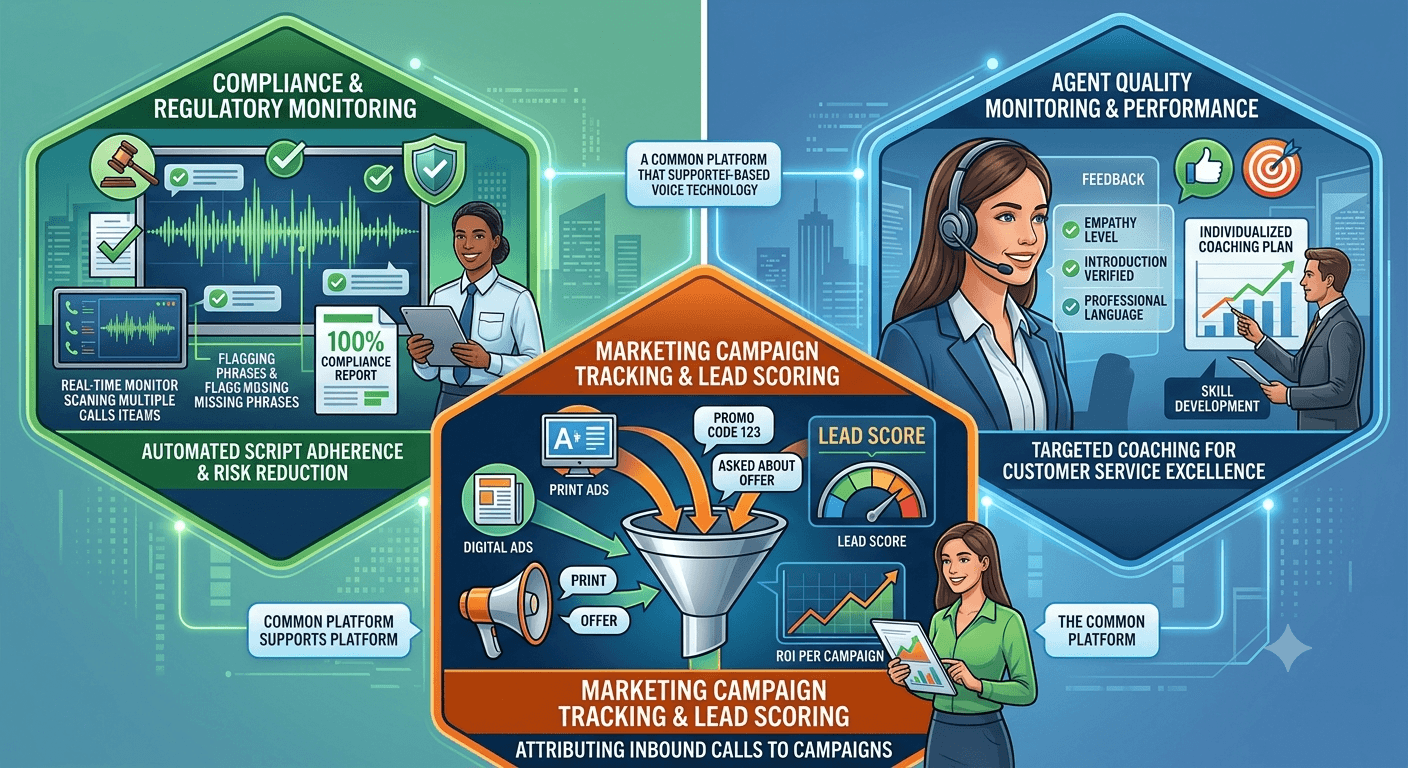
For many industries, compliance is the primary driver for speech analytics. Financial services and healthcare providers must ensure that their agents are following strict scripts and reading necessary legal disclaimers. The system can be programmed to search every call for these specific phrases, flagging any interaction that fails to meet regulatory standards.
This automated compliance monitoring is far more effective than manual spot-checking. Instead of listening to a tiny percentage of calls, compliance officers can receive a report on 100% of interactions. This comprehensive oversight reduces the risk of legal penalties and ensures that the company is maintaining the highest standards of professional conduct in every customer interaction.
Marketing Campaign Tracking and Lead Scoring
Marketing teams use the platform to determine the effectiveness of their advertising spend. By correlating specific marketing campaigns with the content of the resulting phone calls, marketers can see which ads are driving high-quality leads. The platform can identify if a caller is asking about a specific promotion or if they represent the target demographic.
Identify lead scores based on the content of the conversation.
Track the mention of specific promotional codes or campaign names.
Analyze the success rate of different marketing scripts used by agents.
Agent Quality Monitoring and Performance
In the contact center, voice analytics helps coach agents more effectively. The platform monitors whether agents are making proper introductions, showing empathy, and using professional language. It can also detect if an agent is using profanity or failing to offer a required upsell, providing a clear roadmap for performance improvement.
Instead of generic training sessions, managers can provide personalized coaching based on the actual data from an agent’s calls. This targeted approach leads to faster improvement and higher morale, as agents receive feedback that is objective and based on their specific strengths and weaknesses. Over time, this constant feedback loop significantly elevates the overall quality of customer service.
Predictive Insights and Behavior Modeling
One of the most advanced aspects of the platform is its use of artificial intelligence to generate predictive insights. The platform can be trained to identify specific behaviors or verbal cues that indicate a high likelihood of a specific outcome, such as a purchase or a cancellation. By analyzing historical call data alongside known outcomes, the AI creates models that can predict future trends.
These insights allow sales teams to prioritize leads that show the highest propensity to buy, while retention teams can focus their efforts on customers who exhibit signs of dissatisfaction. This proactive approach to customer management is a significant step up from traditional reactive methods. It turns the contact center from a cost center into a powerful source of revenue-generating intelligence.
Visualizing Voice Data in Business Intelligence Tools
What is VoiceBase without a way to visualize the data? The platform is built with an open architecture that encourages the use of third-party Business Intelligence tools. Users can export their processed JSON data into tools like Tableau, Power BI, or MicroStrategy to create interactive dashboards. These visualizations make it easy for executives to spot trends and outliers in call data.
According to technical benchmarks, using dual-channel audio can improve word error rates by up to 20% compared to mono recordings in noisy environments.
By utilizing this high-quality input and visualizing it, companies ensure that their transcripts are not only accurate but also highly relevant for internal searching and reporting.
Create heat maps showing sentiment trends over a specific time period.
Build word clouds to identify the most common customer complaints.
Compare agent performance metrics side-by-side for coaching opportunities.
Transforming the Customer Journey
Every interaction a customer has with a brand is a data point. By analyzing the voice component of these interactions, businesses gain a much clearer understanding of the reasons behind customer actions. Voice analytics fills the gaps left by traditional data points like clicks and purchases, providing the human element that is often missing from digital analysis.
By integrating voicebase integrations into the broader tech stack, companies can create a truly holistic view of their customers. This leads to better products, better service, and stronger brand loyalty. When a company truly listens to its customers at scale, it can anticipate needs and resolve issues before they escalate, creating a seamless and positive experience.
The Role of VoiceBase in Sales Coaching
Sales coaching is a specialized area where understanding voice analytics can yield high returns. The platform can identify the specific language patterns used by top-performing sales representatives. By comparing these patterns to the rest of the team, managers can identify the closing behaviors that lead to successful sales and replicate them across the organization.
Identify the optimal ratio of talking versus listening for successful sales calls.
Track the mention of specific keywords that correlate with high conversion rates.
Monitor how effectively agents handle common objections from potential customers.
Scalability and Enterprise Implementation
The architecture is designed with the enterprise in mind. It can handle the demands of global organizations that operate across multiple time zones and handle millions of minutes of audio. The platform’s scalability ensures that whether a company is processing ten calls or ten million, the performance and turnaround times remain consistent.
Enterprise implementation also involves robust security and administrative controls. Administrators can manage access permissions, ensuring that sensitive call data is only visible to authorized personnel. This level of control is essential for maintaining internal security protocols while still allowing different departments to access the insights they need to do their jobs effectively.
Future Trends in Voice AI
As we look to the future, the technology behind the platform continues to evolve. We are seeing a move toward even more nuanced emotional detection, including the ability to identify sarcasm or subtle shifts in tone. Furthermore, the integration of generative AI could allow the platform to not only analyze calls but also suggest the best responses for agents in real-time.
The convergence of voice analytics with other forms of AI will continue to provide deeper insights into human behavior. As more businesses adopt cloud based voice solutions, the standard for customer service and operational efficiency will continue to rise. Organizations that embrace these tools today will be well-positioned to lead their industries in the years to come by turning every conversation into a strategic asset.
Read More: VoIP for Real Estate Agents: Boosts Sales and Efficiency
Final Thought
In a world where data is the new oil, voice recordings represent one of the largest untapped reserves of business intelligence. Understanding what is VoiceBase is the first step toward refining that raw data into something truly valuable. By leveraging cloud based voice technology, enterprises can listen to their customers at scale, ensuring that every conversation contributes to the company’s growth and success. The platform’s ability to provide high-accuracy transcription, sentiment analysis, and predictive insights makes it an indispensable tool for any modern, data-driven organization. By integrating these insights into daily operations, businesses can foster deeper connections with their customers and stay ahead in a competitive market.
FAQs
What is VoiceBase and how does it benefit businesses?
VoiceBase is a cloud-based speech analytics platform that uses AI to transcribe and analyze audio data. It benefits businesses by providing actionable insights from customer conversations, helping to improve agent performance, ensure regulatory compliance, and enhance the overall customer experience through data-driven decision-making.
How does voice API work?
A voice API works by allowing one software application to interact with a voice communication service. It enables developers to programmatically make and receive calls, record audio, and send that audio to analytics engines like VoiceBase for transcription and data extraction without needing to manage the underlying telephony hardware.
What is a voice speaker?
In the context of voice analytics, a voice speaker refers to an individual participant in a conversation. VoiceBase uses “speaker diarization” to distinguish between different speakers in a single audio file, which is essential for identifying who said what during an interaction between a customer and an agent.
What are API voices?
API voices typically refer to synthetic voices generated by Text-to-Speech (TTS) APIs. These allow applications to “speak” to users in a natural-sounding human voice. While VoiceBase focuses on analyzing human speech, many cloud based voice ecosystems use both analytics and synthetic voices to create fully automated customer service bots.
What is voice in presentation?
Voice in a presentation refers to the tone, pitch, and clarity of the speaker. In a business context, analyzing the “voice” of a presentation using tools like VoiceBase can help speakers identify areas for improvement, such as reducing filler words or ensuring their sentiment aligns with the message they are trying to convey.
What are the primary voicebase integrations available?
VoiceBase integrates with a variety of communication and BI platforms, including Vonage, Twilio, and Tableau. These integrations allow for the automatic ingestion of call recordings and the seamless export of analyzed data into dashboards for easy visualization and reporting.
How does VoiceBase handle PCI and PII data?
VoiceBase handles sensitive data through automated detection and redaction. Its AI identifies patterns consistent with credit card numbers or social security numbers and removes them from both the audio and the transcript, helping businesses maintain compliance with security standards like PCI-DSS.
Can VoiceBase handle different languages?
Yes, VoiceBase supports a wide range of global languages and dialects. This capability is essential for multi-national corporations that need to analyze customer interactions across different geographic regions while maintaining a high level of transcription accuracy and sentiment analysis.