
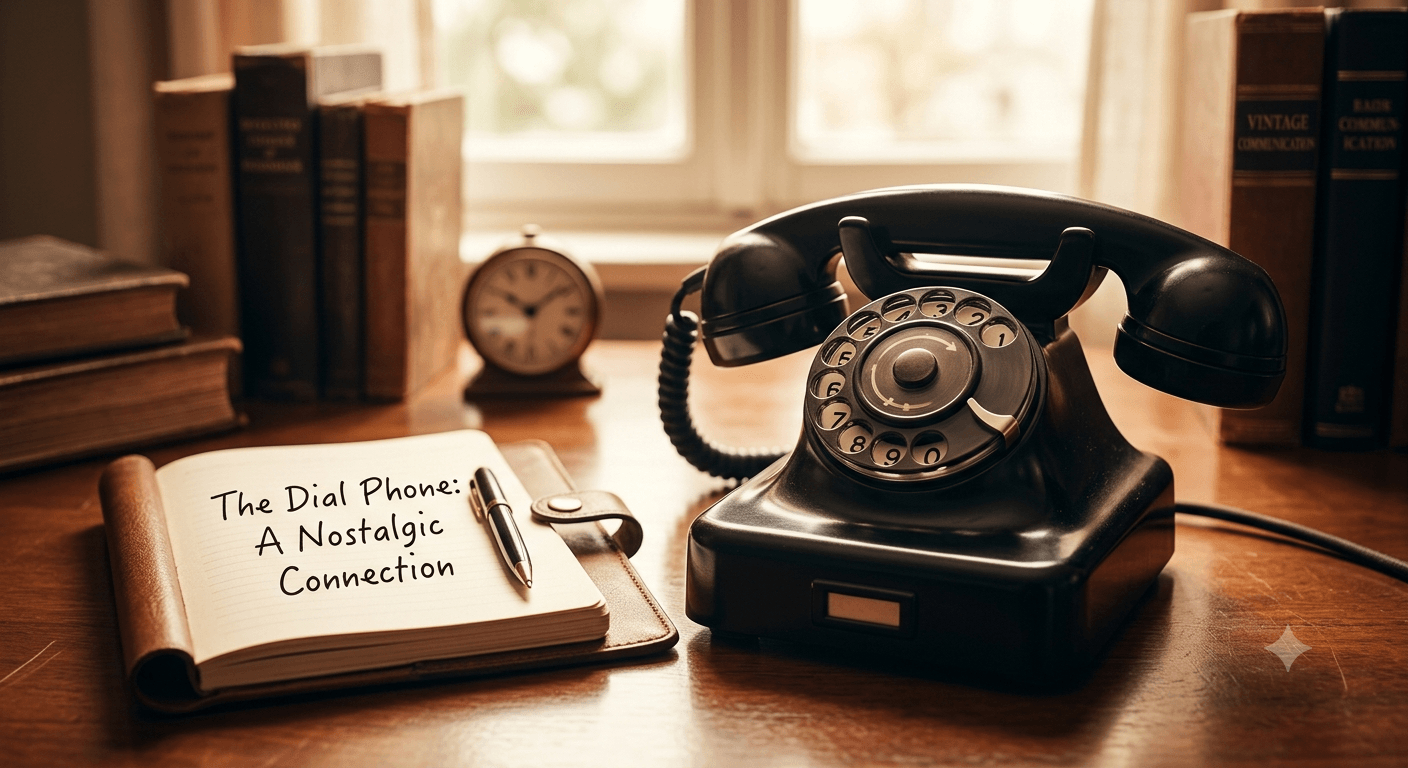
A rotary phone is a classic telecommunications device that uses a rotating dial to send electrical pulses to a telephone exchange. Unlike modern touch-tone systems, this vintage device requires users to physically rotate a circular dial for each digit of a phone number. Each number corresponds to a specific number of pulses, which the central office interprets to connect your call. While largely replaced by digital smartphones, these iconic machines represent the foundation of modern communication, blending mechanical ingenuity with a tactile user experience that many still cherish today as a symbol of mid-century design.
What is a rotary phone?
A rotary phone is an analog telecommunications instrument characterized by a circular dial that generates electrical pulses to signal a telephone number. This technology, known as pulse dialing, was the standard for decades before the advent of dual-tone multi-frequency (DTMF) signaling. When you rotate the dial and release it, a spring mechanism returns it to the home position, opening and closing the electrical circuit a specific number of times. For example, dialing a “5” sends five distinct pulses down the line. This mechanical process allowed the automated telephone exchange to identify which person you were trying to reach without the intervention of a human operator.
The physical design of a rotary-dial telephone typically consists of a base unit containing the ringer and the dial mechanism, and a rotary handset that houses the transmitter and receiver. The transmitter, or mouthpiece, converts sound waves from your voice into electrical signals, while the receiver in the earpiece converts incoming electrical signals back into audible sound. These devices were engineered for extreme durability, often lasting for thirty or forty years with minimal maintenance. Today, they are considered prized collectibles, admired for their heavy-duty construction and the satisfying clicking sound the dial makes as it returns to its resting state.
Who invented the old dial phone?
As unlikely as it sounds, the dial phone can trace its roots to an undertaker—Almon Strowger. There are conflicting accounts about what sparked Strowger’s interest, but the most widely accepted version involves a professional rivalry. Back in the 1880s, when Almon Strowger was an undertaker in Topeka, Kansas, you had to turn a crank on your phone to get the attention of the local telephone operator, tell her the number of the person you wanted to speak to, and then she would manually connect the call through a switchboard. This manual system gave operators significant power over which businesses received incoming calls from the community.
When a close friend died and Strowger wasn’t called to provide services, he suspected the local operator was in cahoots with a competing undertaker and diverted the grieving family’s call to his rival. This underhanded connection supposedly set Strowger on a quest to find a way that people could skip the telephone operator and make their own phone calls directly. He succeeded in his mission, and in 1892, Strowger patented his automatic telephone exchange and rotary dial designs. This invention revolutionized the industry, leading to the creation of the Strowger Automatic Telephone Exchange Company, which laid the groundwork for the automated systems we use today.
Who ya gonna call?
Just because Strowger invented a way for people to make their own calls didn’t mean it caught on right away. It took decades before dial phones were widely adopted because the transition was rolled out exchange by exchange and required impressive coordination across the country. Exchanges are the local switching offices where calls are connected, and the switchboards in each exchange had to be replaced with electromechanical switches. Furthermore, every phone connected to that exchange had to be replaced with a rotary dial phone, and telephone service subscribers had to learn how to use the dial phone effectively.
The timeline of adoption was gradual and varied significantly by geographic location:
The first commercial installation of a dial telephone system was a 99-line exchange in LaPorte, Indiana, in 1892.
AT&T installed its first dial telephones in the Bell System in Norfolk, Virginia, in 1919.
The last major transition occurred in 1978 when the city of Avalon on Catalina Island finally converted its manual phone system.
Rural areas often maintained manual systems much longer than urban centers due to the high cost of upgrading infrastructure.
What did dial phones look like?
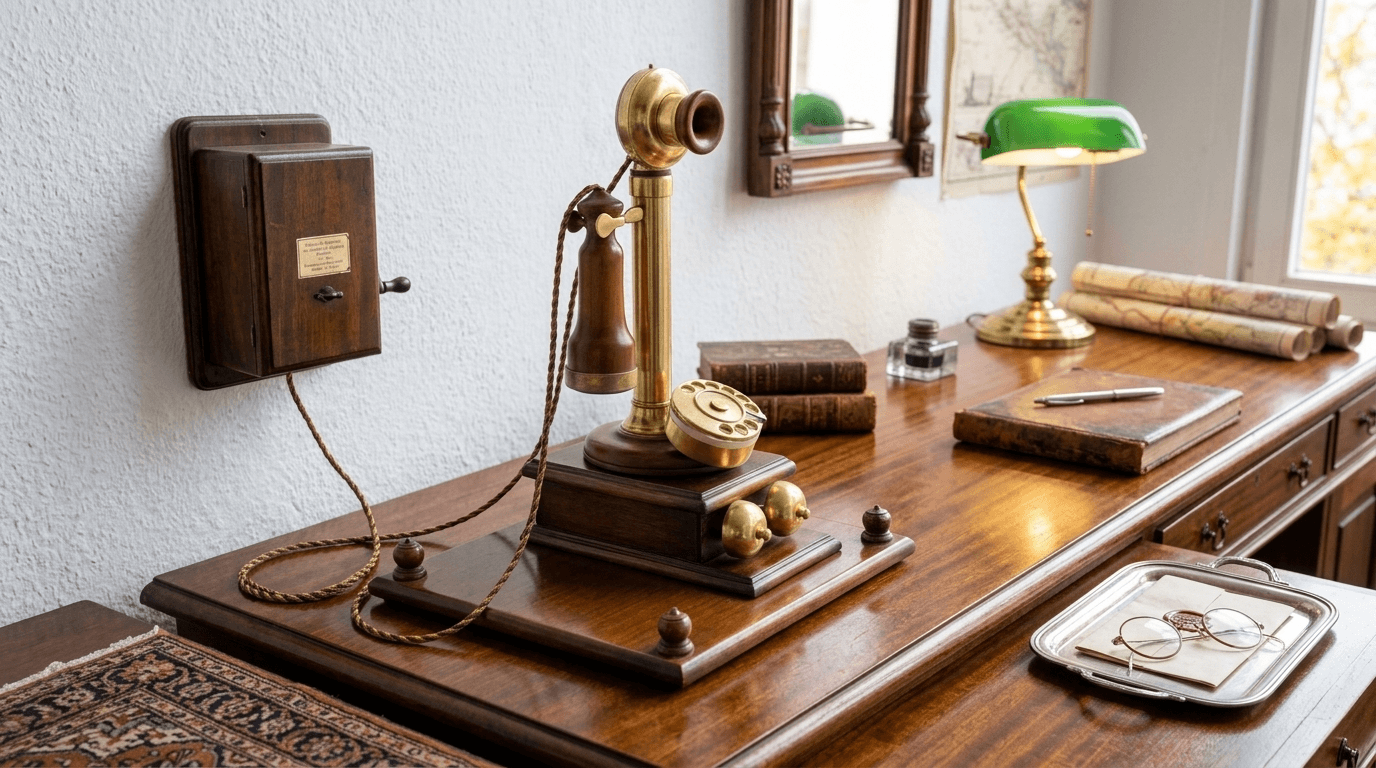
The very first rotary phones used small metal pieces on the numbers of a rotary dial, but it wasn’t long before the iconic finger holes appeared. These finger holes made it much easier to turn the dial and ensured the user didn’t slip while navigating the numbers. For those who didn’t want to chip their dialing finger’s nail, a pencil made a great dialing tool, a habit that became a common sight in offices across America. Early models were often made of heavy metal or Bakelite, a primitive form of plastic that gave the phones a distinctive, weighty feel and a glossy black finish.
One of the first dial phone models was called the candlestick, featuring a tall, slender neck with the dial on its base and a separate receiver held to the ear. In the 1930s, the black plastic dial phone with the cradle at the top for the handset became popular, representing the classic “desk phone” aesthetic. In 1949, the Western Electric Model 500 was introduced, which eventually offered customers a choice of colors beyond basic black. Later, in the 50s and 60s, the rotary wall phone became a kitchen staple, often featuring extra-long coiled cords that allowed people to walk around while talking.
Do you know how to use a rotary phone?
Using a rotary dial phone requires a level of patience and physical interaction that modern technology has largely eliminated. To use a dial phone, you must first understand that the process is entirely mechanical; the speed at which the dial returns to its original position is controlled by a governor inside the device. This ensures the pulses are timed correctly for the exchange to read them. If you try to force the dial back faster, you will likely dial the wrong number because the pulse timing will be disrupted. It is a rhythmic process that forces the user to slow down and focus on the task at hand.
Beyond just the dialing, these phones offered a very different sensory experience compared to modern smartphones. The “ringer” was a physical bell located inside the base, which was struck by a small metal hammer when an incoming call arrived. This produced a loud, resonant “cling-clang” that could be heard throughout an entire house. To answer, you simply lifted the heavy rotary handset, and to end the call, you placed it back in the cradle. There were no “end call” buttons to press; the weight of the handset would physically depress two buttons in the cradle to disconnect the line.
Why does a rotary telephone have letters?
If you look closely at a rotary dial phone, you will notice that most of the numbered holes also contain letters of the alphabet. This was not for texting, but rather to help people remember long phone numbers during a time when telephone exchanges were named. In the early to mid-20th century, phone numbers often started with the first two letters of an exchange name, such as “PEnnsylvania 6-5000.” This made it easier for people to memorize their friends’ and businesses’ contact information by associating them with local landmarks or neighborhood names.
Research into telecommunications history shows that the letters “Q” and “Z” were traditionally omitted from the rotary dial. This was because the letters were mapped out in groups of three on the numbers 2 through 9, and including all 26 letters didn’t fit the standard 10-hole layout perfectly.
According to a historical study by the University of Salford, these exchange names were a vital part of the social fabric, providing a geographical identity to callers before the transition to all-number calling in the 1960s.
Today, these letters remain on our digital keypads, a lingering ghost of the old phone dial era.
How to Use a Rotary Phone ?
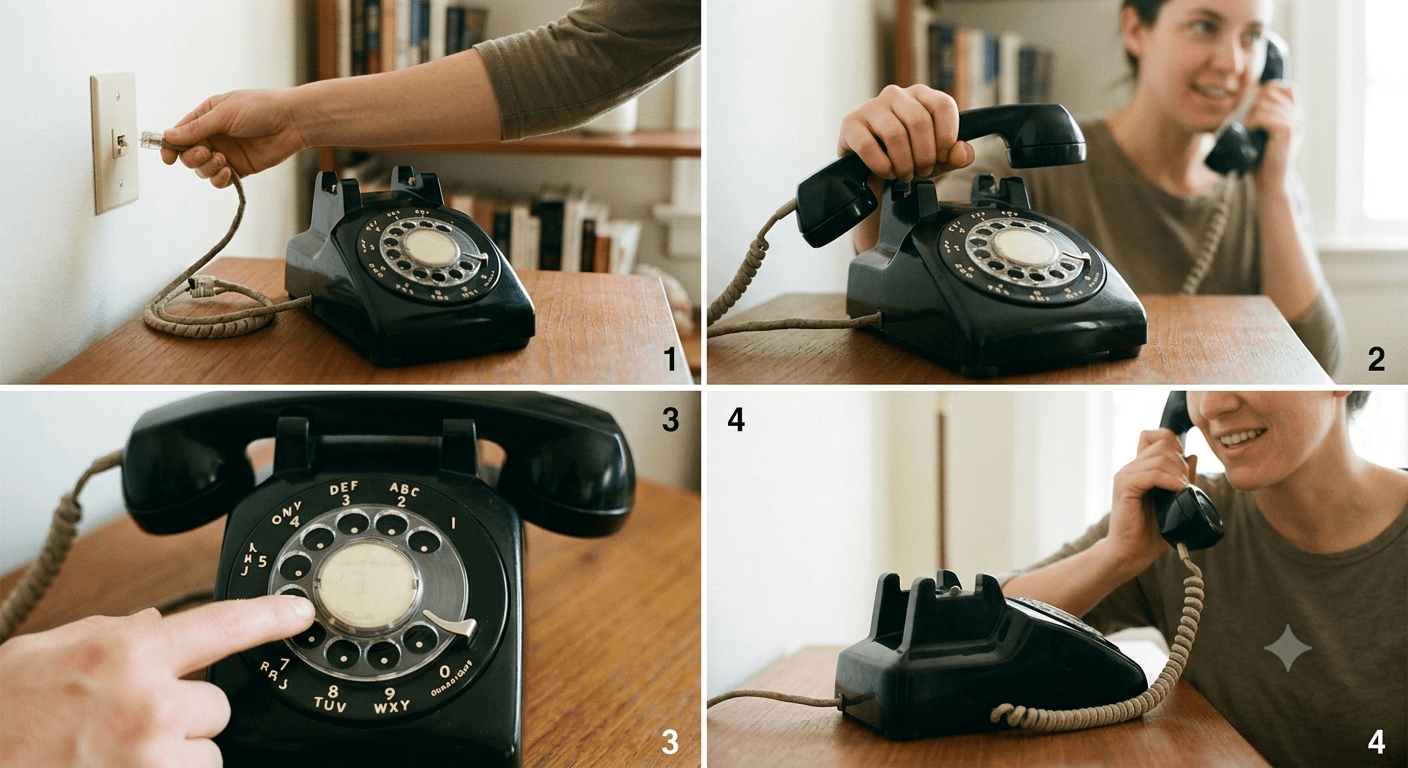
Step 1. Plug the phone cord into a phone jack in the wall
Unlike cell phones, which only need to be plugged into an electrical outlet to recharge, a rotary dial telephone must be plugged into a telephone jack in the wall. This physical connection links the device to the telephone company’s central office via copper wiring. A rotary phone that isn’t plugged into a phone jack will simply be a decorative conversation piece on which you cannot communicate. You must ensure that your modern landline service still supports pulse dialing, as some digital voice-over-IP (VoIP) services may require an adapter to recognize the mechanical pulses.
Step 2. Lift the handset, also known as the receiver.
Rotary phone dialing is the reverse of cell phone technology where you type the number first. With an old rotary dial phone, you must lift the handset first to open the circuit and signal the exchange that you wish to place a call. When you lift the receiver and hold it to your ear, you should hear a steady, continuous dial tone. This tone indicates that the line is active and the central office is ready to receive your pulses. If you don’t hear a tone, the phone may not be connected properly or the line may be out of service.
Step 3. Insert your finger into the numbered hole corresponding to each digit.
This is the aspect most likely to confound anyone used to tapping out digits on a screen. To dial the phone, you must follow these specific actions:
Place your index finger in the hole that matches the first digit of the number you are calling.
Rotate the dial clockwise until your finger hits the metal finger stop near the bottom right.
Remove your finger and let the dial spin back on its own without touching it.
Wait for the dial to come to a complete stop before attempting to dial the next digit.
Repeat this process for every digit in the phone number, including the area code if necessary.
Step 4. The phone will ring.
Once you have finished dialing all the digits, the central office will route your call to the destination. Unlike modern phones, there is no “Send” or “Call” button to press; the call initiates automatically after the final digit’s pulse is sent. When you reach your party, you can have a conversation through the rotary handset just as you would on any other device. When you are finished talking, replace the receiver in its cradle to physically depress the switch hook and disconnect the line. This is the only way to “hang up” and ensure your line is free for future calls.
The mechanical brilliance of pulse dialing
The way a rotary phone works is a marvel of 19th-century engineering that remained relevant for nearly a hundred years. When you spin the dial, you are winding a spring. As the dial returns, a cam or a set of gears interrupts the electrical current on the phone line. These interruptions are known as pulses. A “1” produces one pulse, while a “0” produces ten pulses. This simple binary-like communication allowed for the first automated routing of calls across vast distances without the need for a person to plug a cable into a jack at a switchboard.
Modern telephone lines are designed for “tone dialing,” where each number has a specific frequency. However, many landline networks still recognize the old pulse dialing system. If you are using a rotary phone today on a digital line, you might notice a slight delay as the system translates those pulses into digital signals. Fact: In a 2011 study on vintage technology, it was noted that many older “step-by-step” switches in telephone exchanges could still process rotary signals long after the phones themselves were considered obsolete. This backwards compatibility is a testament to the robust design of the original telephone rotary systems.
Why vintage rotary phones are making a comeback
In the age of digital distraction, the rotary phone has become a symbol of intentionality. Because you cannot quickly redial or store numbers in a digital memory, you have to actually know the number of the person you are calling. This tactile interaction creates a more meaningful connection to the act of communication. Collectors often seek out a roatry phone for its aesthetic appeal, placing them in home offices or entryways as functional art. The “heft” of an old fashioned rotary dial phone is something many find comforting in an era of light, fragile plastic smartphones.
There are also practical benefits to these older devices. Because they are powered by the phone line itself rather than an external power outlet or battery, a rotary handset can often work during a local power outage when cordless phones fail. As long as the telephone lines are intact, the low-voltage current provided by the central office is enough to operate the ringer and the transmitter. This reliability has kept many people holding onto their rotary dial phones as emergency backups, ensuring they can always dial the phone when it matters most.
Collecting and restoring rotary phones
Finding a working rotary dial phone has become a popular hobby for enthusiasts of mid-century modern design. Many of these phones can be found at antique shops, estate sales, or online auctions. While some might have frayed cords or dusty internals, they are relatively easy to restore because they lack complex microchips. Cleaning the contacts of the rotary dial and lubricating the gears can often bring a non-functional unit back to life. For those who want the look but not the old tech, some companies even produce a rotary mobile phone that uses Bluetooth to connect to your smartphone.
When looking for an old rotary dial phone, enthusiasts often check for specific models like the Western Electric 500 or the Stromberg-Carlson versions. These “tanks” of the phone world are known for their indestructible build quality. If you find a phone with a dial that sticks, it usually just needs a bit of specialized oil. Many hobbyists also enjoy changing the faceplates or the circular paper center of the dial, which originally displayed the owner’s own phone number. This level of customization makes every rotary dialer unique to its owner and history.
The cultural impact of the rotary dial
The rotary dial telephone did more than just connect people; it changed how we speak and think. The phrase “dialing a number” comes directly from this technology, yet we still use it today even when we are tapping a glass screen. Similarly, the term “hang up” refers to the act of placing the receiver back on its wall-mounted hook or cradle. These linguistic fossils remind us of the time when a phone call was a deliberate, stationary activity that required our full attention. You couldn’t easily multi-task while tethered to a rotary wall phone in the kitchen.
In film and television, the roatry phone is often used to establish a specific era or mood. The frantic sound of someone trying to dial a long number during a suspenseful scene is a classic cinematic trope. Because it takes several seconds to dial each digit, the rotary phone naturally builds tension in a way a smartphone cannot. Whether it is a colorful Princess phone in a teenager’s room or a heavy black desk phone in a detective’s office, these devices carry a weight of nostalgia and character that transcends their original function as mere communication tools.
Can you use a rotary phone on a modern line?
A common question for vintage enthusiasts is: do rotary dial phones still work on modern lines? The answer is generally yes, but with some caveats. Most traditional landline providers still support pulse dialing, although they don’t advertise it. If you have a fiber-optic or cable-based “landline,” you are actually using VoIP. In these cases, the digital terminal in your home might not understand pulses. To solve this, you can buy a pulse-to-tone converter that plugs in between the phone and the wall, translating your mechanical dial turns into modern tones.
Using a rotary dial cell phone adapter is another way to bring this tech into the 21st century. These devices allow you to pair your vintage phone with your smartphone via Bluetooth. When someone calls your mobile, the vintage rotary phone rings with its original bell, and you can answer using the rotary handset. This bridge between old and new allows people to enjoy the aesthetic and tactile experience of a dail phone without needing to maintain a traditional copper wire landline service, which is becoming increasingly rare and expensive.
Read More: Cloud-Connected Audio: How It Works, Benefits, and Provider
Final Thought
The rotary phone remains one of the most significant inventions in the history of human interaction. From Almon Strowger’s desire for privacy to the iconic Model 500 that sat on millions of nightstands, this device represents a golden age of engineering. While our modern world moves faster, the deliberate spin of a dial reminds us of a time when communication was something you could feel, hear, and touch. Whether you are a collector, a history buff, or someone who just misses the sound of a real bell, the rotary phone continues to hold a special place in our hearts and our homes.
Frequently Asked Questions
Can a rotary phone still be used?
Yes, a rotary phone can still be used today as long as your telephone service provider supports pulse dialing or you use a pulse-to-tone converter. While many modern digital and VoIP lines are designed for tone dialing, converters allow these vintage devices to communicate with modern networks. You simply plug the phone into the converter, and it translates the mechanical pulses into the digital tones required by modern exchanges.
What does a rotary phone do?
A rotary phone converts the physical motion of a spinning dial into electrical pulses to signal a telephone number to an exchange. It also allows for two-way audio communication using a transmitter and a receiver housed in the handset. The device uses an internal mechanical ringer to alert the user of incoming calls, providing a completely analog method of staying connected to a telecommunications network.
When did rotary dial phones end?
The production and widespread use of rotary dial phones began to decline in the 1970s and 1980s following the introduction of touch-tone dialing. Push-button phones became the standard because they were faster and allowed for interaction with automated menu systems (like “press 1 for sales”). The last major manual-to-automated transition in the United States occurred in 1978, although many households continued to use their existing rotary phones well into the 1990s.
Why is there no Q on a rotary phone?
The letter “Q” was omitted from early rotary dials because it looked too much like the number “0” and was rarely used in exchange names. In the early 20th century, telephone numbers were based on exchange names, and designers felt that adding “Q” and “Z” would clutter the dial and potentially lead to dialing errors. As phone systems evolved, these letters were eventually added to modern keypads, but they remain absent from most classic vintage rotary dials.
How do you dial a rotary telephone?
To dial a rotary telephone, you must lift the handset, listen for a dial tone, and then rotate the dial for each digit. You place your finger in the hole corresponding to a number, pull it clockwise until it hits the finger stop, and then release it. You must wait for the dial to return to its original position completely before you begin dialing the next digit in the sequence.
What are the parts of a rotary phone?
The primary parts include the base, the rotary dial, the switch hook, the ringer, and the handset. The handset contains the microphone (transmitter) and the speaker (receiver). Inside the base, you will find the ringer bells and the mechanical gears that control the timing of the pulses generated by the dial.
Does a rotary phone need electricity?
No, a rotary phone does not need to be plugged into a standard electrical wall outlet; it is powered by the telephone line itself. The telephone company sends a small amount of low-voltage direct current (DC) through the copper wires, which is enough to power the phone’s transmitter and operate the mechanical ringer.
Is it hard to maintain a rotary phone?
Maintaining a rotary phone is relatively simple because they are built with durable mechanical parts rather than sensitive electronics. Most maintenance involves cleaning the exterior, ensuring the dial moves freely, and occasionally checking the internal contacts for dust. Because they were designed for longevity, many of these phones require very little intervention to keep them in working order for decades.
Why are rotary phones so heavy?
Rotary phones are heavy because they were constructed using high-quality materials like Bakelite, thick plastics, and heavy metal internal frames. This weight was intentional to prevent the phone from sliding across the desk while the user was vigorously spinning the dial. The heavy-duty construction also contributed to the legendary durability that allows these phones to function even today.