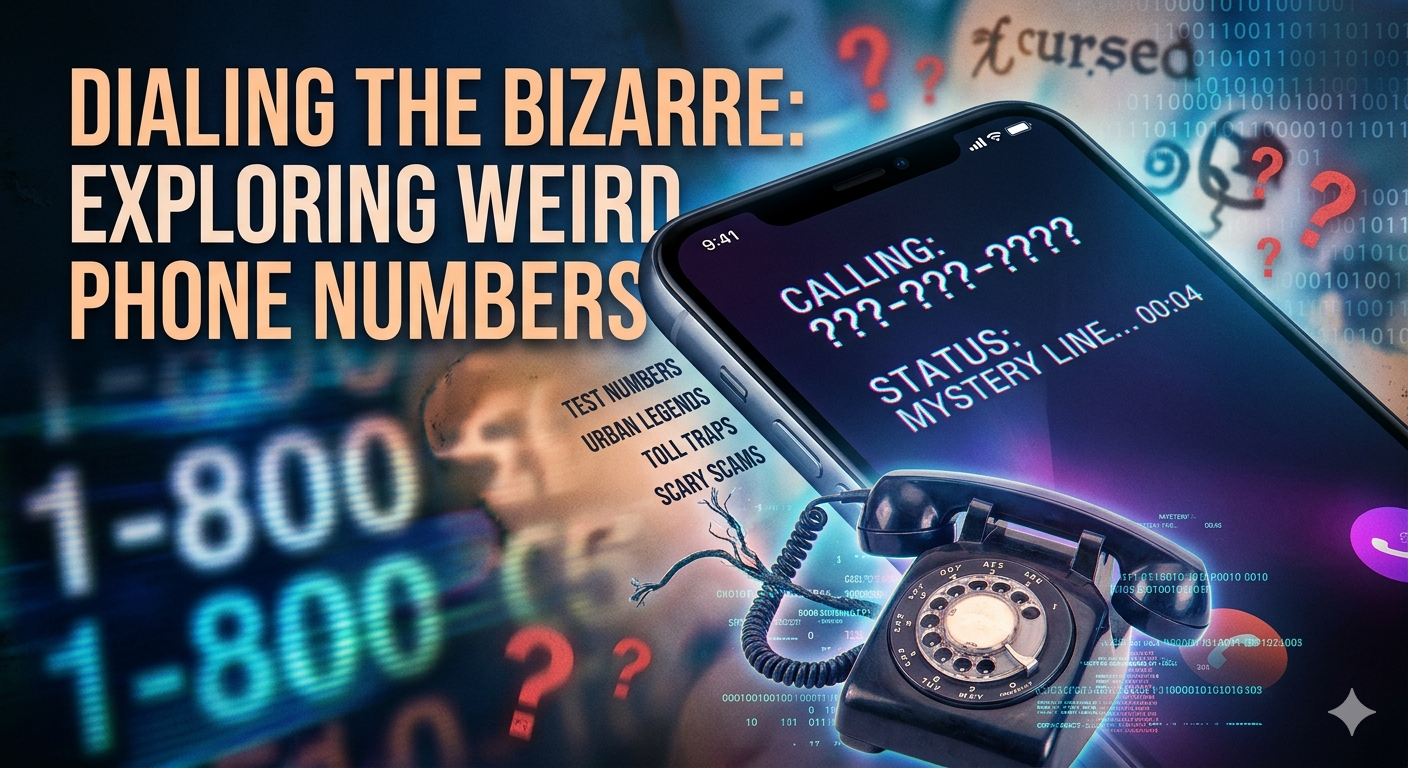
Weird phone numbers to call are publicly known numbers that play unusual recordings, interactive messages, jokes, stories, or fictional experiences instead of connecting to a real person. These numbers are created for entertainment or promotional purposes, but availability and call charges may vary depending on your location and phone carrier.
Weird phone numbers are specific digit sequences within the global telecommunications network that lead to unusual, automated, or unsettling responses rather than a standard person-to-person connection. These lines often consist of forgotten test numbers used by engineers, defunct marketing campaigns, or elaborate urban legends designed to provoke a sense of mystery or fear. While some of these oddities are harmless technical artifacts, others serve as “toll traps” or tools for data collection. Understanding the nature of these strange phone numbers is essential for anyone looking to explore digital folklore while maintaining their personal security and financial safety from potential international calling scams.
What are Weird Phone Numbers
Weird phone numbers are telephone numbers that play unusual recordings, automated messages, sound effects, or interactive experiences instead of connecting to a person or business. Many are created for entertainment, testing, or promotional purposes, while others are legacy numbers that have become popular because of their unique or mysterious recordings.
Not every phone number is used by a person or business. Some weird phone numbers are created for testing and maintaining telephone networks. Phone engineers use these numbers to check call quality, sound, and network connections. When you call them, you may hear beeps, repeated tones, or automated voices reading numbers. Although these recordings can seem strange or mysterious, they are usually part of routine telecommunications testing rather than anything unusual.
Another significant source of these anomalies is the “leftover” numbers from massive marketing campaigns of the late 20th century. During the 1990s, companies heavily promoted “super-numbers” like 1-800-COLLECT or 10-10-220, which were designed to bypass traditional long-distance fees. While these services have largely faded into obscurity due to the rise of mobile technology, many of the numbers remain active. When dialed today, they may play bizarre, outdated recordings or offer services that no longer exist, creating a nostalgic yet eerie bridge to a previous era of communication. These remnants are often cited by digital archaeologists as some of the most interesting weirdest phone numbers to call for those interested in the history of the PSTN.
Finally, the concept of strange numbers to call is often bolstered by the use of “fictional” numbers in media. Producers frequently register real numbers for movies or television shows to add a layer of realism to the story. If a viewer dials a number seen on a character’s business card, they might hear a pre-recorded message from the actor, effectively turning a standard phone line into a piece of immersive entertainment. These lines are generally safe and provide a fun way for fans to interact with their favorite fictional worlds, though they eventually expire or get reassigned, leading to even more confusion when a real person eventually inherits the line.
Verified and Famous Weird Phone Numbers to Call
Examples of verified and famous weird phone numbers to call:
Santa Claus Hotline — A seasonal hotline where callers can hear a Santa-themed message or interact with holiday content (availability may vary by year and region).
Rejection Hotline — A humorous number designed to play a fake rejection message instead of connecting to a person.
E.T. Phone Home Number — Numbers inspired by the famous phrase from the movie E.T. that became part of pop-culture phone-number lists.
Dial-A-Song — A phone service that provided callers with access to recorded songs and music content.
Note: Many “weird phone numbers” shared online are region-specific, temporary, or no longer active. Always verify that a number is current before calling, as phone services can be reassigned or discontinued.
If you are looking for a curated list of weird phone numbers to call that offer unique experiences, there are several verified options that have stood the test of time. These lines are often managed by hobbyists or small organizations and are intended to provide entertainment or technical information. One of the most famous is the “Hall and Oates Emergency Helpline,” which allowed users to listen to classic pop hits on demand. While its status fluctuates, it remains a legendary example of how a phone number can be used for lighthearted, creative purposes. Other lines include echo tests, where the system simply repeats whatever you say back to you with a slight delay, which can be both fascinating and slightly creepy.
-
Many people search for a phone number that repeats what you say to test their own audio equipment. These lines, often referred to as echo mirrors, are used by VoIP providers to help users diagnose lag or jitter. By calling one of these real phone numbers to call, you can hear exactly how you sound to others on the network. This is a practical application of the phone system that often gets categorized as weird due to the unnatural sensation of hearing your own voice played back through the earpiece.
-
Random phone numbers to call can also include “time and temperature” services that still operate in various parts of the country. These were once ubiquitous but have now become rare phone numbers. They provide a simple, automated readout of the current time and local weather conditions. For many, calling these numbers is a nostalgic trip back to a time before smartphones made this information available instantly on a screen. These lines are safe and represent a functional, if somewhat outdated, part of the communication grid.
-
There are also various “number stations” or test lines that broadcast seemingly random strings of digits or phonetic alphabet words. These are often used for calibration and synchronization of telecommunications hardware. While conspiracy theorists sometimes associate these with espionage, they are usually just administrative tools. Exploring these weird phone numbers to call gives a glimpse into the machine-to-machine communication that happens behind the scenes every time you place a call.
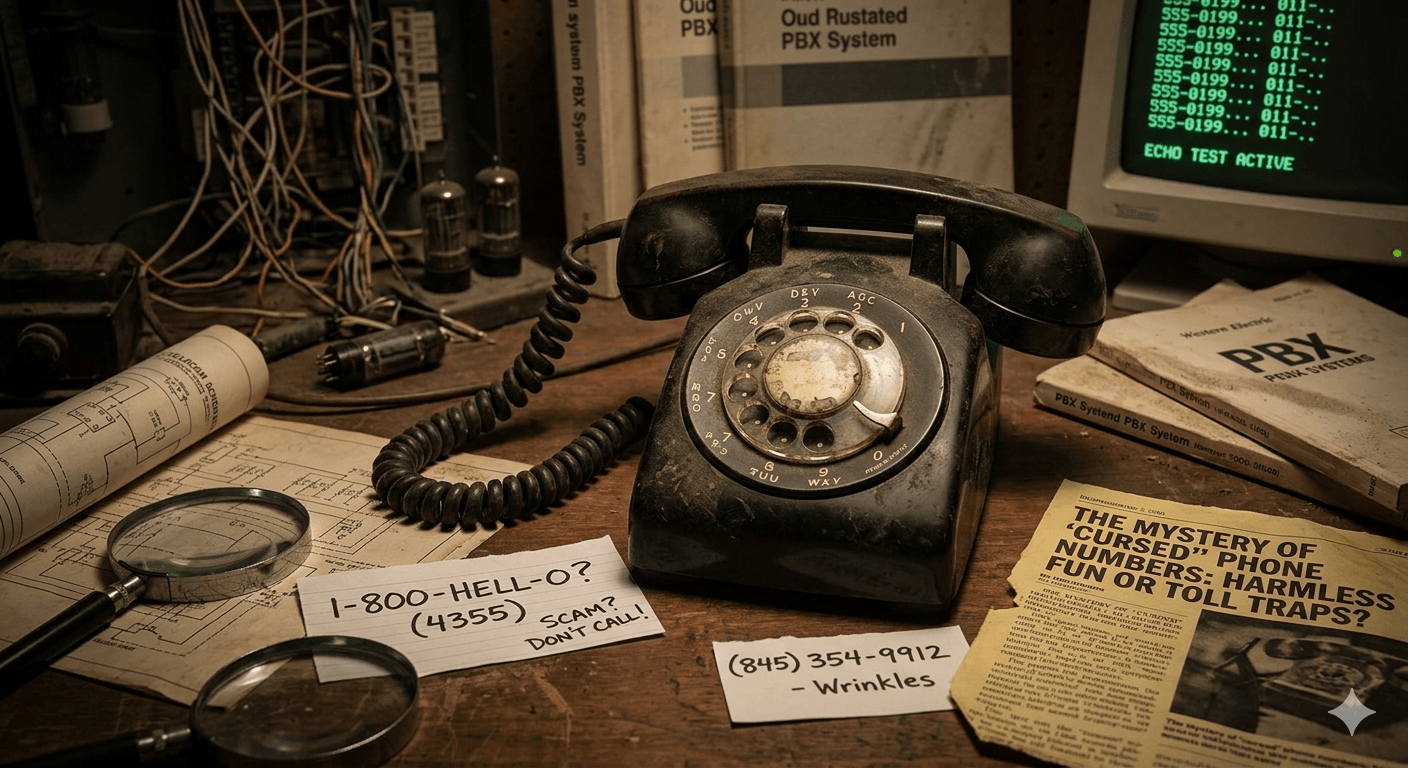
The Dangers of Weird Phone Numbers to Never Call
Despite the curiosity surrounding these anomalies, there are very real risks associated with certain digit sequences, leading experts to warn about weird phone numbers to never call. Many of the most popular “scary numbers” shared on social media are actually part of premium-rate scams. When a user dials one of these lines, they are connected to an international carrier that charges several dollars per minute. The longer the caller stays on the line—often lured by silence, heavy breathing, or a creepy recording—the more money the scammers make. These financial traps are designed to exploit the human desire for a thrill at the expense of their monthly bill.
Beyond the financial risk, interacting with scary phone numbers can compromise your digital privacy. When you call an unknown number, you are essentially providing your own caller ID to whoever is on the other end. This information can be harvested and sold to telemarketing lists or used for more targeted social engineering attacks. If a caller engages with a “cursed” number that asks for personal information or encourages them to “press 1” to hear a secret message, they are confirming that their line is active and that they are susceptible to psychological manipulation, making them a prime target for future scams.
-
Numbers you should never call at 3am are often promoted in urban legends as a way to contact the supernatural. In reality, these are often just standard lines that have been repurposed by internet pranksters or scammers who know that people are more vulnerable to fear in the middle of the night. Calling these numbers during the “witching hour” serves no purpose other than to potentially expose your phone number to malicious actors who monitor these lines for active leads.
-
Top 10 phone numbers you should never call frequently include those that resemble emergency services but contain slight variations. Dialing these can lead to unintentional harassment of real dispatchers or connect you to automated systems that attempt to record your voice for fraudulent purposes. It is vital to remember that any number promising a “haunted” or “scary” experience is almost certainly a hoax or a trap designed to generate revenue through international connection fees.
-
Cursed phone numbers like the supposed “Red Room” or “Death” numbers are purely the products of creepypasta fiction. While they may have associated phone numbers that once played recordings, they are not based on any physical or supernatural reality. The danger lies in the curiosity they spark, which leads people to ignore basic safety protocols and dial international codes that carry heavy financial penalties.
The Mystery of Why Weird Numbers Call My Phone
A common complaint among mobile users is the sensation of thinking weird numbers call my phone at all hours of the day. This phenomenon is rarely related to ghosts or urban legends and is instead a result of automated dialing software used by telemarketers and scammers. These entities use “neighbor spoofing” to make it appear as though the call is coming from a local area code or a strange, non-standard number to increase the chances that the recipient will answer out of curiosity. Once the call is picked up, the system may remain silent to see if a human voice responds, confirming the number’s validity for future sales.
This type of interaction is part of a larger trend in telecommunications fraud known as “robocalling.” According to research from the Federal Communications Commission, nearly 50 billion robocalls are made in the United States every year. Many of these calls originate from overseas and use fake caller ID information to bypass filters. If you see an odd phone number on your screen, the safest course of action is to let it go to voicemail. Legitimate callers will leave a message, while automated systems will usually disconnect immediately upon failing to reach a live person.
To combat these scary numbers, many carriers have implemented the STIR/SHAKEN framework. This technological standard helps verify that the caller ID information displayed on your phone matches the actual origin of the call. While this has significantly reduced the number of spoofed calls, it is not perfect. Users are still encouraged to use third-party apps or built-in phone features to silence unknown callers. By ignoring these stranger phone number attempts, you effectively cut off the data loop that scammers rely on to build their databases, eventually leading to a decrease in the number of strange calls you receive.
Psychology and the Appeal of Creepy Numbers to Call
The human fascination with creepy numbers to call is rooted in a psychological phenomenon known as pareidolia. This is the tendency of the human brain to perceive meaningful images or sounds in random data. When a caller dials a weird phone number and hears static, clicking, or a distorted automated message, their brain may interpret these sounds as whispers or footsteps. This effect is amplified by the context of the call; if the person believes they are calling a haunted number, they are much more likely to “hear” something supernatural in what is actually just a poor network connection.
Furthermore, the “thrill of the unknown” plays a massive role in why people seek out phone numbers to call when bored. In an age where almost every piece of information is instantly accessible via a search engine, the telephone remains one of the few mediums where a direct, real-time interaction with the unknown is possible. Dialing a random real phone numbers to call provides a sense of mystery that is increasingly rare in the digital world. This desire for exploration often outweighs the logical caution one should exercise when dealing with unknown telecommunications sequences.
-
The popularity of the Wrinkles the Clown phone number is a perfect case study in how a creepy phone number can become a cultural icon. What started as a local marketing stunt in Florida grew into a national sensation, with millions of people dialing the number to hear a recorded message from a “scary” clown. This demonstrates that even if a number is known to be a stunt, the psychological impact of the interaction remains highly effective at generating interest and fear.
-
Old phone numbers that still work are often seen as “ghosts” of the past. These lines, which may have belonged to long-defunct businesses or deceased individuals, can sometimes lead to disconnected tones or strange clicking sounds that feel eerie to the modern caller. There is a specific subgenre of internet culture dedicated to finding these “dead” lines and documenting the strange auditory experiences they provide, further fueling the myth of haunted numbers to call.
-
Many of the most famous scary phone numbers to call are actually inactive lines that have been co-opted by “creepypasta” writers. They assign a fictional backstory to an existing or non-existent number, leading thousands of people to dial it. If the number happens to be a real line assigned to an innocent person, the resulting harassment can be devastating. This is why it is always important to verify if a number is intended for public interaction before dialing.
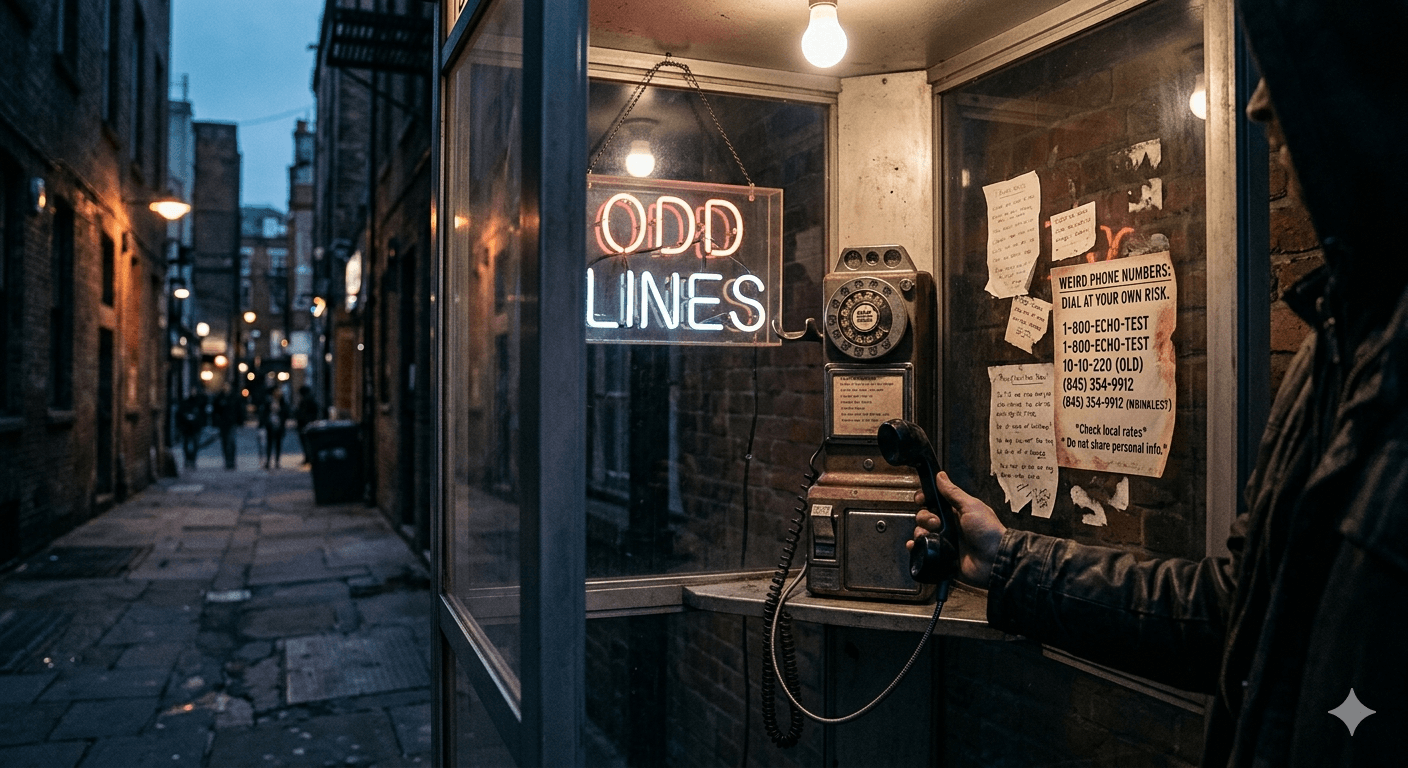
Safety Guidelines for Dialing Weird Phone Numbers
If you choose to explore the world of weird phone numbers, it is essential to follow strict safety protocols to protect your identity and your bank account. First and foremost, never call a number that begins with a prefix you do not recognize, especially if it looks like an international code. Many “scary” numbers are located in small island nations where the cost of a call can exceed $20 per minute. Always research a number online before dialing it to see if other users have reported it as a scam or a toll trap.
Another vital step is to protect your own caller ID. You can use prefixes like *67 in the United States to mask your number when calling out, although this does not work for toll-free numbers or some advanced digital lines. A better option is to use a secondary VoIP number, such as one from Google Voice, which is not tied to your primary cellular account or personal data. This creates a buffer between you and any potential malicious actors on the other end of the weird phone number to call.
-
Always check for hidden charges before calling any number that is advertised as a “horror” or “cursed” experience. These are almost never free and can result in significant financial loss.
-
Do not provide any personal information, such as your name, location, or birthdate, to an automated system or a person on a weird number.
-
If a number asks you to “press a button” to continue, hang up immediately, as this is a common tactic to identify active phone lines for spam.
-
Use a “burner” app if you are frequently testing interesting phone numbers to call to ensure your main line remains clean of telemarketing lists.
-
Be aware that even if a call sounds silent, the connection is still active and you are being billed for the time spent on the line.
Read More: What are the Call Recording Benefits and Laws in USA?
Final Thought
The world of weird phone numbers is a fascinating intersection of technical infrastructure and modern mythology. While the allure of uncovering a hidden message or experiencing a digital “ghost” is strong, it is important to balance this curiosity with a healthy dose of skepticism and security. Most strange phone numbers are simply forgotten remnants of a vast network or clever marketing tactics designed to go viral. By understanding the risks of weird phone numbers to never call and following safe dialing practices, you can enjoy the mysteries of the telephone system without falling victim to the very real scams that often hide behind the scary stories.
Weird Phone Number FAQs
-
Is 555 555 5555 a real phone number?
In the North American Numbering Plan, the 555 prefix is primarily used for directory assistance and as a placeholder for fictional numbers in movies and television. While some 555 numbers like 555-1212 are functional, a sequence like 555-555-5555 is not a valid working number for an individual or business. This is a safety measure to prevent real people from being harassed by viewers of fictional media.
-
Is 999 a horror number?
No, 999 is the primary emergency services number in several countries, including the United Kingdom, Ireland, and Hong Kong. While there are internet urban legends that suggest dialing 999 leads to scary or “cursed” messages, these are entirely false. You should never dial 999 unless you have a life-threatening emergency, as prank calls to this line are illegal and can delay assistance for those in need.
-
What is the most horror number?
The most “horror” number often depends on the current viral trend. In the past, numbers like (845) 354-9912 or the Wrinkles the Clown line have been cited as the creepiest. However, these are typically just recordings or marketing stunts. The most truly “horrific” numbers are the ones used in international calling scams that can drain a victim’s bank account in a matter of minutes.
-
Who’s telephone number is 1?
The number 1 is not a functional phone number on its own. In the North American Numbering Plan, “1” is the country code used to indicate a long-distance call. If you attempt to dial just the number 1, you will likely receive an error message from your service provider or a tone indicating that the call cannot be completed as dialed.
-
Can calling a weird number give my phone a virus?
It is extremely unlikely that simply calling a number will give your smartphone a virus. Viruses and malware are typically delivered through malicious links in text messages or through apps downloaded from untrusted sources. However, calling a weird number can lead to your phone being targeted by more sophisticated phishing attacks or voice-based scams in the future.