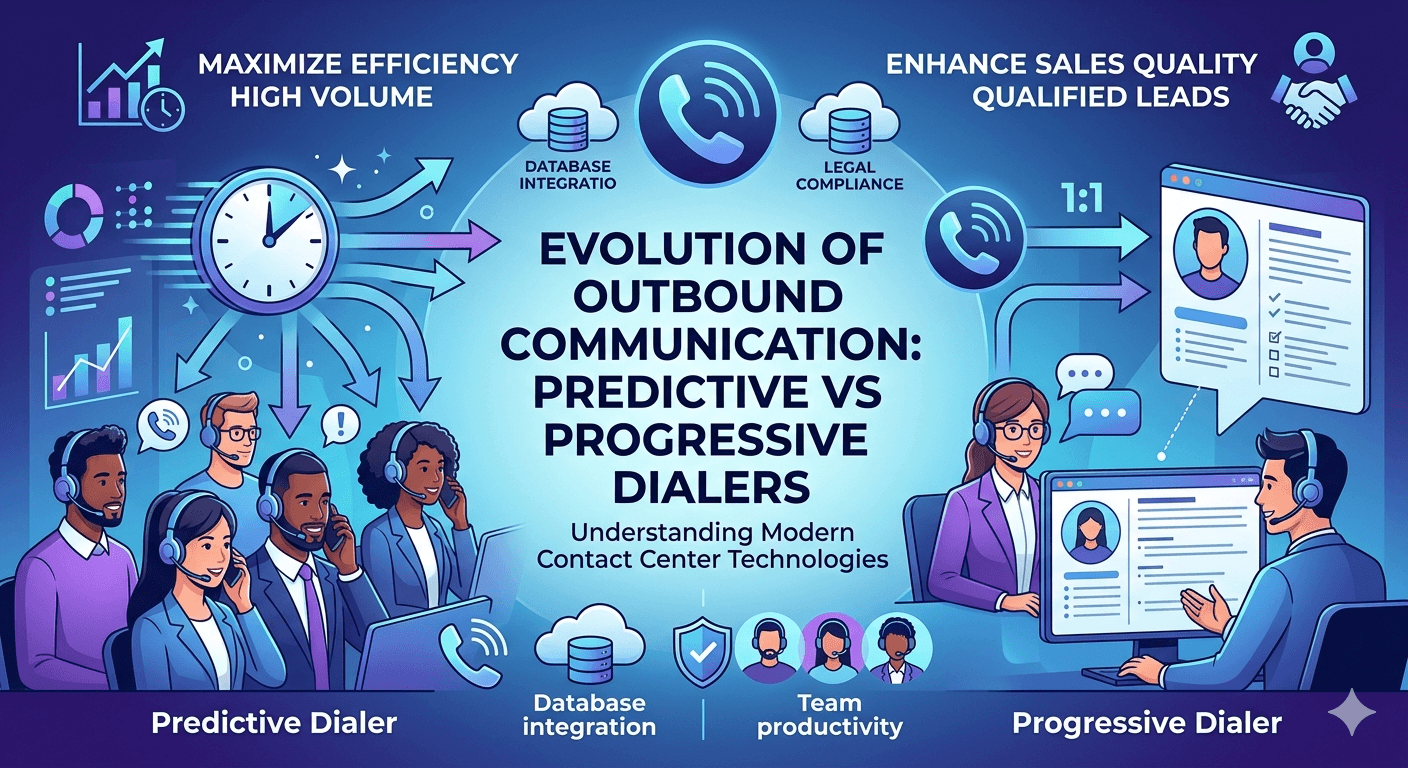
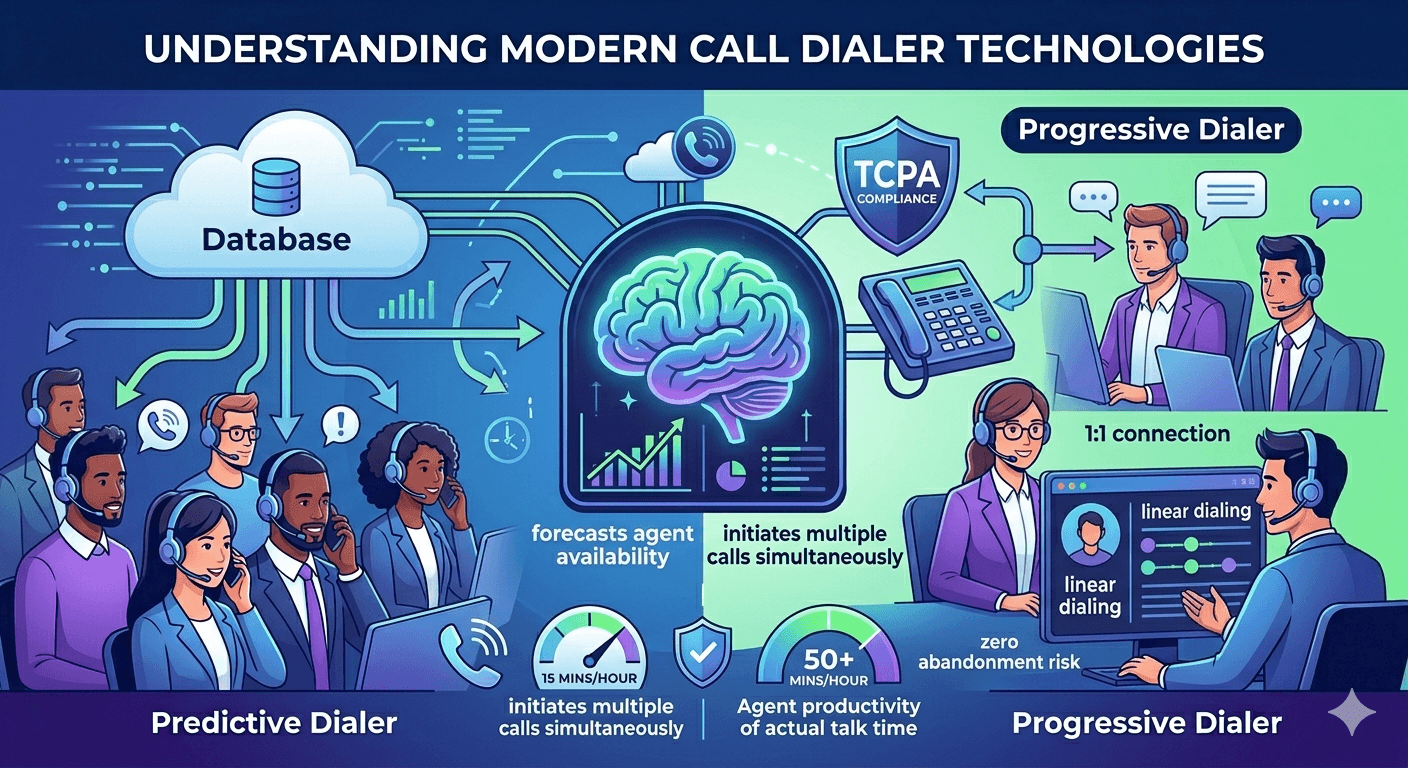
A predictive dialer is an automated system in contact centers that dramatically increases agent productivity by initiating multiple calls simultaneously before an agent is free. Using mathematical algorithms, it forecasts agent availability and answer probabilities, connecting only live respondents to agents. In contrast, a progressive dialer is another type of automated dialer that initiates calls one by one only when an agent becomes available. This ensures a smoother connection and is often used when the ratio of agents to calls needs to be precisely managed.
Modern outbound systems are categorized based on how they initiate calls and distribute them to available representatives. At the heart of this technological shift are automated tools that can dial thousands of numbers simultaneously, filtering out unproductive calls before they even reach a human ear. This advancement has allowed organizations to scale their operations without necessarily increasing their headcount. However, the specific method used to reach out to leads can vary greatly depending on the goals of the campaign, the quality of the lead list, and the regulatory environment of the region where the calls are being placed.
Understanding the mechanics behind predictive dialer vs progressive dialer tools is essential for any business leader looking to optimize their communication infrastructure. Whether the goal is high-volume telemarketing, personalized debt collection, or intricate business-to-business sales, the technology powering the calls acts as the engine of the entire operation. By removing the manual labor from the dialing process, companies can ensure that their staff remains focused on the most critical part of their job: building relationships and closing deals.
Exploring the Mechanics of What is Predictive Dialer and Its Core Functions
A sophisticated automated solution known as a predictive dialer uses complex mathematical algorithms to forecast when an agent will be free to take the next call. Unlike simpler systems, this technology does not wait for an agent to become available before it starts dialing. Instead, it analyzes historical data, such as average call duration and the time of day, to predict when a conversation is likely to end. This allows the system to begin dialing the next set of numbers in advance, ensuring that a live person is on the line the moment the representative finishes their previous interaction.
The primary objective of this predictive dialing system is to eliminate the idle time that typically occurs between calls. In a manual environment, an agent might spend up to forty seconds of every minute navigating through busy signals, no-answers, and disconnected lines. With this automated approach, the software handles those obstacles in the background. It only routes a call to the agent when it detects a human voice on the other end. This leads to a massive increase in talk time per hour, often moving from fifteen minutes of actual conversation to upwards of fifty minutes per hour in a highly optimized setting.
According to research by the Direct Marketing Association, automated systems can increase agent productivity by as much as 200 to 300 percent compared to manual dialing.
This is particularly beneficial for large-scale campaigns where the volume of leads is high and the conversion margin is thin. By maximizing the number of interactions, a company can ensure that every lead is contacted multiple times if necessary, without placing an undue burden on the staff. The intelligence of the system lies in its ability to adjust the dialing rate dynamically, slowing down when there are fewer agents available and speeding up when the team is ready for more volume.
How Does a Predictive Dialer Work in a High Volume Contact Center
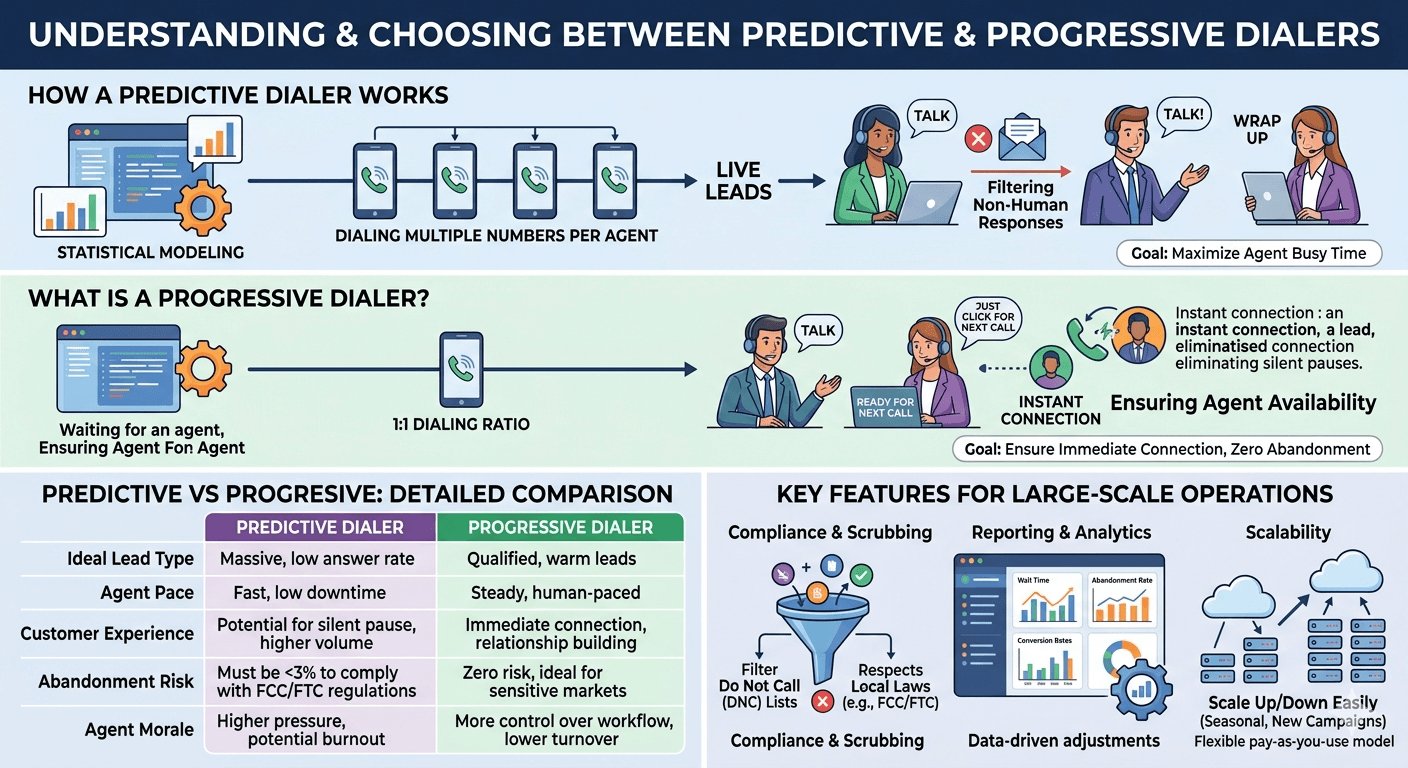
To truly grasp how does a predictive dialer work, one must look at the intersection of statistical modeling and real-time telephony management. The software continuously monitors the status of every agent in the queue. It takes into account the number of agents currently talking, those who are wrapping up their notes, and those who are waiting for a call. Simultaneously, the system calculates the probability of a call being answered based on the time of day and the specific demographics of the lead list. If the probability of an answer is low, the system will dial multiple numbers for every single available agent to ensure someone eventually picks up.
One of the most impressive features of this predictive dialing technology is its ability to filter out non-human responses. The software uses sophisticated voice detection to distinguish between a live person saying “hello” and an automated answering machine or a carrier message. If the system detects an answering machine, it can be programmed to either hang up immediately or leave a pre-recorded message, all without ever bothering the agent. This ensures that the representative only ever deals with live prospects who are ready to engage in a conversation, which significantly improves morale and reduces burnout.
However, the speed of these systems must be balanced against the risk of dropped calls. A dropped call occurs when the dialer reaches a live person but no agent is available to take the call because the system predicted an agent would be free sooner than they actually were. Regulatory bodies, such as the Federal Communications Commission in the United States, have strict rules regarding abandonment rates, typically mandating that they remain below three percent. High-quality predictive dialers are designed with these regulations in mind, automatically slowing their pace if the abandonment rate begins to approach the legal limit.
Defining Progressive Dialer Software and Its Operational Advantages
While predictive systems focus on high-speed volume through mathematical forecasting, the progressive dialer software follows a more controlled and linear approach to outbound calling. In this model, the system only dials one number for every available agent. It waits until the representative indicates they are ready for a new call before it initiates the next dial. This creates a 1:1 ratio that completely eliminates the risk of call abandonment. Since the system never dials more numbers than it has agents to handle, every person who answers the phone is guaranteed to be greeted by a live professional immediately.
The mechanics of progressive dialing are designed to maintain a steady flow of work without the aggressive pacing of predictive systems. When an agent finishes a call and completes their post-call documentation, they hit a button or the system detects their idle status and immediately dials the next number on the list. This removes the need for manual number entry and searching through a database, which still provides a significant efficiency boost over manual methods. It strikes a balance between the speed of automation and the reliability of human-centric pacing.
This approach is particularly valuable for businesses that prioritize the customer experience over sheer volume. In industries like luxury goods, high-end real estate, or complex financial services, having a “silent pause” at the beginning of a call can be detrimental to the brand image. Because a progressive system ensures the agent is already on the line the moment the customer answers, the interaction feels more natural and less like a telemarketing blast. This immediate connection helps in building rapport right from the first second of the conversation, which is critical for high-stakes sales environments.
Detailed Comparison: Predictive vs Progressive Dialer for Business Success
When evaluating a predictive vs progressive dialer, the decision usually boils down to the volume of leads and the desired quality of the interaction. Predictive systems are the heavy hitters of the outbound world, designed to churn through thousands of leads with maximum efficiency. They are best suited for campaigns where the list of contacts is massive and the likelihood of any single lead answering is relatively low. In these cases, the sheer volume of calls handled by the predictive dialers ensures that even if only a small percentage of people pick up, the agents remain busy and the campaign goals are met.
On the other hand, the progressive dialer is built for stability and consistency. It is the preferred choice for teams that have a moderate volume of leads that are considered “warm” or “qualified.” Since these leads are more likely to answer and more valuable to the business, the company cannot afford to risk dropping a call or frustrating the lead with a delay. The progressive method ensures that the agent is always there to say hello the moment the phone is picked up, preserving the integrity of the lead and the professional reputation of the organization.
The difference in agent experience is also a significant factor in the predictive vs progressive dialer debate. Agents working on a predictive system often feel more pressure because the calls come in rapid succession with very little downtime. This can lead to faster exhaustion if not managed with proper break schedules. In contrast, those using a progressive or preview system often feel they have more agency over their workflow. They can take a moment to breathe between calls or review notes, which can lead to a more satisfied workforce and lower turnover rates in the long run.
Choosing the Right Predictive Dialers for Large Scale Operations
Selecting the best predictive dialers for a large enterprise requires a deep dive into the software’s ability to manage data and comply with local laws. A high-quality system must be able to integrate with existing databases to ensure that Do Not Call lists are respected in real-time. If a number is added to a restricted list, the dialer should automatically scrub it from the active campaign to prevent legal repercussions. This level of automation is vital for protecting the company from the heavy fines associated with telemarketing violations.
Furthermore, a top-tier predictive dialing system should provide detailed analytics and reporting features. Managers need to be able to see the average wait time for agents, the abandonment rate of the dialer, and the conversion rates for different lead lists. These insights allow for the fine-tracking of campaign performance and the ability to make data-driven adjustments on the fly. If one lead source is performing poorly, the system should allow the manager to reallocate resources to a more productive list without shutting down the entire operation.
Scalability is another critical component when looking at what is predictive dialer technology in the modern cloud-based era. Traditional on-premise systems were limited by hardware constraints and the number of physical phone lines available. Modern cloud dialers, however, can scale up or down in minutes. A company can add fifty new agents for a seasonal promotion and then scale back down once the rush is over. This flexibility ensures that the business only pays for what it uses, making high-powered dialing technology accessible to organizations of various sizes and budgets.
Identifying Key Scenarios for Implementing a Predictive Dialing System
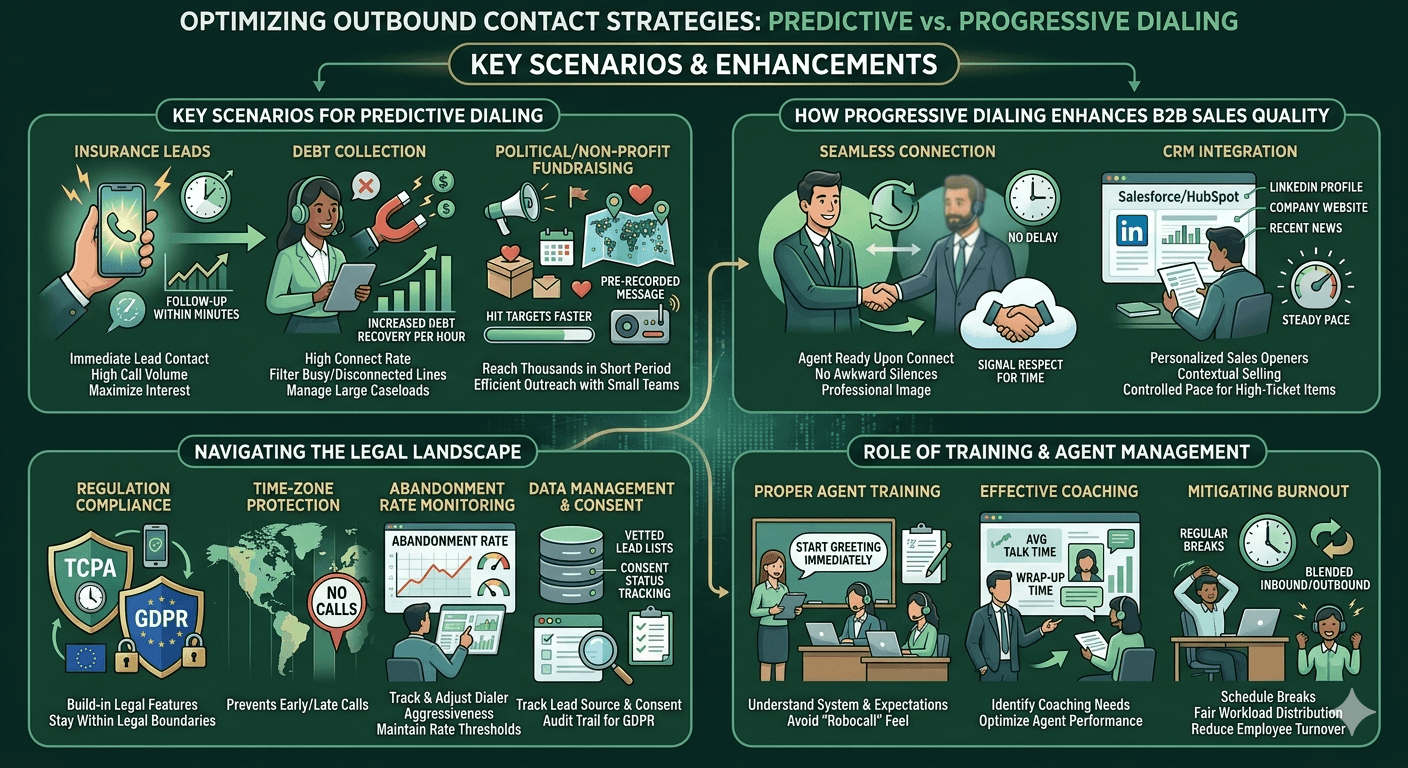
The implementation of a predictive dialing system is most effective in industries where speed and volume are the primary drivers of revenue. For example, in the insurance industry, agents often need to follow up on hundreds of internet leads every day. Since these leads can go “cold” very quickly, the ability to reach out to them within minutes of their inquiry is paramount. A predictive system can ensure that every lead is called immediately, maximizing the chances of catching the prospect while their interest is still high.
Debt collection is another field where this technology shines. Collection agencies often deal with large databases of contact numbers that have low answer rates. By using a predictive dialer, these agencies can ensure that their agents are only spending time on calls where a debtor has actually answered the phone. This significantly increases the amount of debt recovered per hour and allows the agency to manage its large caseload more effectively. The system’s ability to automatically handle busy signals and disconnected lines is especially useful in this context, where lead data quality can be inconsistent.
Large-scale political or non-profit fundraising also benefits immensely from this approach. When an organization needs to reach out to thousands of donors in a short period, the efficiency of predictive systems is unmatched. These campaigns often rely on reaching a specific “quota” of contacts, and the high-speed nature of the dialer makes it possible to hit those targets even with a relatively small team of volunteers or staff members. The ability to play pre-recorded messages to answering machines also helps in spreading the message without taking up valuable human interaction time.
How Progressive Dialing Enhances Sales Quality in B2B Environments
In the world of business-to-business sales, the focus shifts from quantity to the quality of the conversation, making progressive dialing the superior choice. In B2B scenarios, the prospects are often busy professionals who value their time and expect a high degree of professionalism. If a B2B lead answers the phone and hears nothing for several seconds, they are likely to hang up and may even form a negative opinion of the calling company. The progressive dialer removes this risk by ensuring the salesperson is ready and waiting the moment the connection is established.
Another advantage for B2B teams is the integration of progressive dialer software with CRM platforms like Salesforce or HubSpot. When the system dials a number, it can simultaneously pull up the prospect’s LinkedIn profile, company website, and recent news articles. This allows the salesperson to open the call with a personalized comment or a reference to a recent company achievement. This level of sophistication is what separates a standard cold call from a strategic outreach effort, and it is made much easier when the dialing system supports a steady, controlled pace.
Research published in the Journal of Business Research highlights that the “human touch” and the perceived effort in a sales call are direct predictors of customer trust. By using a system that prioritizes a seamless connection, businesses signal that they value the customer’s time. This subtle psychological cue can be the difference between a prospect staying on the line to hear a pitch or hanging up immediately. For high-ticket items where a single sale can represent thousands of dollars in revenue, the investment in a progressive system pays for itself through improved conversion rates and better brand perception.
Understanding the Legal Landscape and Predictive Dialing Regulations
Navigating the legalities of outbound calling is one of the most challenging aspects of managing a contact center. In many jurisdictions, there are strict limitations on how automated systems can be used. For example, the Telephone Consumer Protection Act (TCPA) in the United States sets clear guidelines on calling hours, the use of automated voices, and the maintenance of internal Do Not Call lists. A robust predictive dialer system must have built-in features that help the organization stay within these legal boundaries, such as time-zone protection that prevents calls from being made too early or too late in the recipient’s local area.
One specific area of concern is the “abandonment rate.” Because predictive systems dial more numbers than there are available agents, they occasionally “abandon” a call if no one is free to take it. Regulations typically require that the abandonment rate be tracked and kept under a specific threshold. Advanced dialers provide real-time monitoring of this metric, allowing managers to see exactly how many calls are being dropped. If the rate starts to climb, the manager can adjust the dialer’s aggressiveness or add more agents to the queue to balance the load.
In the European Union, the General Data Protection Regulation (GDPR) adds another layer of complexity. Organizations must ensure that they have a legal basis for processing the personal data of the people they are calling. This often means that lead lists must be carefully vetted for consent before they are loaded into the dialer software. High-quality dialing systems provide data management tools that help companies track the source of their leads and the consent status of each contact, providing an audit trail that can be used to demonstrate compliance in the event of an inquiry from a regulatory body.
The Role of Training and Agent Management in Dialer Success
While the technology is a powerful tool, the success of an outbound campaign ultimately depends on the people using the system. Proper training is essential for agents working with predictive or progressive dialers. They need to understand how the system works and what to expect when a call is connected. For example, in a predictive environment, agents must be trained to start their greeting immediately upon hearing a voice, as any delay can make the call feel like a “robocall” to the person on the other end.
Managers also play a critical role in the success of these operations. They must use the data provided by the predictive dialers to coach their team effectively. By analyzing metrics like average talk time and wrap-up time, managers can identify which agents are excelling and which ones might need more training. If an agent has a very short average talk time, it might indicate that they are struggling with the initial “hook” of the script. Conversely, a very long wrap-up time might suggest that the agent is having trouble with the software or is using the time as an unauthorized break.
Burnout is a real concern in high-volume contact centers, especially those using aggressive predictive pacing. To mitigate this, managers should use the dialer’s scheduling features to ensure that agents have regular breaks and that the workload is distributed fairly. Some systems allow for “blended” environments where agents handle both outbound calls and inbound inquiries. This variety can help keep agents engaged and reduce the monotony of a single-task workflow. By focusing on the well-being of the staff, organizations can maintain high levels of productivity and reduce the costs associated with high employee turnover.
Technological Evolution: From Hardware to Cloud-Based Dialers
The transition from traditional hardware-based systems to modern cloud solutions has revolutionized the accessibility of dialing technology. In the past, implementing a predictive dialing system required a significant upfront investment in servers, phone lines, and IT staff. This often meant that only the largest corporations could afford these powerful tools. Today, however, cloud-based progressive dialer software can be set up in a matter of hours with very little initial cost. This has leveled the playing field, allowing small and medium-sized businesses to compete with much larger organizations.
Cloud-based systems also offer superior reliability and disaster recovery capabilities. Since the software is hosted in secure data centers, the business is not at risk of losing its communication capabilities due to a local power outage or equipment failure. Agents can log into the system from anywhere with an internet connection, making remote work a viable option for contact centers. This has been a major advantage for companies looking to tap into a global talent pool or reduce their overhead by closing physical office spaces.
Furthermore, cloud dialers are constantly updated with the latest features and security patches. Unlike on-premise hardware that can quickly become obsolete, a cloud-based predictive vs progressive dialer solution evolves over time. Users benefit from the latest advancements in AI-driven voice detection, better integration with third-party apps, and improved user interfaces without having to perform manual upgrades. This “software as a service” model ensures that the business always has access to the most efficient tools available in the market.
Future Trends in Outbound Dialing and Artificial Intelligence
As we look toward the future, the integration of Artificial Intelligence (AI) and Machine Learning is set to make predictive dialing systems even more effective. Future dialers will likely move beyond simple historical averages and instead use real-time behavioral data to predict the best time to call a specific individual. For example, if a prospect has recently visited the company website or opened a marketing email, the dialer could automatically prioritize that lead for an immediate follow-up. This “intent-based” dialing will significantly increase the relevance and success of outbound outreach.
Natural Language Processing (NLP) is another area where we expect to see significant growth. Future systems may be able to “listen” to the initial seconds of a call and provide real-time suggestions to the agent based on the prospect’s tone and keywords. If a customer sounds frustrated, the system could suggest a more empathetic script or even offer a discount code to help de-escalate the situation. This type of “augmented” conversation will help agents be more effective and provide a better experience for the customer.
Finally, we are seeing a shift toward omnichannel communication. While the phone remains a critical tool, businesses are increasingly looking for ways to integrate it with SMS, email, and social media messaging. A modern dialer might send an automated text message to a lead a few minutes before calling them, or follow up a voicemail with a personalized email. By coordinating these different channels, companies can increase their overall contact rate and provide a more cohesive brand experience. The dialer of the future will not just be a predictive dialer vs progressive dialer vs progressive dialer tool for making calls; it will be the central hub for all outbound customer engagement.
Summary Table: Dialers at a Glance
| Feature | Predictive Dialer | Progressive Dialer | Preview Dialer |
| Dialing Ratio | Many numbers per agent | 1 number per agent | Agent controlled |
| Pacing | Algorithm-based (High) | Linear (Medium) | Manual (Low) |
| Idle Time | Minimal | Low | High (research time) |
| Abandonment Risk | Possible (needs monitoring) | Zero | Zero |
| Best For | High volume, low lead value | Warm leads, B2B, support | High-value, complex B2B |
| Agent Experience | Fast-paced, intense | Balanced, steady | Research-heavy, controlled |
| CRM Integration | Essential | Essential | Critical |
This table provides a quick reference for understanding which tool aligns best with specific operational goals. While the predictive dialer system focuses on the math of the connection, the progressive and preview options focus on the depth of the interaction. Choosing between them is a matter of prioritizing the specific outcomes that matter most to your business model.
Read More: What is an Escalation Call?
Final Thought
The decision to implement a specific dialing technology is a strategic choice that affects every level of an organization, from the bottom-line revenue to the daily morale of the staff. Both predictive dialers and progressive dialers offer significant advantages over manual methods, but they serve different purposes within the sales and support ecosystem. A predictive dialing system is a powerhouse for volume, turning a massive list of contacts into a steady stream of conversations for a large team. Conversely, progressive dialer software provides the stability and professionalism needed for high-quality leads and complex business interactions. By carefully analyzing the volume of leads, the value of each conversation, and the regulatory environment, businesses can choose the tool that will best empower their team to succeed in an increasingly competitive marketplace.
Frequently Asked Questions
-
What is the main purpose of a predictive dialer?
The main purpose of a predictive dialer is to maximize the amount of time an agent spends talking to live customers while minimizing the time spent dialing and waiting. By using statistical algorithms to predict agent availability and answer rates, it ensures that a new call is ready the moment an agent finishes their previous one. This drastically improves the efficiency of high-volume outbound campaigns.
-
Are predictive dialers legal in the United States?
Yes, they are legal, but they are subject to strict regulations under the Telephone Consumer Protection Act (TCPA). Businesses must ensure that their abandonment rate (the percentage of calls answered by a person but not connected to an agent) stays below 3%. They must also respect the National Do Not Call Registry and follow specific rules regarding the hours during which they are allowed to place calls.
-
How do preview dialers differ from auto dialers?
Preview dialers are a specific type of auto dialer that prioritizes agent preparation. Unlike standard auto dialers that connect the call as soon as it is answered, a preview system shows the agent the lead’s information first. The agent can then review the customer’s history and decide exactly when to initiate the call. This is the opposite of high-speed systems like predictive dialers, focusing on quality and personalization over volume.
-
Can small teams benefit from using progressive dialers?
Absolutely. Progressive dialers are often the ideal choice for small teams because they provide a significant productivity boost over manual dialing without requiring a large pool of agents to feed a predictive algorithm. Since the progressive system dials one number for every available agent, even a team of two or three people can use it to maintain a steady workflow without risking dropped calls.
-
What type of campaigns work best with predictive dialers?
Predictive dialers are most effective for campaigns that involve a high volume of leads with relatively low individual values. This includes telemarketing, large-scale fundraising, and debt collection. In these scenarios, the goal is to reach as many people as possible as quickly as possible. Because these lists often have lower answer rates, the predictive system’s ability to filter out non-answers is invaluable.