
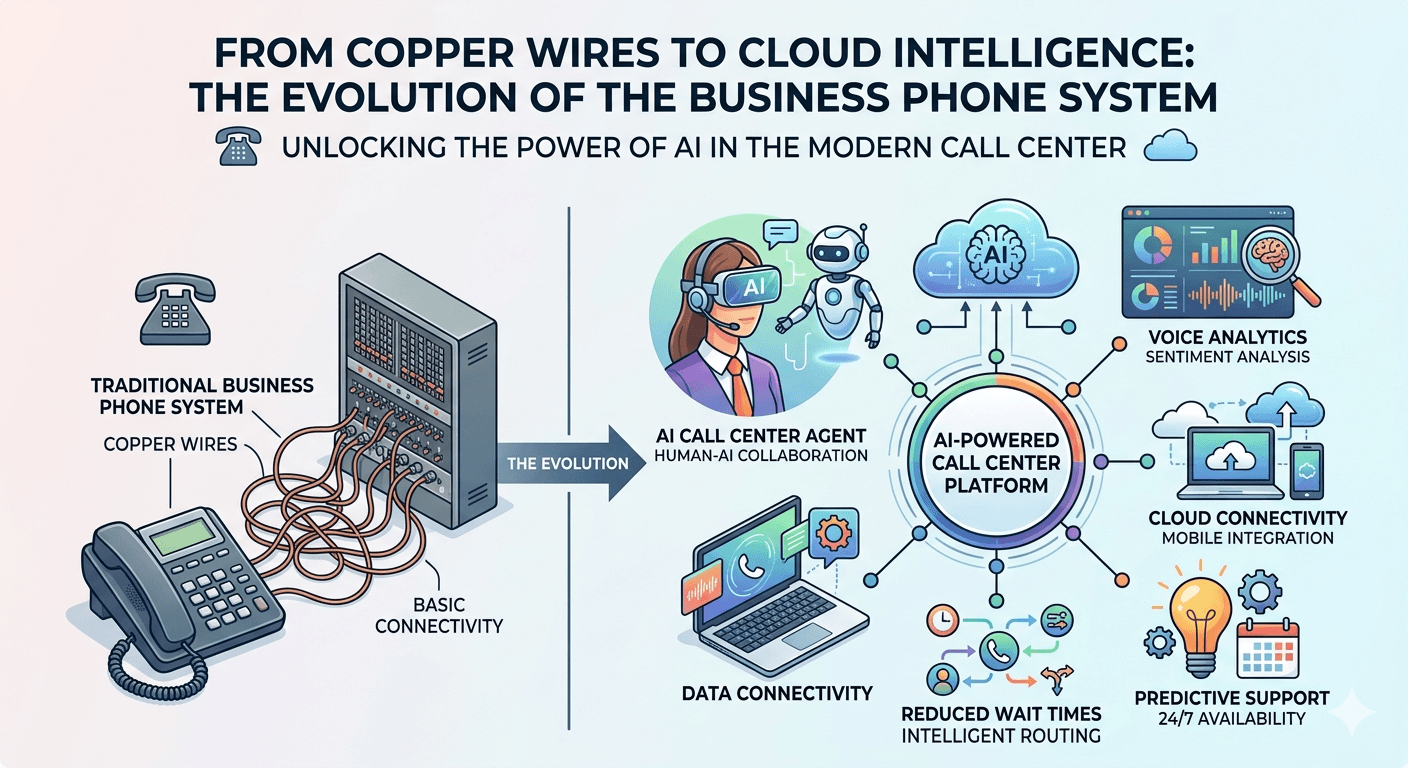
The landscape of business communication is undergoing a seismic shift. Gone are the days when a business phone system was merely a physical handset sitting on a desk with a tangle of copper wires trailing into the wall. Today, the convergence of business telephony and advanced computing has birthed a new era of interaction. In an age where customer experience is the primary brand differentiator, organizations are moving beyond basic business telephone systems toward sophisticated, intelligence-driven platforms. This evolution is driven by AI powered call center technology, which does not just facilitate a conversation but analyzes it in real-time to provide insights that were once impossible to capture.
For any modern enterprise, understanding what is a business phone system in the 2020s requires looking at the intersection of cloud connectivity and machine learning. We are no longer just talking about making and receiving calls; we are talking about business telecom systems that can predict customer needs, coach agents during live interactions, and provide a seamless link between a company and its clientele. This comprehensive guide explores how ai call center software and advanced business phone solutions are redefining the caller experience and why your organization needs to adapt to these changes to stay competitive.
What is a Business Phone System?
Before diving into the complexities of artificial intelligence, it is essential to establish a baseline. When we ask what is business phone technology today, the answer is vastly different than it was a decade ago. A business phone system definition encompasses a multiline telephone network designed to handle the complex communication needs of a professional organization. Unlike a standard residential line, these systems provide features like call routing, automated attendants, and shared lines that allow a business communication with phone number consistency to manage high volumes of traffic effectively.
At its core, a phone system for business communication is a centralized hub. Whether you are using a traditional pbx business phone system or a modern online business phone system, the goal remains the same: to provide a professional point of contact for customers. The shift from hardware-centric business telephone service to software-defined business phone systems has allowed companies of all sizes to access enterprise-grade features. From a home business phone system for a solo entrepreneur to phone systems for large business infrastructures, the technology has become more accessible, scalable, and powerful.
The Evolution of Business Telephony
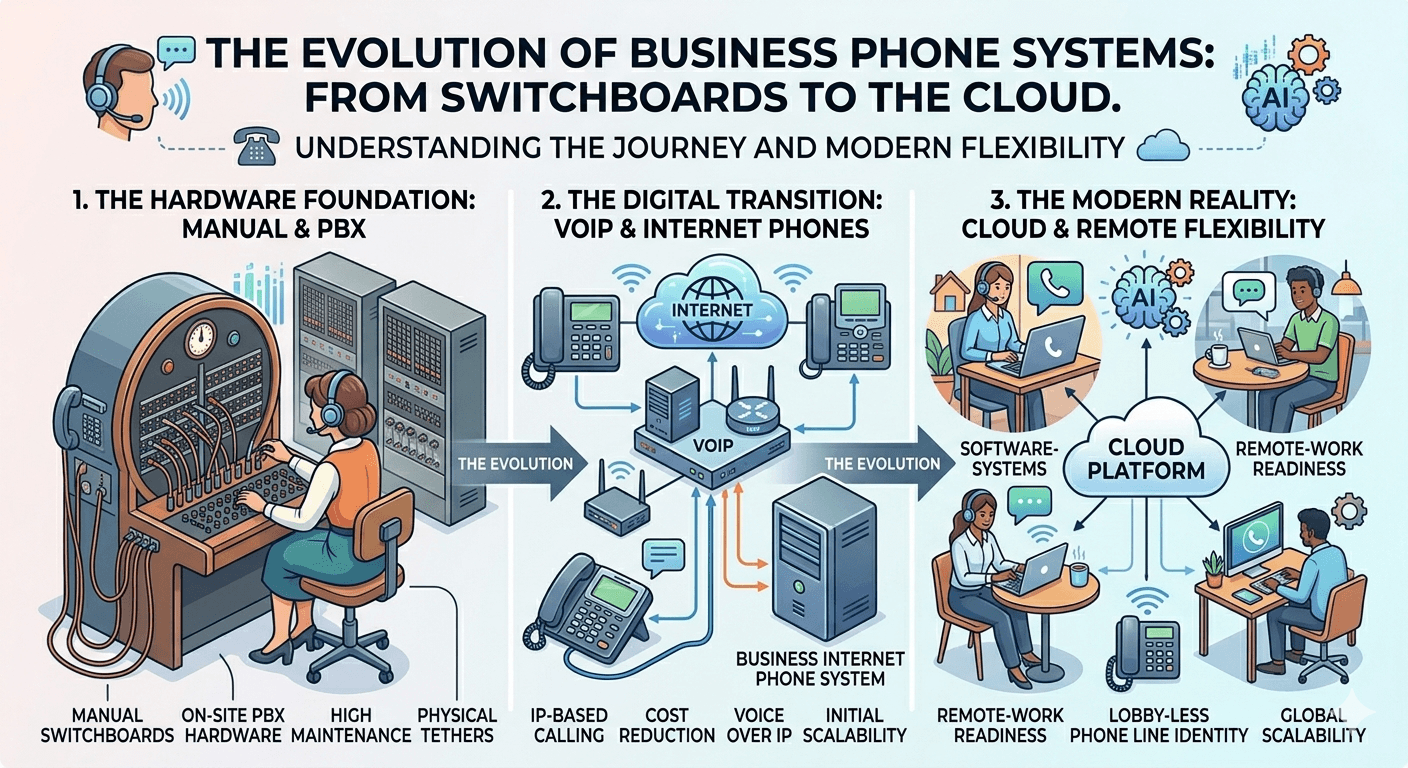
The journey of business telephony began with simple switchboards and evolved into the Private Branch Exchange (PBX). For years, business pbx systems were the gold standard, requiring significant on-site hardware and maintenance. However, the rise of the internet led to the development of the business internet phone system, commonly known as VoIP (Voice over Internet Protocol). This transition allowed for business phone systems software to take the lead, moving the “brains” of the operation to the cloud.
Today, corporate phone systems are no longer tethered to a physical location. An office phone system now lives on laptops, smartphones, and tablets, allowing employees to maintain their business phone line identity from anywhere in the world. This flexibility is what defines a professional phone system in the modern remote-work era. The move to the cloud was the necessary precursor for the integration of artificial intelligence for call centers, as cloud-based data is much easier for AI algorithms to process and analyze than analog signals.
Getting Started: How to Secure Your Business Identity
For new ventures, the first step in establishing credibility is figuring out how can i get a business phone number. This is often one of the most critical branding decisions an entrepreneur makes. A dedicated business phone number separates personal life from professional obligations and allows for a more organized approach to lead management. Many startups look for ways to get a business phone number free through various trial services or basic digital apps, though most growing companies eventually graduate to a paid business telephone service to ensure reliability and advanced features.
The process of how to make a business phone number active involves selecting a provider that offers the right available phone numbers, including local or toll-free options. A 1- business phone (toll-free) number can give a small company the appearance of a national brand, while local numbers help build trust within a specific community. Once you have selected from the available phone numbers provided by your business phone systems company, you can begin configuring the business phone system features that will define your caller experience.
Key Components of Modern Business Phone Systems
When evaluating new business phone systems, it is helpful to understand the standard features that make these tools effective. A modern phone system in business communication setup usually includes:
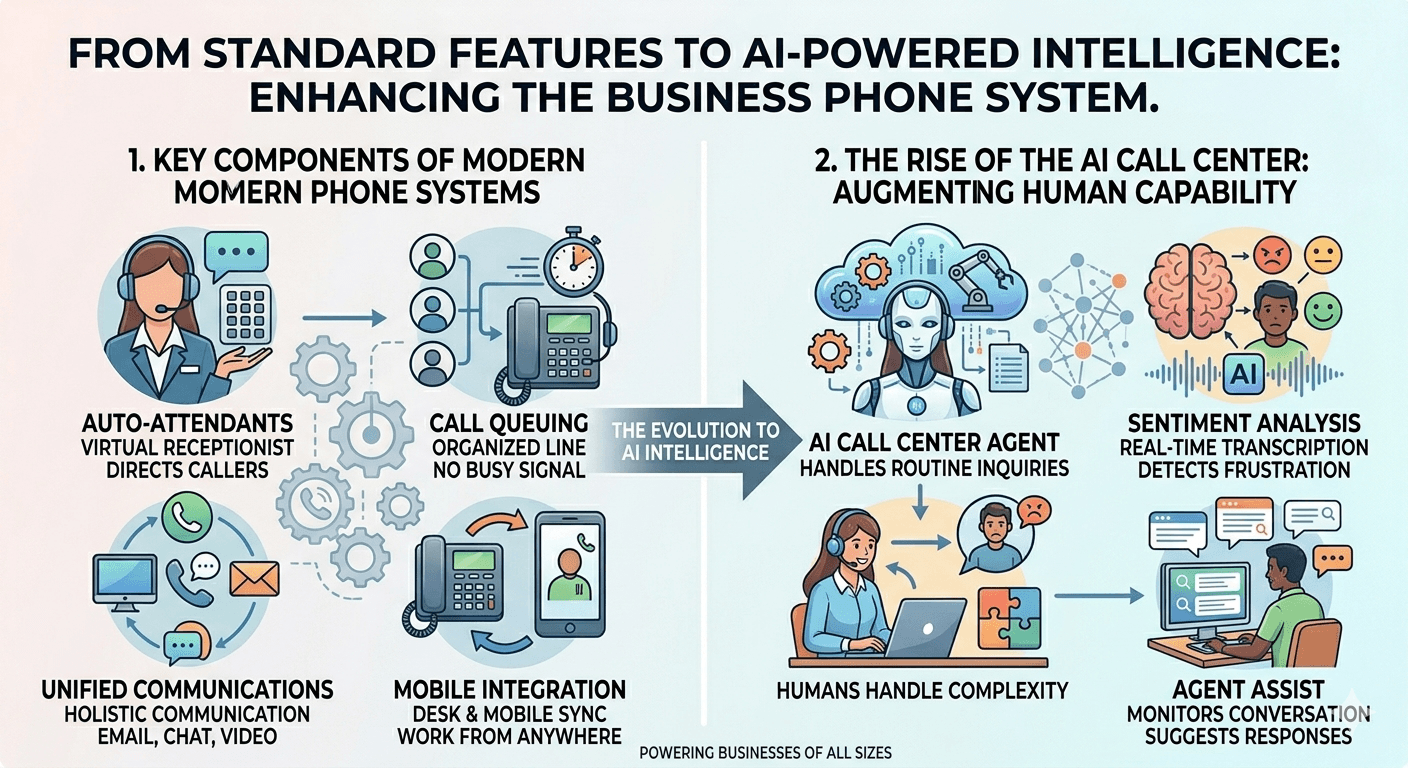
- Auto-Attendants: This feature acts as a virtual receptionist, directing callers to the right department without human intervention, which is a staple in any corporate phone system.
- Call Queuing: Essential for phone systems businesses that experience high call volumes, ensuring that customers are held in an organized line rather than receiving a busy signal.
- Unified Communications: Integrating your business phone systems with email, chat, and video conferencing to create a holistic communication environment.
- Mobile Integration: Ensuring that your business phone small system works just as well on a mobile device as it does on a desk phone, which is vital for the modern entrepreneur phone system.
The Rise of the AI Call Center: A New Standard
As we move beyond basic connectivity, the focus shifts to call center ai. An ai powered call center is not just about replacing humans with robots; it is about augmenting human capability. Artificial intelligence call center solutions use Natural Language Processing (NLP) and Machine Learning (ML) to understand the context, intent, and emotion behind every word spoken during a call. This technology, often referred to as aicall or call center intelligence, is transforming the traditional contact center artificial intelligence landscape into a proactive powerhouse of data.
The integration of ai in call centers has led to the development of the ai call center agent. These are sophisticated virtual assistants capable of handling routine inquiries, such as checking an account balance or updating a shipping address, with human-like fluency. By deploying ai for callcenter operations, businesses can free up their human agents to handle more complex, emotionally sensitive issues. This creates a balanced ai based call center environment where technology handles the repetitive tasks while humans handle the nuance.
How AI Call Center Software Works?
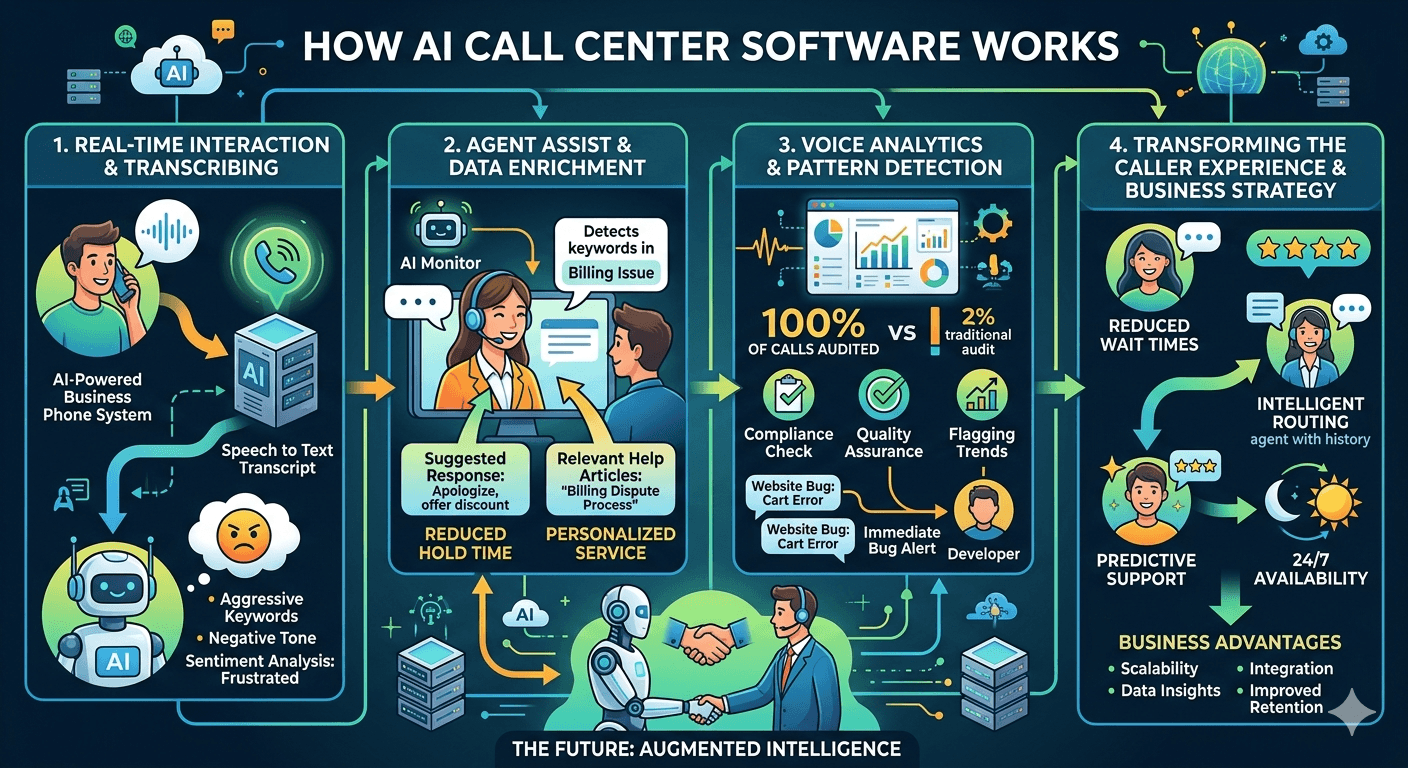
The “magic” behind ai call center software lies in its ability to process vast amounts of unstructured voice data. When a customer does business communication with phone number powered by AI, the system immediately begins transcribing the call. Tools like ringcentral ai or other ai call center solutions analyze the transcript in real-time. They can detect if a customer is frustrated based on their tone and the specific words they use. This is known as sentiment analysis, and it is a cornerstone of ai in contact centers.
Furthermore, ai call center technology provides “agent assist” features. As the agent speaks with the customer, the ai call center solutions monitor the conversation and pull up relevant help articles or suggest the best response based on the customer’s history. This reduces the “hold time” while an agent looks for information, significantly improving the overall business telephone systems experience. For a business phone systems for small businesses, this level of support allows a small team to perform with the efficiency of a much larger enterprise business phone systems department.
Voice Analytics: The Heart of the AI Revolution
The most significant impact of ai for call centers is found in voice analytics. In a traditional phone system for business communication, once a call ended, the data was largely lost unless someone manually listened to the recording. With ai based contact center technology, every single interaction is automatically analyzed. This allows phone systems business owners to see patterns that were previously invisible. For example, if multiple customers call a business phone line complaining about a specific website bug, the AI can flag this trend instantly, allowing the company to fix the issue before it escalates.
Call center ai software also plays a massive role in compliance and quality assurance. Instead of a manager listening to a random 2% of calls to ensure quality, artificial intelligence contact center tools can audit 100% of calls. They can check if the agent used the required greeting, followed legal disclosures, and effectively solved the customer’s problem. This level of oversight is what differentiates professional phone system management from a standard, unmonitored telephone business systems setup.
Transforming the Caller Experience with AI
What does this mean for the person on the other end of the business telephone service? It means a more personalized, efficient, and less frustrating experience.
- Reduced Wait Times: Through ai to replace call center bottlenecks, virtual agents handle simple tasks immediately, reducing the queue for everyone else.
- Intelligent Routing: AI in contact centers can recognize a caller’s phone number and route them to the specific agent they spoke with last time, or to an agent who specializes in their specific problem.
- Predictive Support: By analyzing historical data, an online business phone systems platform can predict why a customer is calling before they even speak, allowing the agent to start the conversation with a solution in hand.
- 24/7 Availability: With ai call centers, your business phone systems never truly close. Customers can get support at 3 AM without the company needing to staff a graveyard shift.
Choosing the Right Business Phone Solution
With so many business phone system options available, selecting the right one can be daunting. Whether you are looking for a new business phone system or upgrading an existing buisness phone system, you must consider both your current needs and future growth. A phone system for small business needs to be cost-effective and easy to set up, while phone systems for large business require deep integrations with CRM software and robust business communication telecom systems infrastructure.
For many, the choice comes down to a business internet phone system that offers built-in AI capabilities. Providers like ring central ai have integrated these tools directly into their platforms, making ai call center technology accessible even to those without a massive IT budget. When evaluating a business phone systems company, look for those that offer a clear roadmap for AI integration, as this will be the standard for business telephony moving forward.
Comparing Features: PBX vs. Cloud-Based AI Systems
While pbx business phone systems offered reliability in the past, they often lack the agility of online business phone system models. A modern buisness phone system based in the cloud allows for instant updates and the easy addition of ai call center features. Here is why the shift is happening:
- Scalability: A business phone systems software approach allows you to add or remove lines with a few clicks, whereas traditional telephone systems business hardware required physical installations.
- Integration: Modern business phone solutions connect directly with tools like Salesforce, Zendesk, and Slack, ensuring that your phone business systems are part of your wider tech stack.
- Data Insights: Only ai based call center platforms can provide the level of deep analytics required to understand the modern customer journey.
- Cost Management: When you get a business phone number free or through a low-cost subscription, you avoid the heavy upfront capital expenditure of legacy corporate phone systems.
The Future: Will AI Replace the Call Center?
A common question in the industry is whether we are looking at ai to replace call center workers entirely. While ai call center agent technology is becoming incredibly advanced, the consensus is that the future lies in “augmented intelligence.” The best phone system for business communication will always have a human element for complex problem-solving and empathy. However, the business telephone systems of the future will be “AI-first,” meaning the AI will handle the first layer of interaction, the documentation, and the post-call analysis.
As business pbx systems continue to fade into history, the focus will shift toward call center intelligence that can predict customer churn before it happens. Imagine a business phone system that alerts a manager when a high-value client sounds frustrated on a call, allowing for an immediate “save” attempt. This is the level of sophistication that artificial intelligence for call centers brings to the table. For any business with phone number interactions, these tools are no longer a luxury—they are a necessity for survival.
Investing in the Right Infrastructure
To take advantage of these trends, companies must invest in enterprise business phone systems that are built for the future. This means looking beyond just a business phone line and looking at a platform that offers business phone features like real-time transcription, automated coaching, and advanced sentiment analysis. Whether you are a solo operator using a home business phone system or a global corporation with thousands of lines, the goal is the same: to make every interaction count.
The new business phone systems hitting the market today are more than just tools for talking; they are engines for growth. By leveraging ai powered call center capabilities, businesses can turn their phone systems business costs into a source of competitive advantage. The data gathered through ai call center software can inform product development, marketing strategies, and customer retention programs. In this way, your business telephone service becomes a central pillar of your entire business strategy.
Read More: Wireless IP Phones vs. Mobile Apps: Deciding What’s Best for Your Remote Workforce
Final Thought
The transformation of the business phone system from a simple utility to a sophisticated AI-driven platform is one of the most exciting developments in modern commerce. By integrating ai call center solutions with traditional business telephony, companies can provide a level of service that was previously unimaginable. From the way you first get a business phone number to the complex analytics performed by an artificial intelligence contact center, every step of the process is now infused with data-driven insights. As we move forward, the “caller experience” will no longer be defined by how long someone waits on hold, but by how well a company understands and anticipates their needs through the power of ai in call centers.
Frequently Asked Questions
What is the difference between a traditional business phone and an AI call center?
A traditional business phone is primarily used for voice transmission, while an ai call center uses software to analyze those conversations. Traditional systems like pbx business phone systems focus on routing and connectivity, whereas ai call center software focuses on understanding intent, sentiment, and providing real-time assistance to both the agent and the caller.
How can I get a business phone number for my new company?
You can get a business phone number by signing up with a business phone systems company. Many providers offer a variety of available phone numbers, including local and toll-free options. To start, you can often find basic services that allow you to get a business phone number free for a trial period before committing to a full business telephone service.
Is AI going to replace human agents in call centers?
While ai to replace call center tasks is a growing trend for routine inquiries, it is unlikely to replace humans entirely. The goal of ai in call centers is to handle repetitive tasks and provide data, allowing human agents to focus on complex, high-value, and emotionally charged interactions that require human empathy and critical thinking.
What are the must-have business phone system features for a small business?
A business phone small system should at least include an auto-attendant, call forwarding, voicemail-to-email, and mobile app integration. For those looking to grow, adding ai call center agent capabilities can help manage customer inquiries more efficiently without needing to hire additional staff immediately.
How does voice analytics improve the caller experience?
Voice analytics, a key part of call center intelligence, improves the experience by identifying common customer pain points and reducing wait times. Because the ai powered call center can analyze tone and keywords, it can route callers more effectively and provide agents with the exact information they need to solve a problem quickly, leading to higher customer satisfaction.