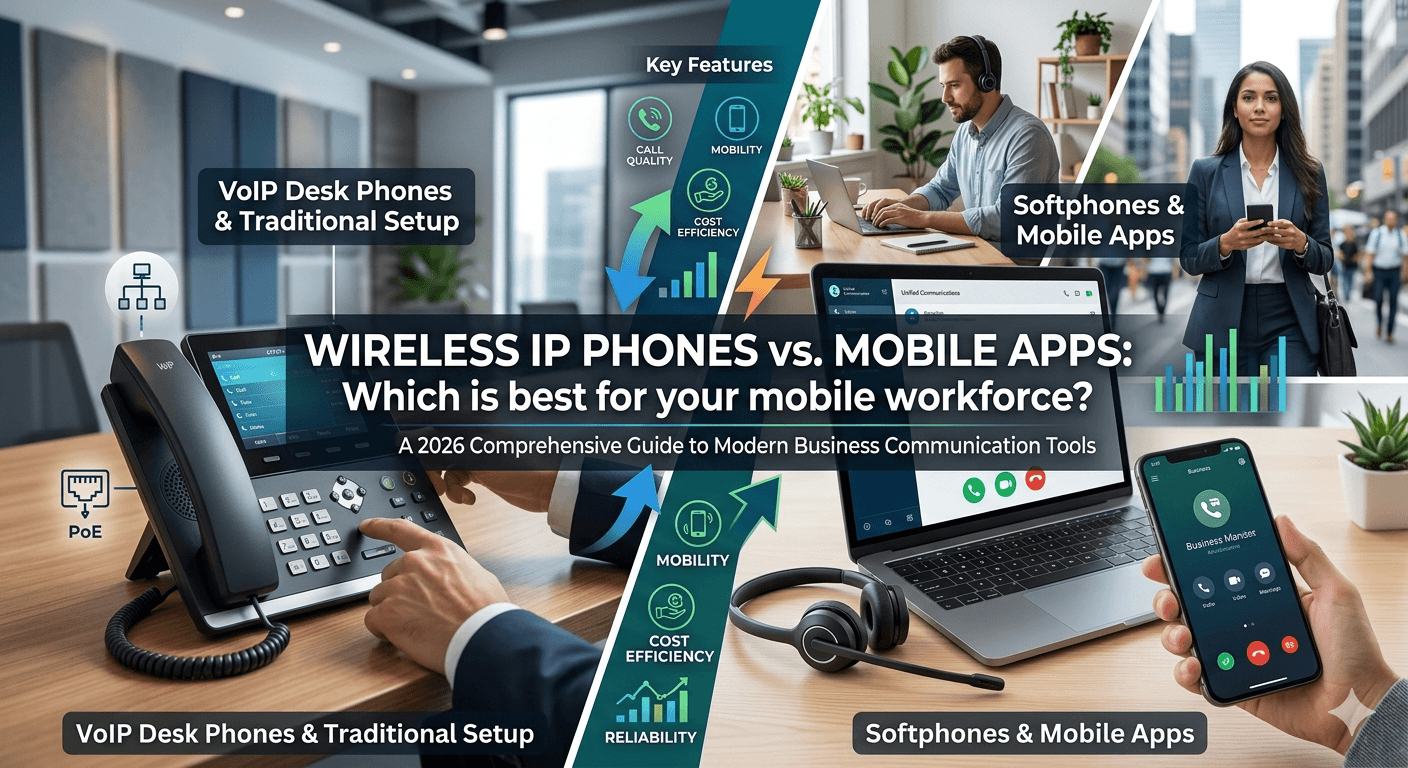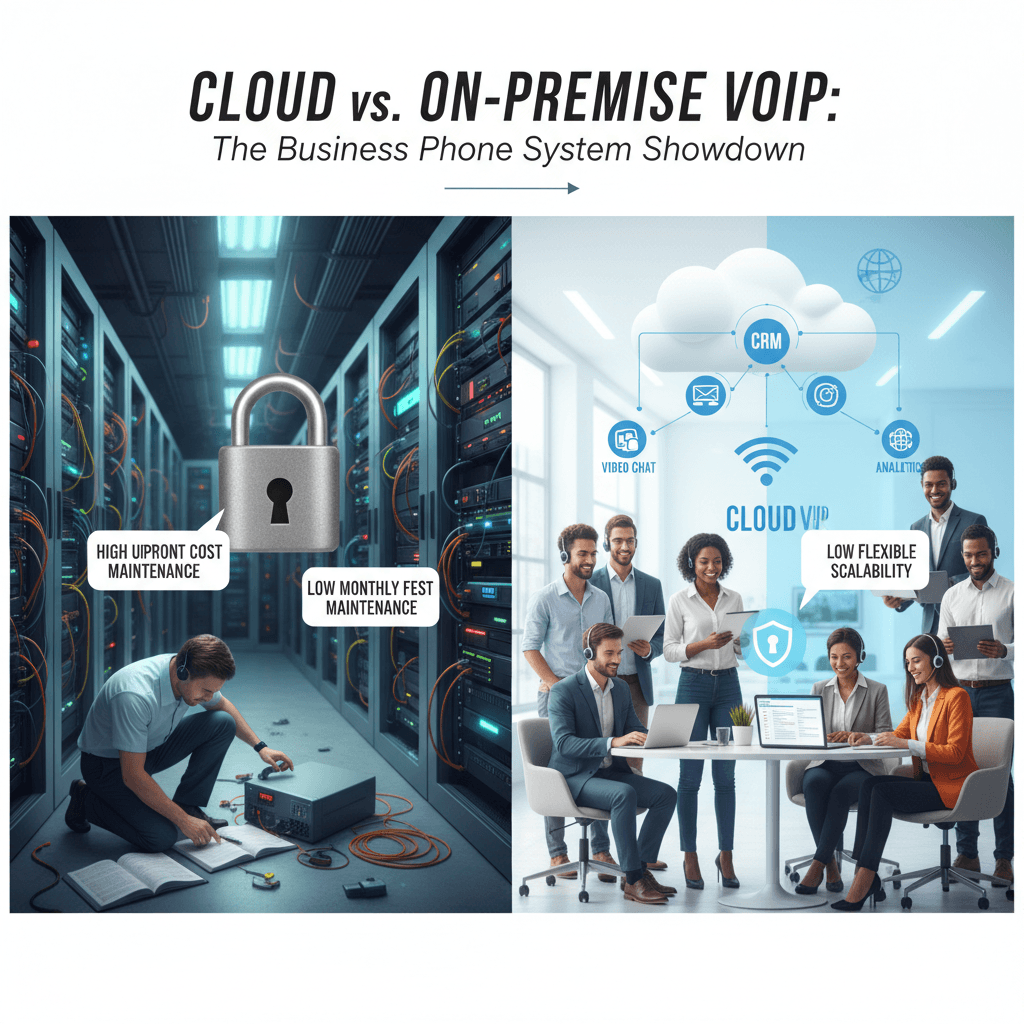

A hosted PBX phone system is becoming the new standard because it delivers enterprise-level communication without expensive on-site hardware. It operates in the cloud, offering scalability, remote access, and easy management. Businesses benefit from lower costs, flexibility, and advanced features like call routing, analytics, and integrations.
In the rapidly evolving business landscape, traditional phone systems are becoming a relic of the past. Companies, especially those focused on growth, are increasingly turning to a more dynamic, cost-effective, and feature-rich alternative: hosted VoIP for business. This innovative approach, often referred to as a hosted PBX phone system or hosted IP phone system, leverages the internet to deliver superior communication capabilities.
Gone are the days of expensive on-premise hardware, complicated installations, and limited functionality. Today, a hosted VoIP system provides businesses of all sizes with an enterprise-grade communication solution that is both powerful and flexible. If you’re wondering why so many businesses are making the switch, and why a hosted IP PBX is considered the new standard for growth, read on.
10 Reason Why Hosted PBX Phone System is the New Standard for Businesses
Here are 10 compelling reasons why adopting a hosted VoIP for business solution will empower your company’s expansion and efficiency.
1. Lower Business Phone Costs
One of the most immediate and impactful benefits of VoIP for business is the significant reduction in communication expenses. Traditional landlines come with high installation fees, per-minute charges, and costly maintenance. A hosted VoIP phone system drastically cuts these overheads.
Instead of investing in expensive PBX hardware, you pay a predictable monthly fee to your provider. This eliminates capital expenditures, reduces long-distance charges (often free within the VoIP network), and slashes maintenance costs, as the provider manages all the infrastructure. For small businesses, these are critical benefits of VoIP for small business, freeing up capital that can be reinvested into growth initiatives.
2. High Call Quality
The misconception that internet-based calls are inherently poor quality is outdated. Modern hosted VoIP solutions deliver exceptionally clear and reliable call quality, often surpassing traditional landlines. This is due to advancements in broadband internet, sophisticated audio codecs, and Quality of Service (QoS) protocols that prioritize voice traffic.
With a good internet connection, your hosted IP phone system will provide crystal-clear conversations, ensuring every client interaction and team meeting is productive and professional. High call quality is a non-negotiable for effective business communication, and contemporary VoIP systems excel in this regard.
3. Advanced Call Features Without High Costs
This is where a hosted PBX phone system truly shines and offers significant advantages of VoIP over traditional systems. Unlike legacy systems where advanced features came with a hefty price tag, a hosted VoIP system includes a comprehensive suite of sophisticated functionalities as standard.
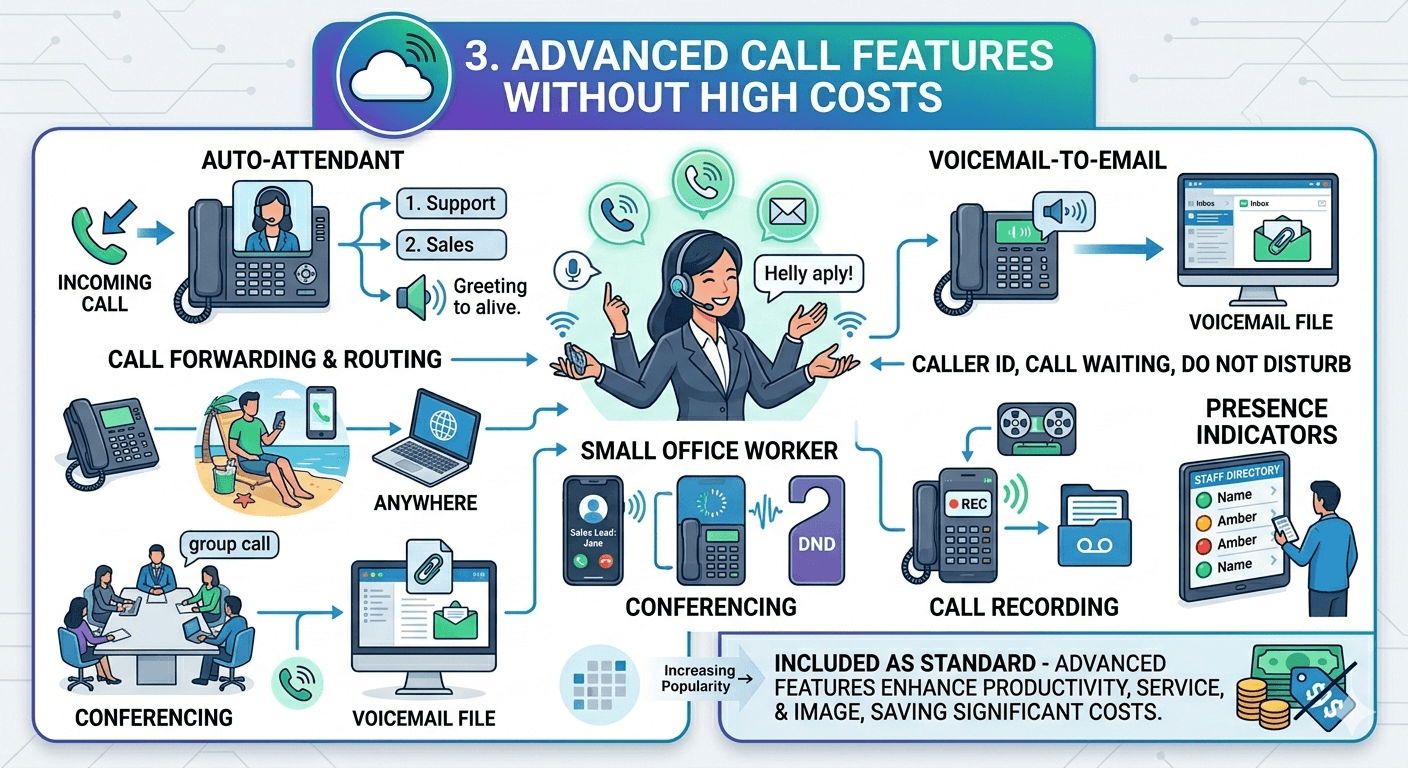
Imagine having access to:
- Auto-Attendant: Professional greetings and call routing.
- Call Forwarding & Routing: Direct calls to the right person, anywhere.
- Voicemail-to-Email: Receive voicemails as audio files in your inbox.
- Conferencing: Easy setup for multi-party calls.
- Caller ID, Call Waiting, Do Not Disturb: Essential features for daily operations.
- Call Recording: For training, quality assurance, or compliance.
- Presence Indicators: See who is available or busy.
These are just a few examples of why use VoIP for business. These features enhance productivity, improve customer service, and project a professional image, all included in your hosted PBX pricing.
4. Better Security with the Right Provider
Security is a paramount concern for any business, and hosted VoIP solutions offer robust protection when partnered with a reputable provider. Leading hosted VoIP for business providers implement multi-layered security protocols, including:
- Encryption: Securing voice data during transmission.
- Firewalls & Intrusion Detection: Protecting the network from un-authorized access.
- Regular Software Updates: Patching vulnerabilities promptly.
- Data Redundancy & Backups: Ensuring service continuity and data integrity.
While no system is entirely impervious, the security measures employed by professional hosted IP PBX providers are often far more advanced than what a small or medium-sized business could afford or manage on its own with an on-premise system. Choosing a provider that prioritizes security is key to leveraging these advantages of VoIP.
5. Employees Can Work from Anywhere with VoIP
The modern workforce is increasingly remote and mobile. One of the standout advantages of VoIP is its inherent flexibility, allowing employees to connect from any location with an internet connection. Whether working from home, a co-working space, or on the road, your team can use their business phone system seamlessly.
This means:
- Remote Work Support: Enable employees to make and receive calls as if they were in the office.
- Geographic Flexibility: Easily set up new offices or temporary locations without complex installations.
- Business Continuity: Operations can continue even if the physical office is inaccessible.
This capability is a huge benefit of VoIP for business, particularly for companies looking to expand their talent pool beyond local geographic limits.
6. Digital Calls Are Just the Beginning: Unified Communications
A hosted VoIP system goes beyond just voice calls. It forms the foundation for a comprehensive Unified Communications (UC) platform. This means integrating various communication channels into a single, cohesive solution.
With a hosted IP phone system, you can consolidate:
- Voice Calls: The core functionality.
- Video Conferencing: Face-to-face meetings from anywhere.
- Instant Messaging/Chat: Quick internal communication.
- Presence Information: See who is available, in a meeting, or away.
- Screen Sharing: For collaborative work and presentations.
This integration streamlines workflows, enhances team collaboration, and minimizes the need for multiple, disparate communication tools. It’s a key reason why use VoIP for business is synonymous with efficiency.
7. Simplified Scalability for Growing Businesses
Growth is exciting, but it often brings infrastructure challenges. Traditional phone systems require significant upgrades and investments every time you add new employees or expand offices. This is not the case with a hosted PBX phone system.
Scalability is one of the most compelling advantages of VoIP for a growing business. You can:
- Add or Remove Users Instantly: Simply log into a web portal to provision new extensions or deactivate old ones.
- Expand Locations Easily: Connect new offices to the same system with minimal setup.
- Handle Increased Call Volumes: Hosted solutions are designed to manage fluctuating demands without performance degradation.
This “pay-as-you-grow” model means your communication system can effortlessly scale with your business without incurring prohibitive costs or downtime.
8. Seamless Integration with Business Tools
Modern businesses rely on a suite of applications to manage their operations, from CRM to helpdesk software. A major benefit of VoIP for business is its ability to integrate seamlessly with these essential tools.
Imagine:
- Click-to-Call: Initiate calls directly from your CRM database.
- Automatic Call Logging: All call activity recorded within your CRM or helpdesk.
- Screen Pops: Customer information automatically displayed when they call.
- Call Analytics: Data from calls integrated with sales and support metrics.
These integrations enhance productivity, improve customer relationship management, and provide valuable insights into communication patterns. It’s a powerful aspect of why use VoIP for business makes operational sense.
9. Enhanced Mobility with Mobile VoIP Apps
For the ultimate in flexibility, hosted VoIP solutions come with dedicated mobile applications. These apps turn any smartphone into an extension of your business phone system.
With a mobile VoIP app, your employees can:
- Make and receive calls using their business number, even from their personal phone.
- Access business contacts, voicemails, and call history on the go.
- Participate in conference calls from anywhere.
- Keep personal and business communications separate on a single device.
This enhanced mobility ensures that your team is always connected and professional, whether they’re in the office, at home, or traveling. It’s a massive advantage of VoIP for any business with a mobile workforce.
10. Robust Disaster Recovery Options
Business continuity is vital, and a hosted PBX phone system offers superior disaster recovery capabilities compared to on-premise solutions. Since the system is hosted in the cloud, often across multiple data centers, it’s inherently more resilient.
In the event of a local disaster (power outage, office closure):
- Automatic Call Forwarding: Calls can be rerouted instantly to mobile phones or other locations.
- Geographic Redundancy: Your service continues uninterrupted from another data center.
- Remote Accessibility: Employees can continue working from anywhere, using softphones or mobile apps.
These robust disaster recovery options minimize downtime and ensure your business can continue communicating, safeguarding your operations and customer relationships. This resilience is a compelling reason why use VoIP for business.
Predictable Monthly Costs with Subscription Models
One of the significant financial advantages of VoIP for business, particularly for small businesses, is the predictable nature of its costs. Moving to a hosted VoIP system transforms what used to be a capital expenditure (CAPEX) into an operational expenditure (OPEX).
With hosted PBX pricing, you typically pay a fixed monthly subscription fee per user. This fee usually includes:
- Access to all the advanced features.
- Unlimited local and long-distance calling (within North America, for example).
- Maintenance and upgrades handled by the provider.
- Scalability for adding or removing users.
This predictability helps with budgeting and cash flow management, removing the unexpected costs associated with traditional phone system repairs or hardware replacements. It’s a huge benefit of VoIP for small business trying to manage their finances effectively.
Access to Analytics for Smarter Decision-Making
A often-overlooked, yet powerful, advantage of VoIP for business is the wealth of data and analytics it can provide. Unlike traditional systems, hosted VoIP solutions track various call metrics, offering insights that can inform business strategy.
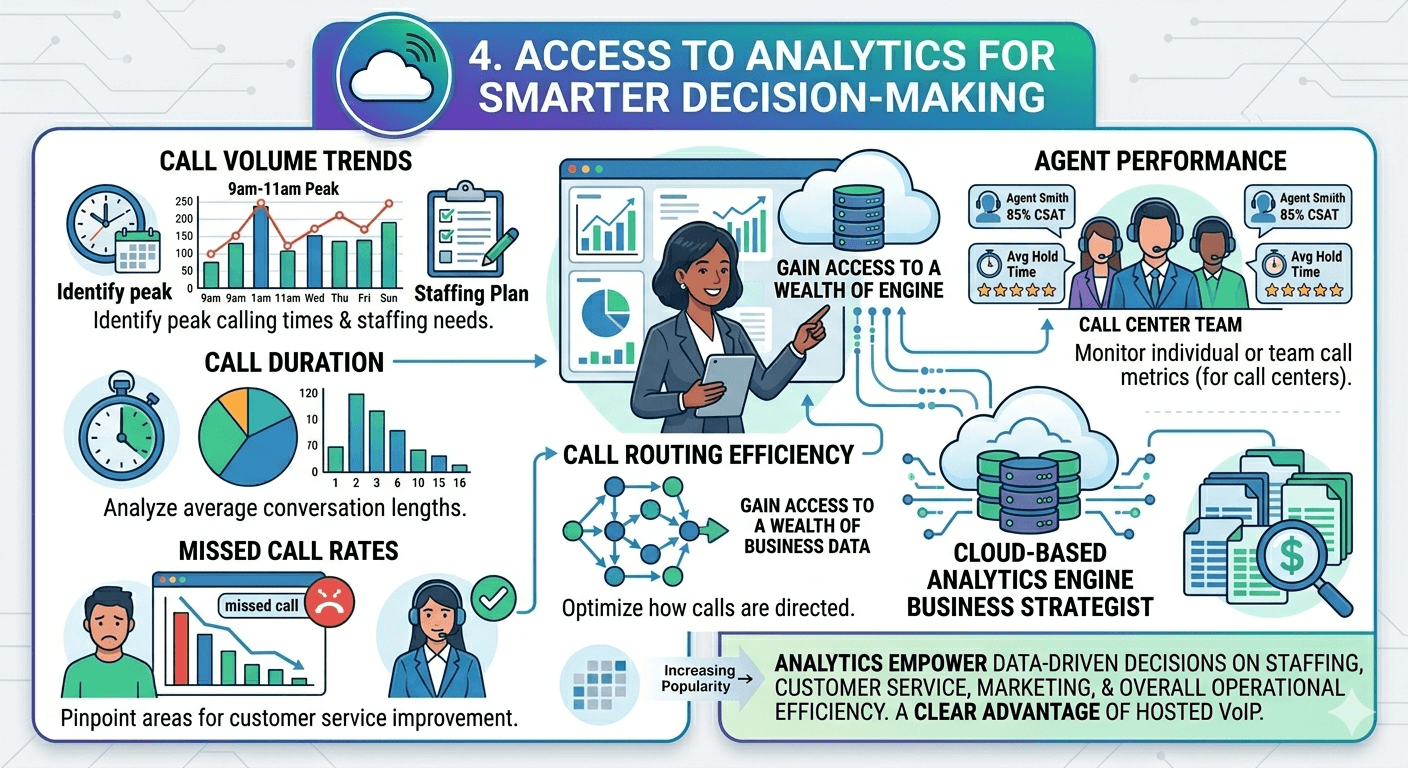
You can gain access to:
- Call Volume Trends: Identify peak calling times and staffing needs.
- Call Duration: Analyze average conversation lengths.
- Missed Call Rates: Pinpoint areas for customer service improvement.
- Agent Performance: Monitor individual or team call metrics (for call centers).
- Call Routing Efficiency: Optimize how calls are directed.
These analytics empower you to make data-driven decisions about staffing, customer service, marketing campaigns, and overall operational efficiency. This level of insight is a clear advantage of voice over internet protocol that traditional systems simply cannot offer without expensive add-ons.
Unlock the Full Potential of VoIP Today with Intermedia
Choosing the right hosted VoIP for business provider is crucial to unlocking these benefits. Intermedia, a leading provider of cloud communications, offers robust hosted PBX solutions designed for growth. With Intermedia, you gain access to a reliable hosted IP phone system that delivers exceptional call quality, a rich feature set, and seamless integration capabilities, all backed by award-winning support. Make the switch and empower your business communication for the future.
Read more: VoIP vs PBX: Which Should You Choose for Your Business?
Final Thoughts
The decision to adopt a hosted VoIP solution is more than a simple hardware upgrade; it is a foundational shift toward a more agile, cost-efficient, and future-proof communication infrastructure. By migrating to the cloud, organizations liberate themselves from the constraints of traditional copper-wire systems, gaining a dynamic platform that scales effortlessly with their ambitions.
From significantly lowering monthly overhead and delivering crystal-clear HD voice quality to enabling a truly borderless workforce, the advantages of VoIP are both clear and compelling. These systems do more than just facilitate calls—they serve as a central nervous system for modern operations, integrating seamlessly with CRM platforms and essential productivity tools to turn every interaction into actionable data.
For businesses aiming for sustainable growth in an era of rapid digital transformation, investing in a hosted PBX phone system isn’t just a luxury—it’s a strategic imperative. It ensures that your communication remains uninterrupted, your team remains connected, and your professional image remains polished, regardless of where the day’s work happens. Embrace the power of cloud communications today to bridge the gap between your current operations and your business’s future potential.
FAQs
-
What is a hosted PBX phone system?
A hosted PBX phone system is a business phone system where the PBX (Private Branch Exchange) functionality is delivered as a service over the internet by a third-party provider, rather than being located on your company’s premises. This allows businesses to access advanced features without needing to buy or maintain complex hardware.
-
Is hosted VoIP reliable?
Yes, hosted VoIP for business is highly reliable. Reputable providers use robust data centers, redundant systems, and advanced network management to ensure high uptime and call quality. Reliability largely depends on having a stable and sufficient internet connection at your business location.
-
What is the difference between VoIP and a hosted PBX?
VoIP (Voice over Internet Protocol) is the technology that allows voice calls over the internet. A hosted PBX is a specific type of VoIP phone system where the core infrastructure (the PBX) is managed and maintained by a third-party provider, offering a comprehensive suite of features as a service. So, a hosted PBX uses VoIP technology.
-
How much does a hosted PBX phone system cost?
Hosted PBX pricing typically follows a per-user, per-month subscription model. Costs can vary widely based on the provider, the number of users, and the specific features included in the plan (e.g., basic, standard, premium). Generally, it is more cost-effective than purchasing and maintaining an on-premise PBX system.
-
Can I keep my existing business phone numbers when switching to a hosted VoIP system?
Yes, in almost all cases, you can port your existing business phone numbers to your new hosted VoIP phone system. This ensures continuity for your customers and avoids the need to update all your business collateral with new numbers. Your chosen VoIP provider will guide you through the number porting process.