
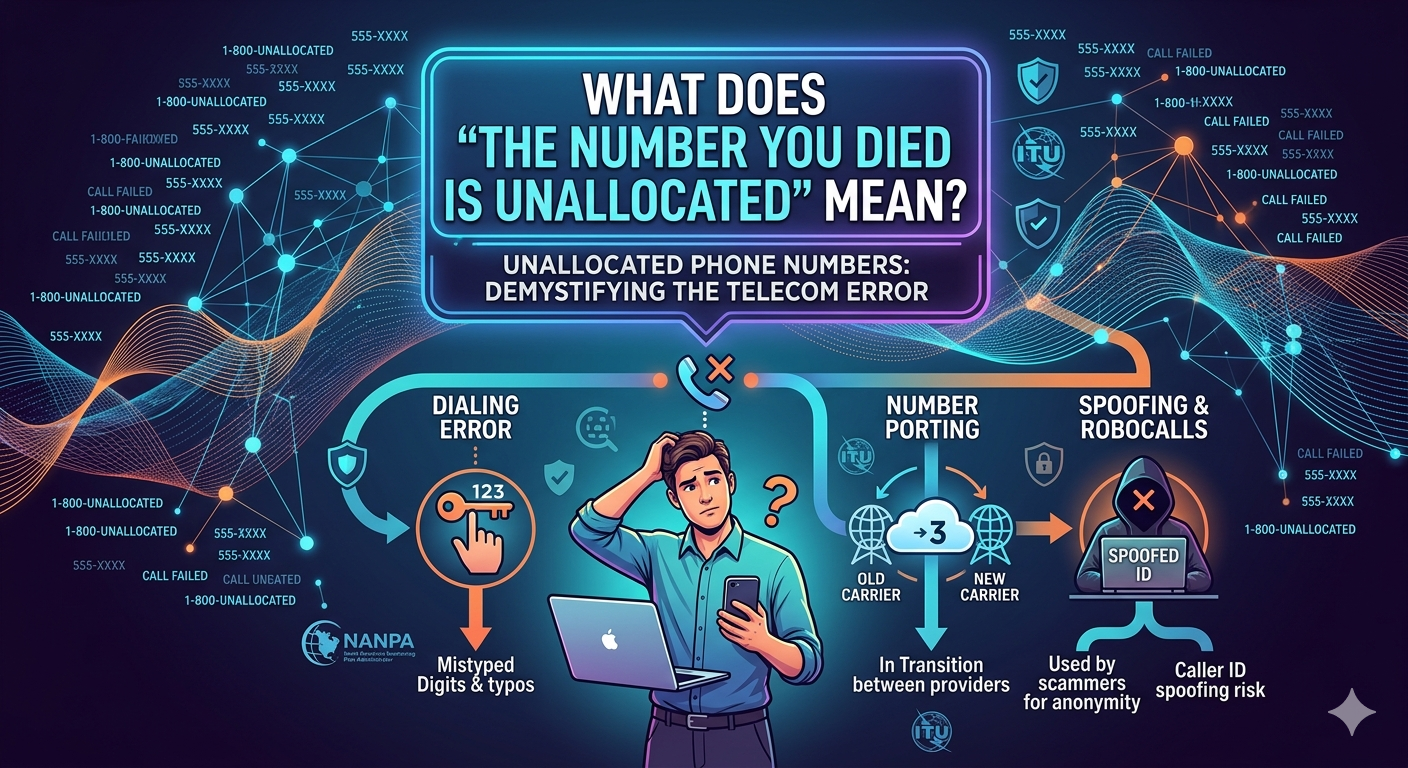
An unallocated phone number is a specific sequence of digits that has not yet been assigned to a telecommunications service provider or an individual subscriber by the national numbering authority. When you encounter a voice recording stating the number you have dialed is unallocated number, it indicates that the telephone network is unable to route your call because the destination does not exist in any active subscriber database. This status typically occurs when a number is freshly generated, has been returned to the central pool after a long period of inactivity, or is currently caught in an administrative transition between mobile carriers.
Deciphering the unallocated number meaning in modern telecommunications
To understand the core unallocated number meaning, one must look at how the global telecommunications infrastructure manages its resources. Every country has a regulatory body, such as the Federal Communications Commission in the United States, which oversees the distribution of phone numbers. These numbers are kept in a massive central registry and released in large blocks to various service providers like AT&T, Verizon, or T-Mobile. A number remains in an unallocated state until it is officially handed over to a provider for public use. If you dial a sequence that hasn’t been released yet, the exchange switches trigger an automated response because there is no path to complete the connection.
The lifecycle of a phone number involves several stages, including active, disconnected, and aging. When a user cancels their service, the number does not immediately become unallocated. Instead, it enters an aging phase where it remains inactive to prevent the new owner from receiving calls intended for the previous resident or business. Once this cooling-off period ends, the number is returned to the general pool. If you happen to call during the brief window after it has been scrubbed from the carrier database but before it is reassigned, you will hear the specific message regarding the number that you have dialed is unallocated.
Understanding what does unallocated mean requires a distinction between a number that is simply out of service and one that is non-existent in the routing tables. A disconnected number often belongs to a carrier but has no active user, whereas an unallocated phone number might not even belong to a carrier yet. This technical distinction is why the error messages differ; a disconnected number might play a series of three rising tones followed by a specific announcement, while an unallocated one often features a more generic operator recording explaining that the digits do not lead to a valid destination.
Common reasons why you hear the number you have dialed is unallocated message
The most frequent reason for receiving the number you have dialed is unallocated message is a simple dialing error or a typo in the contact list. Phone numbers are precise strings of data, and missing a single digit or reversing two numbers can lead the network to search for a destination that has never been activated. In many cases, people accidentally add an extra zero or forget the area code, which causes the internal switching system to look for a number block that hasn’t been assigned to any physical hardware or digital line, resulting in the standard error recording.
Another significant factor involves the process of number porting between different service providers. When a customer decides to move their service from one company to another while keeping their original digits, a complex data exchange occurs between the two infrastructures. During this transition, there can be a momentary lapse where the old carrier has released the number, but the new carrier has not yet fully integrated it into their active routing directory. If a call is placed during this specific millisecond or hour of transition, the network might report the status as a non allocated number because it is technically in limbo.
Administrative updates and network maintenance can also trigger these responses. Telecommunications companies frequently update their internal databases to optimize call routing and integrate new technologies like 5G or Voice over Internet Protocol systems. If a database synchronization error occurs, certain active numbers might temporarily show up as unallocated to the rest of the world. This is usually a short-lived technical glitch that resolves itself once the master registry and the local exchanges finish their handshake protocols and update their records to show the correct ownership of the digits.
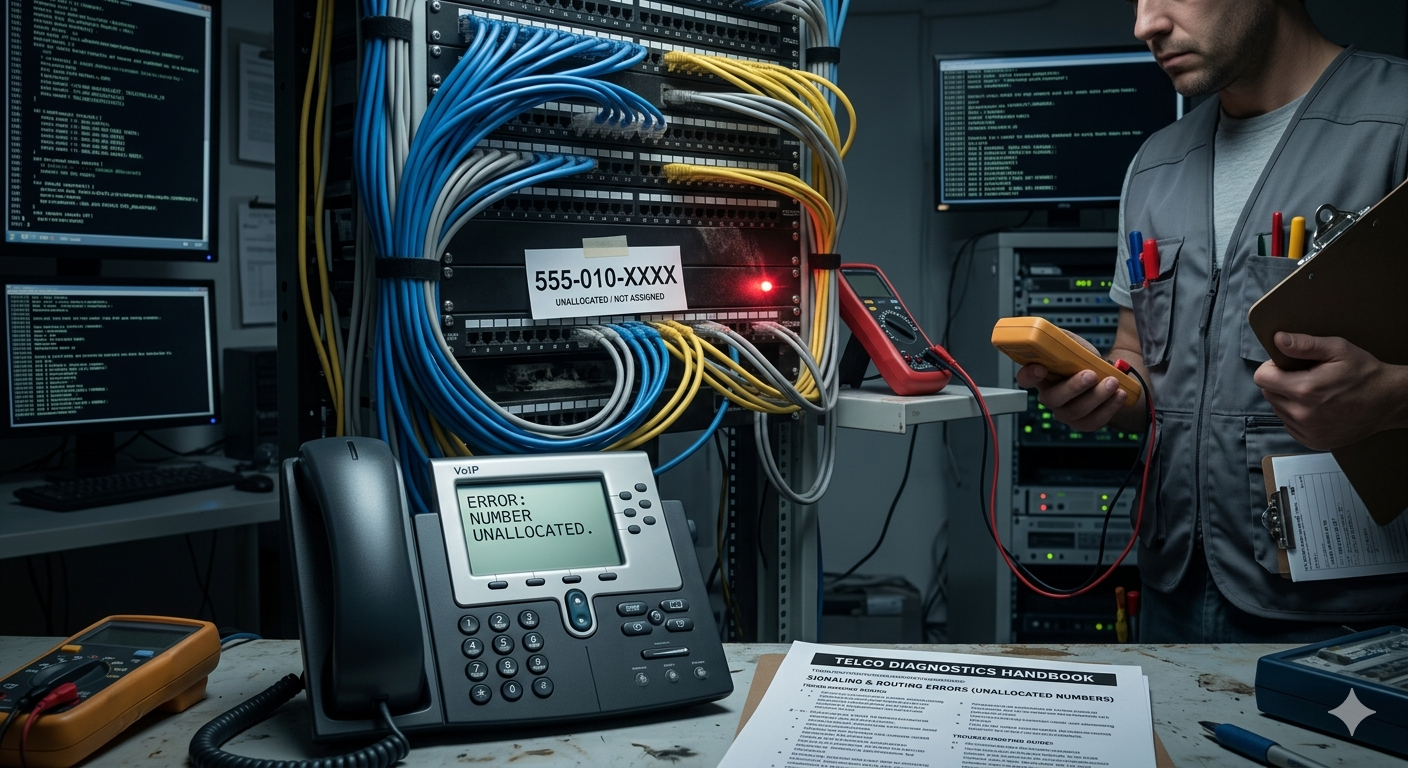
Identifying the risks of receiving a call from an unallocated phone number
It is a common and confusing experience for many people to receive a call, miss it, and then find that the number is unallocated when they try to call back. This phenomenon raises the question of how did i get a call from an unallocated number if it doesn’t officially exist. The answer lies in a practice known as caller ID spoofing, which is frequently used by telemarketers and scammers. These entities use specialized software to mask their real phone number and display a fake one on your screen. Often, they choose random digit combinations that are not currently assigned to any real person, which is why the number is unallocated when you attempt a return call.
Receiving a call from an unaligated phone number is a major red flag for potential fraudulent activity. Since legitimate businesses and individuals must have a registered, active account to make outgoing calls, any call appearing to originate from an unallocated source is likely generated by a computer. These automated systems can cycle through thousands of number combinations per minute. If you answer, you might be greeted by a robocall or a person attempting to gather personal information. The fact that the number does not exist in the official registry allows these callers to remain anonymous and avoid being easily tracked by law enforcement or regulatory agencies.
To protect yourself from these types of calls, it is important to understand what is an unallocated phone number in the context of digital security. You should avoid sharing sensitive data if the caller ID looks suspicious or if the number looks like a sequence of repetitive digits like 000-000-0000. Many modern smartphones now include features that cross-reference incoming calls with databases of known unallocated or high-risk numbers, automatically flagging them as potential spam. Utilizing these tools can significantly reduce the amount of unwanted communication you receive from sources that have no physical or legal presence on the telecommunications grid.
Technical infrastructure and the role of the North American Numbering Plan
The management of phone numbers is a massive logistical undertaking supported by strict international standards.
According to the North American Numbering Plan Administrator, numbers are distributed in central office codes, which are the three digits following the area code.
When a carrier needs more numbers, they request a block. Until that block is assigned and the carrier activates it in their switches, every number within that range is considered unallocated. This structured approach ensures that there are enough numbers for the growing population of mobile devices and internet-connected gadgets while maintaining a logical order for global routing.
Research into telecommunications traffic shows that the Numbering Plan Area codes are reaching exhaustion in many urban centers, leading to the creation of overlay codes. When a new overlay is introduced, many of the numbers within it start as unallocated. During the initial rollout, it is common for callers to experience the number you have dialed is unallocated error if they are dialing into the new code before the service providers have finished configuring their local exchanges to recognize the new prefix. This highlights the importance of the backend synchronization that must happen across every carrier worldwide to ensure a call can travel from a small town in one country to a city in another.
Another interesting fact is provided by the International Telecommunication Union, which sets the standards for international dialing. Their E.164 recommendation defines the format for global numbers, ensuring that every phone on the planet has a unique identifier. When a number is labeled as unallocated, it means it satisfies the structural requirements of the E.164 standard but lacks a corresponding entry in the global Domain Name System for telephony. Essentially, the address exists on the map, but the house has not been built yet, so the mail carrier has nowhere to deliver the package.
Investigating why would someone use an unallocated number for business
There are instances where a business might deliberately use an unallocated number for certain internal operations or testing phases. Software developers working on communication apps often use these numbers in a sandbox environment to test how their systems handle error codes and call failures. By simulating a call to a number that is not allocated, they can ensure that their application provides the user with a clear and helpful error message rather than simply crashing. This type of controlled environment is crucial for building robust telecommunications software that can navigate the complexities of global networks.
Furthermore, some organizations might hold onto a block of numbers without immediately assigning them to employees. These are essentially unallocated within the company’s internal private branch exchange system. While the carrier might see them as assigned to the company, the internal system sees them as vacant. If an outside caller reaches one of these extensions, the internal switch might return a signal that results in the caller hearing the message that the number is unallocated. This helps the business manage its internal directory and ensures that callers are not accidentally connected to a phantom desk or an unmonitored line.
In the world of marketing, some companies use unallocated numbers for tracking the effectiveness of different advertising campaigns. They might lease a specific set of numbers that are activated only for the duration of a specific television or radio ad. Once the campaign ends and the numbers are deactivated, they quickly return to an unallocated state. This allows the company to measure precisely how many calls were generated by a specific advertisement before the numbers are recycled and returned to the carrier’s general pool for future use by other clients or individuals.
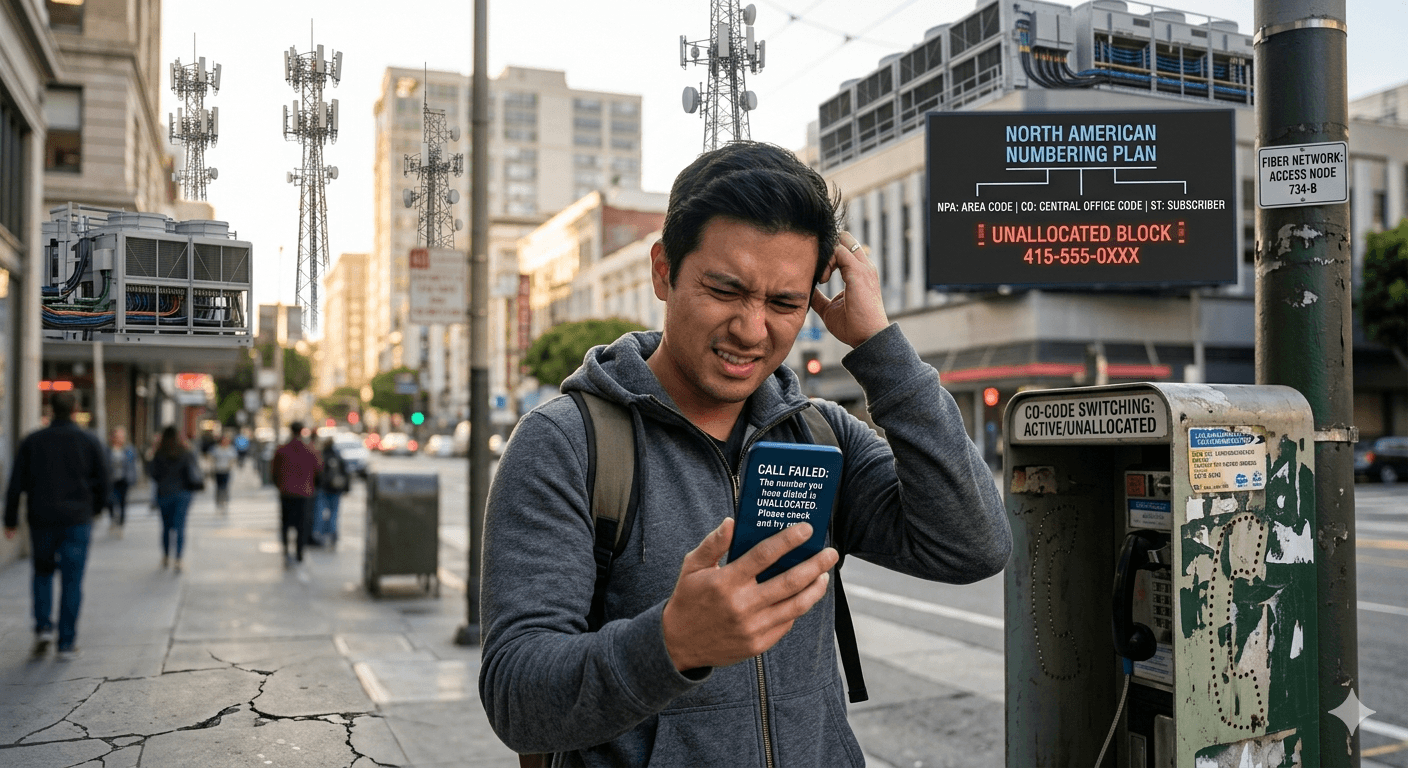
Troubleshooting steps when your own number shows as unallocated
If people trying to reach you report that the number you dialed is unallocated, it suggests a serious configuration error with your service provider. The first step is to restart your device, which forces the phone to re-register with the nearest cell tower and refresh its connection to the network database. Sometimes, a temporary loss of signal can cause a desynchronization between your device and the carrier’s Home Location Register. By rebooting, you prompt the system to re-verify your identity and status, which often resolves the issue where your line appears as unallocated to incoming callers.
If the problem persists, you should contact your carrier and inquire about the status of your account. It is possible that a billing error or an administrative mistake resulted in your number being accidentally marked as inactive or returned to the pool of available digits. Provide the customer service representative with the exact wording of the message that callers are hearing. They can check the routing tables to ensure that your specific Mobile Station International Subscriber Directory Number is correctly mapped to your Subscriber Identity Module card. This process involves verifying that the backend switches recognize your number as an active and allocated resource.
For those who have recently ported their number from another company, the unallocated status is often a sign that the porting process is incomplete. You may need to reach out to both the old and new service providers to ensure the transfer of the number’s ownership has been finalized in the Number Portability Administration Center. If the data transfer is stuck in a pending state, the number will not be reachable from certain networks, leading callers to hear the unallocated message. Once the synchronization is finished across all national databases, your number will once again appear as a valid and active destination for all callers.
Read More: What is Voicemail Drop? Maximizing sales
Final Thought
Understanding the various layers of the telecommunications system helps demystify the experience of hearing that the number you have dialed is unallocated. Whether it is caused by a simple typo, a scammer using a spoofed identity, or a technical hiccup during a network upgrade, this message serves as a vital signal that the communication path is currently broken. By staying informed about how phone numbers are managed and the risks associated with unallocated numbers, you can better navigate the digital landscape and protect your personal information from unwanted or fraudulent callers.
FAQs about unallocated phone numbers
-
What does it mean if it says the number you dialed is unallocated?
When you hear this message, it means the phone number is not currently assigned to any active user or service provider. The telecommunications network recognizes the number as a valid combination of digits, but it cannot find a physical or digital destination to route the call to. This usually happens because the number is new, has been recently disconnected and returned to the pool, or was dialed incorrectly by the caller.
-
What is the *#21# code?
The *#21# code is a standardized supplementary service code used to check the status of call forwarding on your mobile device. When you dial this code, your phone queries the carrier network to see if your calls, data, or SMS are being diverted to another number. It is a useful tool for troubleshooting connectivity issues or ensuring that your calls are not being intercepted or redirected without your knowledge.
-
What is the *#69 code used for?
The *#69 code is a feature known as Last Call Return, which allows you to identify and call back the last person who tried to reach your phone. While it was more common on landline systems, many mobile carriers still support similar variations of this functionality. It provides the caller’s number and, depending on the service, may offer the option to automatically dial that number to return the missed call.
-
What does unallocated mean?
In a general sense, unallocated means that a specific resource has not been set aside or assigned for a particular purpose or user. In telecommunications, it specifically refers to a phone number that is sitting in a central database or a carrier’s inventory but is not currently linked to a live account or a functioning device. The resource exists as a possibility but is not currently active in the operational environment.
-
Why do I keep getting calls from unallocated numbers?
You are likely receiving these calls because of automated dialing software used by telemarketers or scammers. These systems can generate fake caller ID information, often using unallocated numbers to avoid being blocked by traditional spam filters. Since the numbers are not active, you cannot call them back to ask to be removed from their list, making it an effective, albeit annoying, tactic for high-volume robocalling operations.