
DDI Numbers
DDI (Direct Dial-In) numbers allow external callers to reach specific extensions within a company without going through a switchboard. They’re essential for streamlining communication in VOIP and PBX systems.
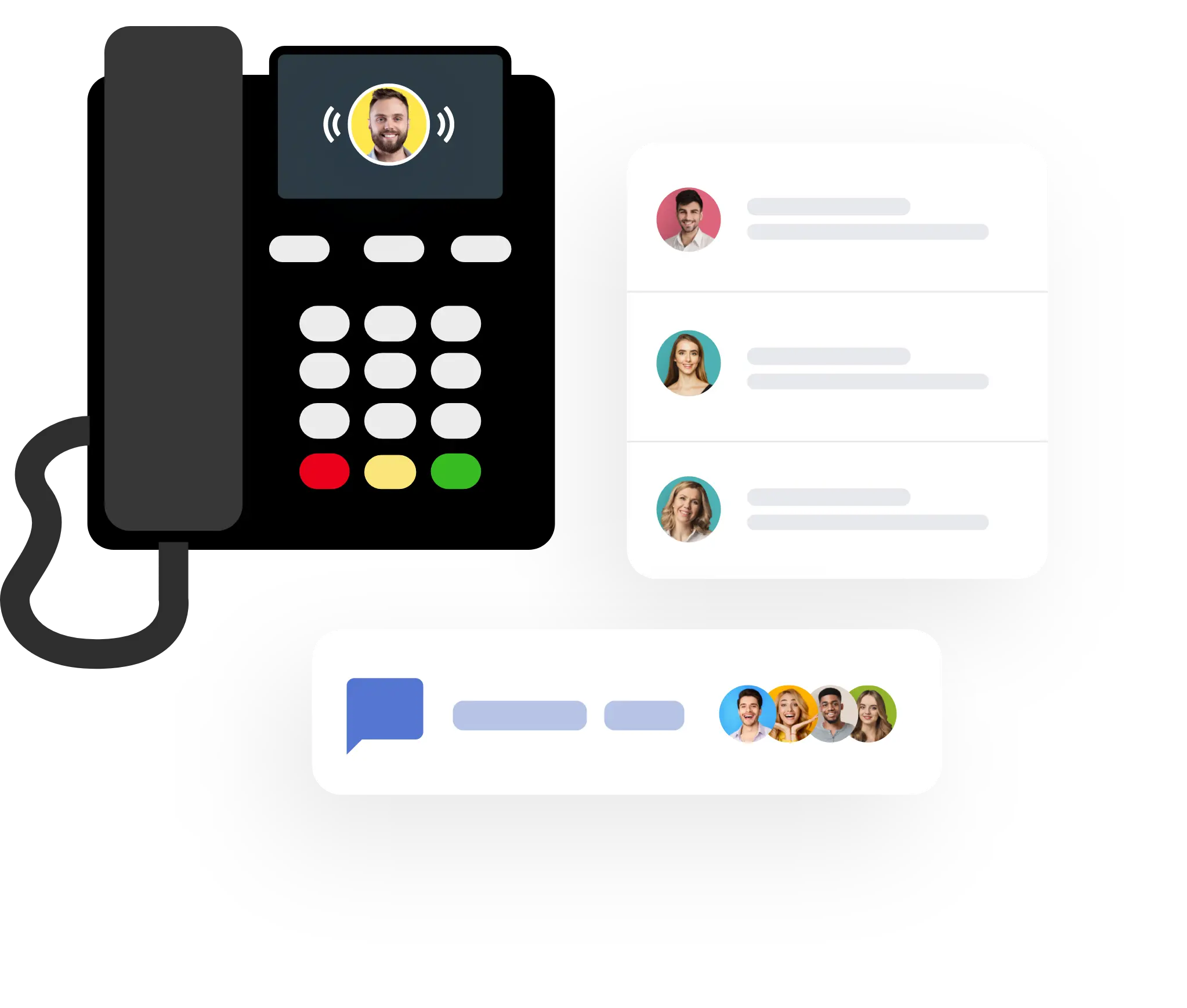
DDI (Direct Dialing Inward) is a feature provided by VoIP Calling
Direct Dialing Inward (DDI) is like giving each employee or department their own personal phone number without needing a separate physical line for each one. With DDI, calls go directly to the right person or team instead of landing at a receptionist or main line first.
For example, if your business has one main number but you want sales, support, and billing to each have their own direct numbers, DID makes it possible. It works through VoIP by assigning virtual numbers that route calls to specific extensions, devices, or departments.
Direct Dialing Inward Scenario in PBX
DDI brings some awesome benefits for your business’s customer care and marketing.
Imagine your company has one main phone number, but you don’t want every customer to go through a receptionist. With DID in PBX, each team or employee gets their own direct number.
👉 For example, if a customer dials +1 234-567-8901, the call goes straight to the sales team extension. Another customer dials +1 234-567-8902, and it lands directly at support. No transfers, no waiting—just direct access.
It’s like giving everyone their own doorbell instead of making visitors knock on one big main door.

Benefits of DDI (Direct Dial-In) calls in simple words:
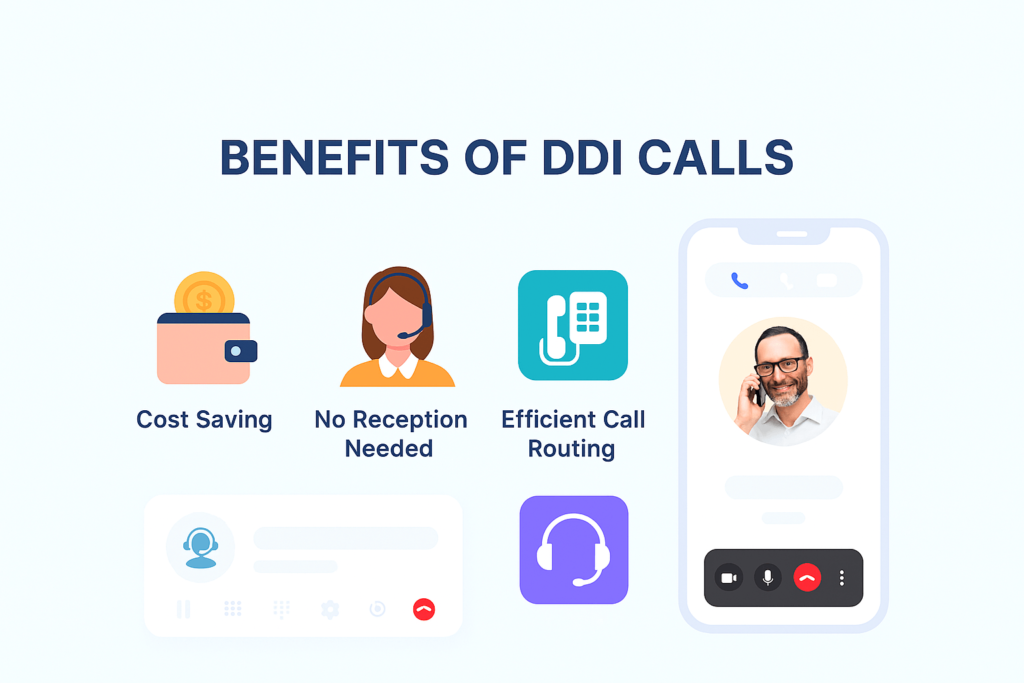
- Skip the Reception Desk – Callers connect straight to the right person or department, no endless transfers.
- Faster Customer Service – Customers don’t wait in line; their calls reach the right team instantly.
- Professional Image – Every department or employee can have their own number without extra phone lines.
- Better Call Tracking – Businesses can track which DDI numbers get the most calls (sales, support, etc.).
- Cost-Effective – No need to buy separate physical phone lines for every employee.
- Flexibility – Numbers can be easily reassigned if staff moves or roles change.
FAQ: DDI Number
DDI numbers (Direct Dial-In numbers) are basically direct phone lines linked to your main business number. Instead of calling the company’s main line and waiting to be transferred, customers can dial a DDI number and land straight at a specific person or department.
👉 Example: A company has one main number, but your sales team gets +44 20 1234 5678 and support gets +44 20 1234 5679. Both are DDI numbers pointing to the same system but reaching different teams.
It’s like giving every employee their own shortcut number without needing separate phone lines for each.
DDI calls are simply the calls that come in through Direct Dial-In numbers.
Instead of ringing the company’s main switchboard, the call goes straight to the person or department linked to that DDI number.
👉 Example: If a customer dials your support team’s DDI number, the call skips reception and lands directly with support—saving time for both sides.
Every business owner knows about telephone numbers. Telephone numbers are 10-digit numbers assigned to the customers, vendors and others to contact your company. With the growing services like SIP trunking and VoIP, DDI is now used as an alternative to traditional telephone numbers. The major difference is that a telephone number can be used for any purpose. However, a DDI is specially provided to a specific locality and is used for businesses.
A conventional telephone number is directly connected to a copper telephone line. Every line has a number and is used for making and receiving calls. As a business one needs multiple lines for concurrent calls. In this way when a call comes on the main number it is received, if another call comes at the same number then it will go to the next line which is available.
A direct inward dial number doesn’t need a physical telephone line. DID numbers are directed towards “call paths”. Similar to physical copper lines, call paths establishes the number of concurrent calls. With VoIP there is no copper wire to be dealt with. DID is known for being flexible. DDI numbers can be used as main company numbers, which will ring directly to an extension or virtual numbers which are controlled to execute a lot of functions. With VoIPBusiness, there are no charges for long distance calls. Your DDI number exists virtually independent of a physical line and you can make it ring wherever you want.
If you get DID numbers then your company has the ability to appear as a part of the local community regardless of your company’s physical location. Most customers give preference to local vendors because it provides more comfort, easier access, fast service and more accountability. Therefore, when you use DID numbers your company number will not be restricted to your location.
With DID numbers your employees’ labour expenses reduce. DDI numbers minimise the receptionist duties. If you assign the DID numbers to each individual then every caller can directly reach the party they want to talk to by simply dialling the DID of that employee. Instead of answering each incoming call the employee can be reached whenever required by the caller. This gives receptionist the ability to perform other duties throughout the day.
Bandwidth is supplied to DDI numbers as part of VoIPBusiness inbound voice services.