When it comes to business communication, two terms often come up: VoIP and PBX. Both are powerful tools, but which one is right for your business? If you’ve ever wondered about the differences, the costs, or which system will make your team more productive, you’re in the right place.
In this guide, we’ll explore everything from the basics to advanced features, real-world examples, cost considerations, and even how to decide between VoIP and PBX based on your unique business needs. By the end, you’ll have a clear picture of what fits your business best.
Understanding the Basics: What is PBX?
PBX stands for Private Branch Exchange. It is essentially a private phone network that a company uses to manage internal and external communication.
Think of it like a central hub for all calls in your business. Instead of giving every employee a separate public phone line, PBX routes calls efficiently, whether they are internal calls between employees or external calls from clients.
How PBX Works
Here’s how a PBX system handles calls:
- Connects employees through internal extensions
- Routes incoming calls to the right department or person
- Provides features like voicemail, call forwarding, call recording, and automated menus
- Can integrate with other business tools for enhanced communication
Example: A customer calls a company’s main line. The PBX system automatically directs the call to the sales department, or if no one is available, it sends it to voicemail or another available employee.
Types of PBX Systems
PBX systems have evolved over the years. Let’s look at the main types:
Traditional PBX
- On-site hardware, connected via physical phone lines
- Reliable and works without the internet
- Requires maintenance and has higher upfront costs
IP PBX
- Uses internet (VoIP) for call transmission
- Scalable and integrates with software tools
- Requires stable internet connection
Cloud / Hosted PBX
- Fully managed by a provider, no hardware required
- Accessible anywhere, ideal for remote teams
- Flexible subscription-based pricing
Understanding the Basics: What is VoIP?
VoIP stands for Voice over Internet Protocol. Simply put, it’s a technology that lets you make phone calls over the internet instead of traditional phone lines.
VoIP can work with PBX systems or standalone as a communication solution. With VoIP, your calls, video conferences, and messages are all digital and internet-based.
How VoIP Works
VoIP converts your voice into digital data packets and transmits them over the internet. This allows:
- Low-cost domestic and international calls
- Integration with computers, mobile devices, and software tools
- Advanced features like video calls, conferencing, and call analytics
Example: Your remote sales team can take calls from anywhere in the world using a laptop or mobile app without paying for expensive international phone lines.
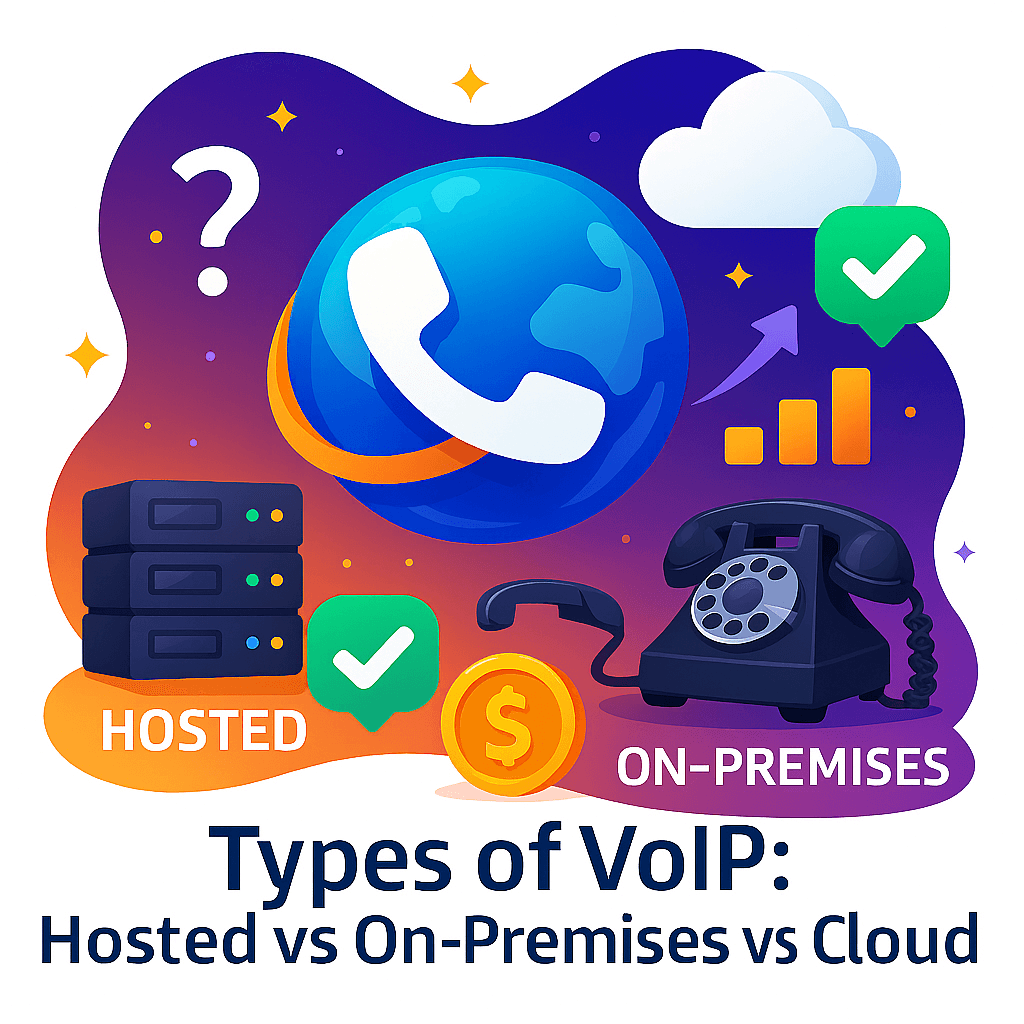
Types of VoIP Systems
Stand-Alone VoIP
- Provides basic calling features
- Ideal for small teams with limited needs
VoIP with PBX (IP PBX)
- Combines internet-based calling with PBX features
- Offers call routing, extensions, and voicemail
- Integrates with business tools for productivity
Cloud VoIP
- Hosted entirely online
- Requires no hardware installation
- Supports remote work and scalability
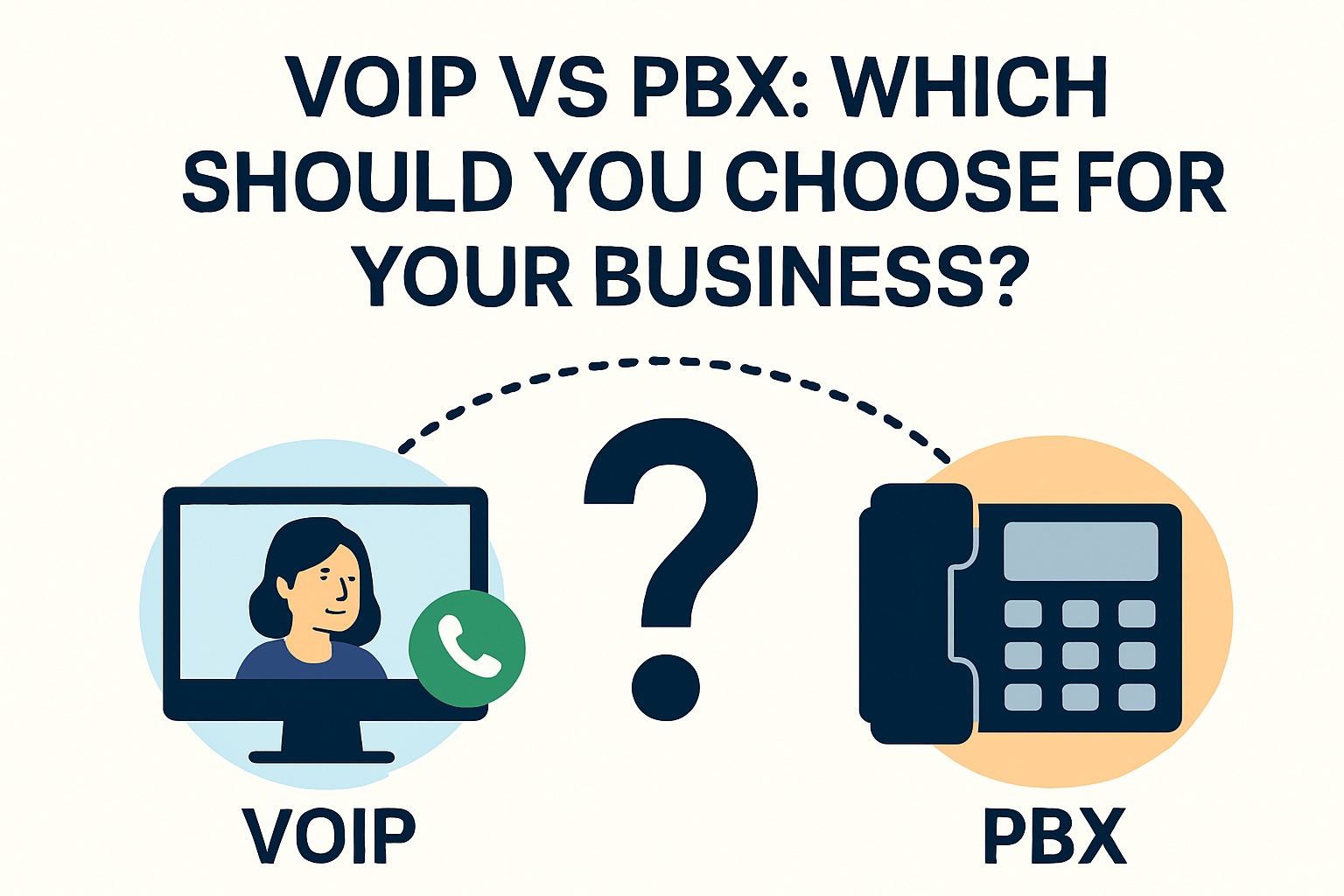
VoIP vs PBX: Key Differences
Now that we understand PBX and VoIP, let’s compare them directly.
| Feature | PBX | VoIP |
|---|---|---|
| Definition | Private phone system managing internal and external calls | Technology to make calls over the internet |
| Infrastructure | Can be on-site or cloud-based | Cloud-based or internet-enabled |
| Internet Requirement | Not always (traditional PBX works offline) | Required |
| Cost | Higher upfront costs for hardware, maintenance required | Lower call costs, subscription or pay-as-you-go models |
| Scalability | Limited in traditional PBX, moderate in IP PBX | Very flexible, especially cloud VoIP |
| Features | Call routing, voicemail, auto-attendant, conferencing | Video calls, messaging, mobile apps, integration with tools |
| Remote Work Support | Limited in traditional PBX, possible with cloud PBX | Excellent, accessible from anywhere |
| Maintenance | On-site for traditional PBX | Managed by provider for cloud VoIP |
Why Businesses Choose PBX
PBX has been around for decades because it works reliably for companies with high call volumes.
Benefits of PBX:
- Professional call management with automated menus
- Direct extensions for employees
- Reliable call quality with minimal internet dependency
- Integration with CRM and business systems
- Good for businesses needing on-site control
Example: A law firm with multiple offices may prefer a traditional PBX to ensure stable call quality and full control over internal communication.
Why Businesses Choose VoIP
VoIP has become popular because it reduces costs, increases flexibility, and supports modern work styles.
Benefits of VoIP:
- Lower costs for local and international calls
- Works anywhere with internet access
- Integrates with business tools like CRM, email, and collaboration platforms
- Offers advanced features like video conferencing, call analytics, and mobile apps
Example: A startup with remote employees worldwide can use cloud VoIP to connect the team without expensive hardware.
VoIP and PBX: Can They Work Together?
Absolutely. VoIP can power PBX systems, creating a hybrid solution known as IP PBX.
Advantages of combining VoIP with PBX:
- Best of both worlds: professional call management plus internet-based flexibility
- Lower call costs and advanced features
- Scalable for growing teams
- Can be on-premises or cloud-based
Example: A mid-size company might use a cloud IP PBX with VoIP to connect in-office and remote employees while routing calls efficiently.
Key Features to Consider in Both Systems
When deciding between VoIP and PBX, look for these essential features:
- Call forwarding and routing
- Voicemail and voicemail-to-email
- Auto-attendant menus for callers
- Call recording for training or legal needs
- Conference calling
- Integration with CRM, email, and messaging tools
- Mobile access for remote employees
Cost Comparison: VoIP vs PBX
Understanding cost differences helps you make an informed decision. Here’s a typical comparison:
| System | Initial Cost | Monthly Cost | Call Costs | Maintenance |
|---|---|---|---|---|
| Traditional PBX | $2,000 – $15,000 | Minimal | Standard phone rates | High, on-site |
| IP PBX | $500 – $7,000 | $20 – $100 | Lower, especially VoIP calls | Moderate |
| Cloud PBX / VoIP | Minimal hardware | $20 – $50 per user | Very low, internet-based | Low, provider-managed |
Example: A 20-person team could save thousands annually by switching from traditional PBX to cloud VoIP.
Pros and Cons
PBX Pros
- Reliable call quality
- Professional call management
- Works offline for traditional PBX
- Control over hardware and security
PBX Cons
- High upfront costs
- Maintenance required for hardware
- Limited flexibility for remote work
VoIP Pros
- Cost-effective for domestic and international calls
- Accessible anywhere with internet
- Scalable and flexible
- Advanced features like video and messaging
VoIP Cons
- Dependent on internet quality
- Security concerns if not properly managed
- May require training for employees unfamiliar with digital tools
Real-Life Examples
Example 1: Small Business
A boutique marketing agency with 10 employees switched to cloud VoIP. Now they can make unlimited calls to clients worldwide, route calls to different departments, and have voicemail notifications sent to email.
Example 2: Medium Business
A logistics company with 50 employees uses an IP PBX system. Calls from customers are routed to the right department, managers can monitor call performance, and remote drivers can use mobile apps to stay connected.
How to Decide: VoIP or PBX?
Here’s a simple guide to help you choose:
- Small business, low budget, remote team: Go for cloud VoIP
- Medium business, mix of office and remote employees: IP PBX with VoIP
- Large enterprise, high call volumes, need on-site control: Traditional PBX or hybrid solution
Frequently Asked Questions
Is VoIP better than PBX?
VoIP is not “better” in every case. It depends on your business needs. For cost savings and flexibility, VoIP shines. For reliability and on-site control, PBX is strong.
Can I use VoIP without PBX?
Yes, VoIP can work as a standalone system for making and receiving calls.
Does PBX work with remote teams?
Traditional PBX has limitations, but IP PBX and cloud PBX can easily support remote employees.
How secure is VoIP?
With proper encryption, secure passwords, and updated software, VoIP can be very secure.
Which is cheaper long-term?
Cloud VoIP is generally cheaper due to lower call costs and minimal maintenance. Traditional PBX has higher upfront costs.
Can I integrate VoIP with my CRM?
Yes. Most modern VoIP and IP PBX systems integrate with CRM, email, and other business tools.
Conclusion
Choosing between VoIP and PBX is not about which is better overall. It’s about which fits your business needs, budget, and team structure.
- VoIP offers cost savings, flexibility, and modern features
- PBX offers professional call management, reliability, and control
- Hybrid solutions like IP PBX combine the best of both worlds
If you want a future-proof system for remote and office teams, cloud VoIP or IP PBX is the way to go. If you value stability and control, traditional PBX may still be your best option.